Starvation Under Siege: Urgent Call for Airdrops to Save Civilians in El-Fashir
Khartoum – August 26, 2025
The Fikra for Studies and Development think tank has issued an urgent appeal to the international community, calling for the immediate launch of sustained humanitarian airdrops into El-Fashir, North Darfur. The organization emphasized that airdrops are no longer a last resort, but the only feasible option to save the lives of nearly one million civilians trapped under a deliberate siege.
A Manufactured Humanitarian Catastrophe
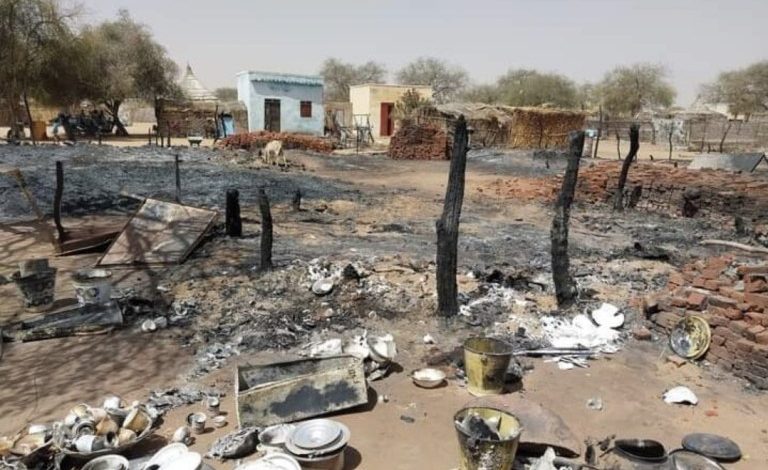
Since May 2024, the Rapid Support Forces (RSF) have imposed a total blockade on El-Fashir, cutting off supply routes and preventing humanitarian convoys from reaching the city. According to the latest UN assessments, more than 45% of children under five suffer from acute malnutrition, with 11% in life-threatening condition. Families, the report notes, have resorted to eating animal fodder and food scraps to survive, as famine conditions deepen.
The crisis escalated in April when RSF fighters stormed Zamzam IDP camp, previously sheltering over half a million displaced people, and turned it into a military base hosting foreign mercenaries. In August alone, at least 89 civilians were killed in El-Fashir and the nearby Abu Shouk camp. Such actions, the statement underlined, reflect the RSF’s systematic use of starvation and violence against civilians.
A Moral Test for the International Community
Fikra urged the United Nations, the United States, the European Union, and the United Kingdom to immediately initiate regular humanitarian airdrops delivering at least 4,700 metric tons of life-saving supplies each week, including nutrient-rich food, emergency medicine, and clean water. The group also called for targeted sanctions against any external actors providing the RSF with anti-aircraft weapons or logistical support, in line with UN Security Council Resolution 2736.
The statement rejected proposals to evacuate civilians from El-Fashir, warning that forced displacement would only worsen what is already the world’s largest displacement crisis. Reports of the RSF executing those fleeing the city on ethnic grounds make such proposals not only unsuitable but complicit in further atrocities.
Political and Military Context
The siege of El-Fashir is part of the wider conflict between the Sudanese Armed Forces and the RSF, which has torn the country apart since April 2023. In June, UN Secretary-General António Guterres proposed a one-week humanitarian truce to allow aid delivery—a proposal immediately accepted by Sudan’s government but flatly rejected by the RSF. On August 18, Sudan’s Prime Minister sent an urgent letter to the UN Secretary-General, describing El-Fashir as an “ethical test for the international community”.
Appeal to Global Conscience
Fikra accused the international community of dangerous complacency, warning that tolerating the RSF’s tactics normalizes the use of starvation as a weapon of war.
“The time for decisive action is now—lives hang in the balance, and history will judge harshly those who look away from a tragedy that can be prevented,” the statement concluded.
In Summary:
El-Fashir stands as the epicenter of a man-made famine, where nearly a million civilians are trapped in a war of attrition. For the international community, this is not simply a Sudanese crisis—it is a test of whether global powers and the United Nations will uphold their responsibility to protect, or resign themselves to being remembered for silence in the face of deliberate mass starvation.