Washington Revives Peace Efforts After a Year of Stalemate
Sudan Events – Agencies
A secret meeting in Zurich between U.S. President Donald Trump’s envoy and Sudanese army chief General Abdel Fattah al-Burhan may mark the beginning of a serious move in Sudan’s peace talks after a year of deadlock. The three-hour session, held on August 11 and attended by Burhan and Trump’s Africa adviser, Massad Boulos, was mediated by Qatar, a key partner in Trump-era U.S. diplomacy. Both sides sought to keep the meeting under wraps, but it proved significant enough to prompt Sheikh Mansour bin Zayed Al Nahyan, the UAE’s vice president and national security adviser, to travel to Zurich the following day to meet Boulos.
The encounter came after a failed meeting in early June that brought together ambassadors of the “Quad” countries (the United States, the UAE, Egypt, and Saudi Arabia). At that session, American diplomats told their Sudanese counterparts they were working on new political proposals to end the war.
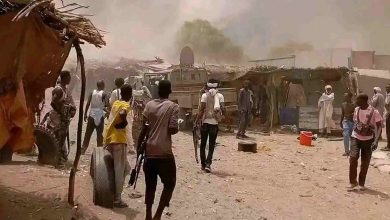
Conditions in Sudan have sharply deteriorated over the past year, amid brutal attacks on civilians by rival military factions and a severe funding shortfall for U.N. relief efforts, as Western governments – including the United States – cut aid budgets.
Western diplomacy has stalled: the London summit in April ended without a final communiqué, while a previous U.S. initiative in Geneva a year earlier also collapsed. With Trump’s return to the presidency on January 20, his Africa adviser Boulos pushed for renewed engagement, but his efforts were sidelined as he turned to other files in Congo and Rwanda involving “resources-for-deals” arrangements.
It remains unclear who makes up Boulos’s Sudan team, particularly as many senior regional experts have left both the State Department and the National Security Council. Nor is it known whether any new analytical assessments of the war have been commissioned. Boulos appeared keen to convene a new Quad meeting—perhaps only to demonstrate his format’s relevance—and was determined to exclude the U.N. and African Union from any high-stakes military negotiations.
At a Washington meeting on July 30, familiar arguments resurfaced, ending in deadlock. Egypt insisted the armed forces must lead the transition, while a U.S. draft communiqué notably omitted direct roles for both the Sudanese Armed Forces (SAF) and the Rapid Support Forces (RSF). Egypt escalated its position, prompting sharp opposition from the UAE—the same stance Abu Dhabi had taken earlier in London and again in June.
It is important to note that most of Sudan’s regional war sponsors—Egypt, Saudi Arabia, and the UAE—are close U.S. allies, unlike Turkey and Iran. Even though the session proved inconclusive, their positions were made clear.
Cairo does not want to see Sudan’s army—or the civilian administration it has installed in Port Sudan—excluded from any prospective transitional phase. President Abdel Fattah al-Sisi and Sudan’s military leaders share deep ties, built on long-standing industrial and defense partnerships and joint officer training at Cairo’s military academy.
The UAE, under Mohammed bin Zayed, is Egypt’s largest foreign investor—with $35 billion committed on the Mediterranean coast—and politically aligns with Cairo, but opposes its Sudan policy. Abu Dhabi argues that the war must end through a civilian transition excluding military factions. Yet critics call this hypocritical, given the UAE’s role as financier and chief backer of Mohamed Hamdan “Hemedti” Dagalo’s RSF, while simultaneously supporting a parallel civilian government in western Sudan, undermining the country’s unity.
The UAE goes further, portraying Sudan’s army as sheltered by extremist Islamist factions tied to the ousted National Congress Party of 2019, while seeing Hemedti as the greater threat. As one secular Eastern Sudanese activist put it, the RSF poses a more serious danger to civilian transition than Islamists, “whose playbook we at least know.”
What exactly transpired between Boulos and Burhan remains undisclosed. But Washington’s team appears to be adopting a new strategy: talk first with Sudanese leaders, then with regional sponsors. Hemedti may well be next on the list, especially following Sheikh Mansour’s meeting with Boulos in Zurich on August 12.