RSF Encircles El Fasher With Earthworks, Trapping Civilians in “Kill Box”
Sudan Events – Agencies
After more than 500 days of siege, Sudan’s Rapid Support Forces (RSF) have created what researchers describe as a “kill box” around the capital of North Darfur.
According to a report released Thursday by Yale University’s Humanitarian Research Lab (HRL), the RSF has constructed over 31 kilometers of earth berms around El Fasher since May 2024, gradually sealing off the city and preventing residents from leaving.
Although hundreds of thousands managed to flee earlier in the siege, Sudanese think tank Fikra for Public Policy estimates that some 750,000 civilians remain trapped inside the city. The United Nations says about 260,000 civilians—including 130,000 children—are stranded inside the Abu Shouk displacement camp with no way out.
“Civilian movement within El Fasher is shrinking by the day—whether because people are being killed, attempting escape, or hiding deeper underground. Some are even digging shelters beneath their homes,” said Nathaniel Raymond, HRL’s executive director. He added that the suffering of El Fasher’s residents today is comparable only to Gaza.
A famine was officially declared in the region more than a year ago. Desperate families have resorted to eating animal fodder and scraps of food to survive. The Yale report stated:
“Through these earthworks, the RSF is constructing a true kill box around El Fasher. The barriers block both the smuggling of food and medicine into the city and the escape of civilians out of it.”
Intensifying Siege and Urban Warfare
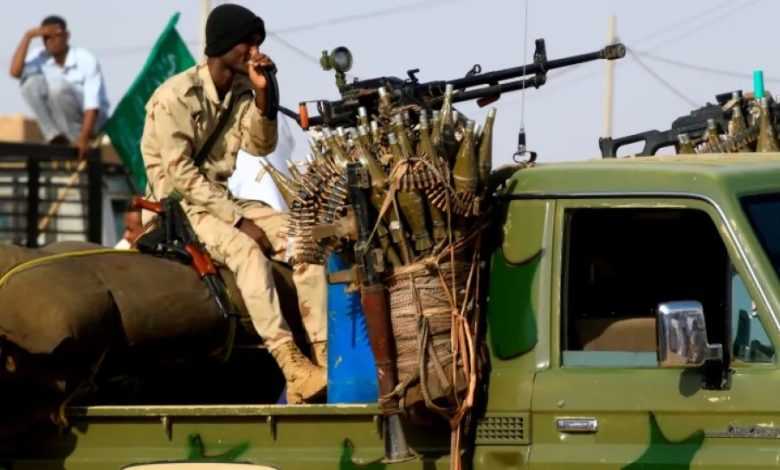
The RSF controls the surrounding countryside and much of northeastern El Fasher, while Sudanese Armed Forces (SAF) units and allied “Joint Forces”—made up of former Darfur rebel movements—hold the rest of the city.
Since the siege began in May 2024, the U.N. has documented more than 1,100 serious human rights violations in El Fasher alone, including the killing and maiming of over 1,000 children.
The Yale report said RSF fighters built 22 kilometers of berms in a semicircle stretching west to north, before adding another nine kilometers east of the city in August. The south, southwest, and northeast approaches near Al-Salam camp remain unsealed for now.
Earlier this year, the RSF seized the Zamzam displacement camp, killing more than 1,000 civilians.
Mines, Battles, and Stalemate
On Thursday night, witnesses reported that Joint Forces allied with the army killed two senior RSF commanders in a surprise attack south of El Fasher. Local journalists said SAF units killed dozens of RSF fighters at a livestock market and recaptured strategic positions.
But military sources warned the army’s situation remains precarious. The SAF’s 6th Infantry Division controls only a small area around the city’s airport, encircled by minefields laid last year—anti-personnel and anti-tank mines that even the RSF lacks the technical capacity to breach.
However, the United Arab Emirates—the RSF’s principal backer—could provide the equipment necessary to overcome those defenses.
International Silence
Amjad Farid al-Tayeb, director of Fikra, condemned what he called the “shameful” silence of the international community:
“We cannot accept the normalization of the RSF holding El Fasher’s citizens hostage. Pressure must be applied on the UAE and the RSF to lift the siege and allow humanitarian aid—or they should face real consequences.”
Kate Ferguson, head of the protection watchdog Protection Approaches, said the tragedy of El Fasher exemplifies a collective failure to shield civilians from atrocities:
“Twenty years ago, the Janjaweed—predecessors of the RSF—committed the same massacres in Darfur, shocking the world and prompting pledges to save the region. Today, despite repeated warnings, we see only paralysis and silence.”