Against Simplification: On the Army, Context is Everything

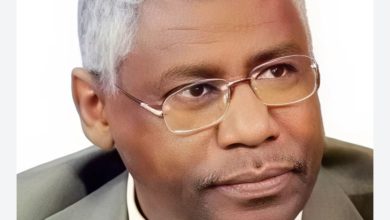
By Moatasem El-Aqra
The question of supporting the army cannot be treated as an abstract, absolute stance, divorced from its context—as political discourse, whether out of malice or intellectual shallowness, often attempts to do. At this moment, Sudan is facing a documented foreign invasion, confirmed by global media and international organizations. We are in the midst of a war against foreign aggressors. In such circumstances, the evaluation of the army’s role changes fundamentally. Those who wish to side with the invaders may do so, and those who prefer neutrality may also choose that path. But as for myself, I cannot remain neutral in the face of an invasion.
I do not subscribe to a totalizing mindset that views every army as a monolithic entity responsible for identical traumas. I see the army’s roles as multiple, even contradictory. An army that suppresses a civilian movement and blocks democratic transformation is not the same as an army carrying out its constitutional duty to defend the nation’s borders against external aggression. Thus, I find myself alongside the army when it fulfills this duty, and always in opposition to it if it turns against the people’s democratic rights in times of peace.
All nations, democratic or otherwise, harbor reservations about their armies. Yet I know of no society that has stood against its army while it defends the homeland against invaders—except certain segments of what is called Sudan’s “civilian movement.”
To disparage the army as it defends national sovereignty against foreign invasion is, at its core, to stand with the aggressors—no matter how much this posture cloaks itself in the rhetoric of civility and democracy.
Sudan’s national tradition has never demanded of its fighters ideological purity. Even in the songs of Mohammed Wardi, no one ever asked whether the Mahdist Khalifa Abdallahi or his dervishes were democratic or secular. Our national narrative celebrated the heroism of Omdurman (Karari), because Sudanese fought invaders—regardless of the ideology or human rights record of the combatants. From Karari to the present, resisting foreign aggression, apart from the ideological pitfalls of the dervishes, is no anomaly. And no freedom has ever come to us on the decks of invading gunboats.
When it comes to the army, context is decisive. To strip away context is a fatal intellectual blindness, born either of weak political literacy or of treachery—feeding on the corpse of one’s compatriot slain by the foreign intruder.
History offers parallels: Christians in the Levant, and atheists from Iran’s Tudeh Party, stood with their national armies when their lands were attacked. They put ideology aside and deferred internal disputes for another day.
Unfortunately, the Sudanese political mind is obsessed with persons rather than deeds. It is gossip-minded—against or for individuals—rather than guided by principles of action. The army here is reduced to a symbolic person: one must be always for it or always against it. I refuse such blindness. I support any army in the world that defends its people and its borders, and I oppose any army that assaults the freedoms of its own citizens. Must this really require explanation?
I believe, regrettably, that standing against an army fulfilling its constitutional duty is no less destructive than supporting one that tramples legitimate rights—and may even surpass it in harm.
For clarity: my stance is principled and universal, not limited to Sudan. If any country at the farthest corner of the world were invaded, I would stand against the aggressors, and with that people’s institutions and forces of resistance. Once the aggression is repelled, we may return to our natural domestic disagreements, as all nations do in peacetime.
As for the purist moralism that recoils at cooperating with the army or with the Islamists (“the Kizan”), I have addressed this before. Hatred of the army or of the Kizan does not cancel the obligation to confront external aggression. Individuals or groups may choose to resist the invaders on their own terms, independent of the state or its ruling elite—as I personally do, with no ties to either the army or the Kizan. Yet the reality shows no such resistance. What we see instead is passive neutrality—or worse, a hostility toward the army greater than hostility toward the invaders themselves. This, in effect, is open collusion with the aggression against the Sudanese people.