El Fasher and the Road to Tawila: Civilians Flee Bombardment Only to Meet Death

Sudan Events – Agencies
The city of El Fasher, capital of North Darfur State, is witnessing a bloody escalation of violence, amid field reports documenting grave abuses by the Rapid Support Forces (RSF) and allied armed factions against civilians fleeing the horrors of war.
These violations are concentrated along the road linking El Fasher to the town of Tawila, now grimly dubbed the “Road of Death” due to the absence of security protection and the collapse of humanitarian response for the displaced and afflicted.
The 68-kilometer stretch west from El Fasher to Tawila has become the only available corridor for thousands of civilians seeking refuge from bombardment and the siege imposed on El Fasher since June 10, 2024.
Tawila itself is under the control of the Sudan Liberation Movement led by Abdel Wahid al-Nur, which has declared neutrality in the war. That stance made the town a preferred destination for displaced families. Yet what was once viewed as a safe passage has turned into a lethal trap, rife with checkpoints and summary killings.
Terrifying Scenes
Videos circulated by activists on social media show men in RSF uniforms opening fire directly on unarmed civilians—scenes that capture panic and demonstrate the excessive use of force. The RSF has been accused of carrying out summary executions of fleeing civilians under the pretext of their alleged collaboration with the army or association with so-called “remnants.”
Colonel Ahmed Hussein Mustafa, military spokesperson for the Joint Forces of the Armed Struggle Movements, told Al Jazeera Net that “after losing control over several fronts, the RSF militia has reverted to a repeated pattern of field executions, often with an ethnic character, as previously seen in El Geneina. Now it is unfolding again on the road to Tawila, amid troubling international silence.”
Meanwhile, the El Fasher Popular Resistance Coordination expressed deep concern over what it called “silent massacres” along the route.
In a statement, the group said dozens of bodies have been found, many showing signs of death from starvation and thirst, while most were victims of deliberate killing simply for belonging to El Fasher. It documented more than 200 cases of enforced disappearance, noting the absence of any effective international intervention.
Mohamed Hassan Mohamed, a member of the El Fasher Resistance Committees, told Al Jazeera Net that what is happening on the road is “a genocide carried out in silence.” He said the committees monitor daily incidents of summary executions and forced disappearances, some even within camps like Abu Shouk, others along the road itself.
“These abuses are driven by ethnic and geographic identity, with no oversight or accountability,” he added. “The road that once symbolized hope for survival has turned into a corridor of death, under unbearable humanitarian conditions and with no guarantees of safe passage. People are being killed without resistance, without weapons, and without any clear reason.”
The Ordeal of Escape
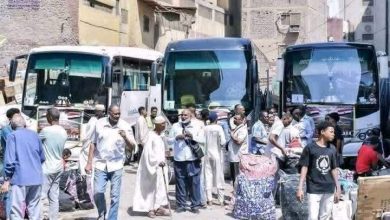
One family that recently reached Tawila recounted a journey filled with fear and hunger. Speaking to Al Jazeera Net, a family member said the trip took more than two days on foot through difficult terrain.
They had to change course several times to avoid RSF deployments. “We hid in the trees whenever vehicles approached. The children cried from hunger and fear, and we survived only by sharing the little water we carried and even some animal fodder,” he said.
The mother described the road as “a passage of death,” with corpses scattered on both sides—some apparently executed—and personal belongings abandoned by people too exhausted or starving to carry them.
“We knew reaching Tawila was not guaranteed, but staying in El Fasher meant certain death,” she said. “Even arriving in Tawila did not mark the end of our ordeal, but the start of another struggle for shelter and safety.”
UN Documentation
In a significant development, the United Nations has documented the killing of at least 125 civilians in the El Fasher area, including summary executions, warning the real toll is likely higher. In a statement yesterday, the UN said El Fasher has been under siege for over 500 days, with recent weeks witnessing near-constant bombardment and deadly strikes on the Abu Shouk displacement camp.
Local sources reported that Tawila has received several survivors in recent days, some of whom later died from brutal torture, while the fate of hundreds remains unknown.
Abubakr Ahmed Imam, spokesperson for the Popular Resistance, said dozens of residents responded to an appeal by former Sovereignty Council member Al-Hadi Idris, who urged El Fasher’s population to flee to safer areas—chiefly Tawila.
“But those who left remain unaccounted for—we don’t know if they are missing or dead,” Imam told Al Jazeera Net. He said the resistance has documented multiple cases of enforced disappearance along the road, alongside videos released by armed militias showing the torture and execution of unarmed civilians.
“The images are painful and degrading to human dignity,” he added. “They reveal a systematic retaliatory pattern targeting civilians on the basis of ethnicity and geography—evidence that what is happening has gone beyond war into crimes of ethnic cleansing.”
Imam stressed that the resistance continues documenting these atrocities in cooperation with independent rights groups, calling for an urgent international investigation into what he described as “the organized targeting of civilians on the road between El Fasher and Tawila.”
Amid mounting violations and rising civilian deaths, people of El Fasher and those along the road to Tawila remain trapped between the fires of war and the silence of the world—while testimonies and horrific footage continue to accumulate in the absence of any effective international action to halt the unfolding catastrophe.
Source: Al Jazeera