Kuwait and the Red Sea Coast: Tourism Investment in a Time of War
Sudan Events – Agencies
Introduction
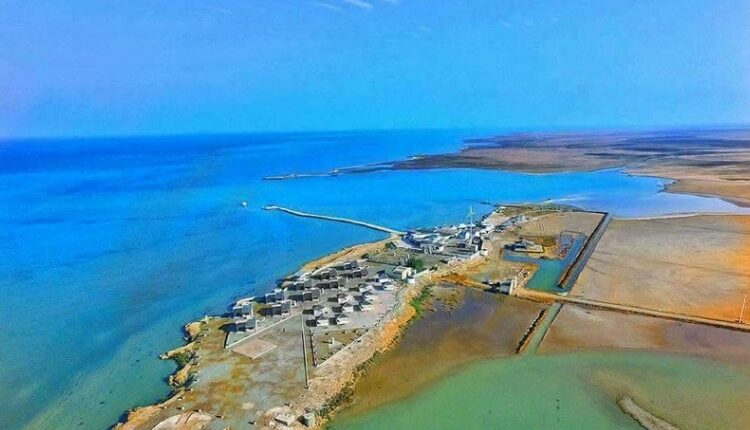
As Sudan endures one of its most complex political and military crises since the outbreak of war between the army and the Rapid Support Forces (RSF) in April 2023, some regional powers continue to seek a strategic foothold on the Red Sea. In this context, Kuwait’s United Real Estate Company (URC) announced the signing of an agreement with the Red Sea State government to develop the Arous tourist resort north of Port Sudan, in an investment valued at around $100 million.
The project—launched at a time when reconstruction efforts in Khartoum and other Sudanese cities remain stalled—raises questions about Kuwait’s motives, its positioning compared to its Gulf neighbors, and the broader implications for Sudan and the region.
Project Details
Location: Arous, 40 km north of Port Sudan
Components: Hotel, residential area, agricultural and energy projects
Financing: 80% URC Kuwait, 20% Red Sea State government
Symbolism: Arous gained notoriety in the 1980s as a diving hub secretly used by Israel’s Mossad between 1979 and 1984
The project also reflects a personal interest from Kuwait’s Emir, Sheikh Mishal Al-Ahmad Al-Jaber Al-Sabah, who owns private property in the area—adding a personal-political dimension to the investment.
Kuwait Between Politics and Investment
Throughout Sudan’s war, Kuwait has adopted a clear stance in support of the army under General Abdel Fattah al-Burhan, rejecting alongside Qatar and Saudi Arabia any parallel government backed by the RSF. This political alignment is echoed in its economic behavior: investing in Port Sudan—the country’s de facto capital—sends a message of political backing for the army and recognition of state institutions.
The project also signals Kuwait’s intent to assert a presence on the Red Sea, a zone of competition involving Saudi Arabia, the UAE, Turkey, Egypt, as well as global players like China and Russia.
Comparison with Saudi Arabia and the UAE
Saudi Arabia: Focused on mega-strategic projects tied to Vision 2030, such as NEOM and new Red Sea logistics corridors.
UAE: Expanded its presence in Sudanese ports and trade routes through companies like DP World, while facing accusations of indirectly funding the RSF.
Kuwait: Less visible than its neighbors, but pursues a quieter strategy centered on tourism and financial investments. Kuwait is also Sudan’s largest bilateral creditor (approx. $15 billion).
This “low-profile” approach allows Kuwait to play a balancing role without being drawn into direct confrontations like those facing the UAE.
Economic Dimension
Beyond politics, Kuwait’s investment in Arous taps into Sudan’s untapped tourism and marine potential.
Red Sea marine tourism represents a promising sector, amid global demand for diving and coastal resorts.
Including agricultural and energy ventures within the resort broadens Kuwait’s investment portfolio in Sudan, beyond telecoms (e.g., Zain).
For Sudan, the project offers foreign currency and jobs, though concerns linger that it may turn into an isolated Gulf enclave with little benefit to local communities.
Strategic Dimension
This investment cannot be divorced from Sudan’s position on the Red Sea:
Port Sudan is the country’s main commercial gateway, making any project there of strategic significance.
Sudan’s location bridges the Gulf and the Horn of Africa—an arena of fierce regional competition.
Kuwait’s entry through tourism could serve as a precursor to broader involvement in ports or energy.
Challenges Facing the Project
Security: Ongoing war threatens the stability of long-term investments.
Weak institutions: Lack of strong state governance risks delays or corruption.
Regional dynamics: Kuwait could face indirect friction with UAE ambitions or Saudi interests.
Conclusion
Kuwait’s investment in Arous resort carries significance well beyond tourism. It represents both an economic step to cement Kuwait’s footprint on the Red Sea and a political signal of support for Sudan’s army and state institutions against the RSF.
Its success, however, depends on Sudan’s ability to overcome its internal turmoil, and Kuwait’s capacity to manage its investment presence without being drawn into fierce regional rivalries. Ultimately, the project may illustrate Kuwait’s mode of engagement: quiet, understated, but deep and anchored in long-term financial interests.