Sudanese Flee Besieged El Fasher After Facing Bombardment, Starvation, and Humiliation
By Altayeb Siddig, Nafisa El-Tahir, and Khalid Abdelaziz
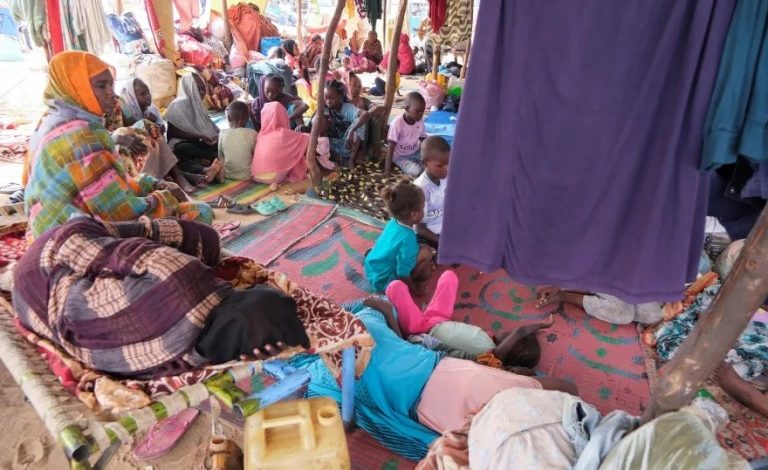
Dabba, Sudan (Reuters) – As the siege by the Rapid Support Forces (RSF) tightened around the Sudanese city of El Fasher, a small group able to afford escape said they had endured relentless bombardment and were forced to negotiate their way past RSF checkpoints to leave a city where many had resorted to eating animal fodder.
A United Nations fact-finding mission concluded last week that the RSF had committed crimes against humanity in El Fasher, the Sudanese army’s last stronghold in the western Darfur region.
“Those who only hear about it can’t imagine what we lived through,” said Dar al-Salam Hamed, one of the escapees.
When she and her family finally decided to leave, she said they were subjected to exhaustive searches by RSF fighters and robbed along the way.
“We truly suffered at the hands of these people,” she told Reuters from a camp in Dabba, an area under army control. “They stole from us, they took my phone, and they searched us in a humiliating way… May God protect us from ever meeting them again.”
The RSF did not respond to requests for comment.
The two-and-a-half-year war between the RSF and the Sudanese army has created what the United Nations calls the world’s worst humanitarian crisis, with famine spreading across Sudan, including El Fasher, the capital of North Darfur state.
The city has become a major battleground in the war, with the RSF seeking to consolidate control over Darfur as the base for a parallel government. That administration was sworn in last month and began appointing ministers on Monday.
According to UN estimates, nearly half a million people have fled El Fasher since fighting erupted there in May 2024, leaving about 270,000 still trapped inside.
Mass Deaths
Ahmed Hag Ali fled the city with his family last week, arriving in Dabba only a few days ago. He was among more than a dozen people who spoke to Reuters after escaping.
“I left on Friday because of the unbearable conditions—the shelling, humiliation, and hunger,” he said. “There is no food, no medicine. People are dying in large numbers. The hospitals are overwhelmed, and there aren’t even enough bandages to stop the bleeding.”
Despite RSF advances near the army’s headquarters last week, Sudan’s army and allied joint forces have maintained control of El Fasher. In recent days, army drone strikes forced RSF fighters to retreat.
The joint forces are drawn largely from non-Arab tribes historically at odds with the Arab tribes that form the RSF’s backbone, fueling ethnically driven attacks. Such violence occurred during the RSF’s takeover of the vast Zamzam displacement camp in April.
One resident, speaking on condition of anonymity, said the RSF recently expanded its trenches and barricades to encircle most of the city along a 31-kilometer line, making it nearly impossible for civilians to leave. Smugglers now must carry food supplies on foot.
As a result, prices have soared: a small container of millet that feeds a family of three to five costs more than $35, while a pound of sugar sells for nearly $20. Animal fodder, which many people have been forced to eat, has become six times more expensive and scarce.
A senior military source said the army launched a major air and ground offensive in neighboring North Kordofan state on Sunday in an effort to break the RSF’s siege of El Fasher and the towns of Dilling and Kadugli further south.
Starvation and Sexual Violence
The UN fact-finding mission determined that the RSF had committed the war crime of deliberately using starvation as a weapon in El Fasher. The report said depriving civilians of food, destroying hospitals, and obstructing humanitarian aid could also amount to crimes against humanity and genocide.
In a statement last week, UN Women said rape and sexual assault were being used as weapons of war in North Darfur.
“Pregnant women are giving birth with untrained midwives, without access to care for complicated deliveries,” the agency warned.
Ali, the escapee, said he and his brother were beaten at an RSF checkpoint when they fled at dawn.
“Leaving is no longer just dangerous—it’s also expensive,” he explained, noting that passage costs as much as five million Sudanese pounds (about $1,600). Few can afford that sum, and RSF fighters have turned escape routes into a lucrative side business.
“That’s why so many remain trapped inside. We left loved ones behind who are still there.”