Battles Impose a Single Path to Resolution
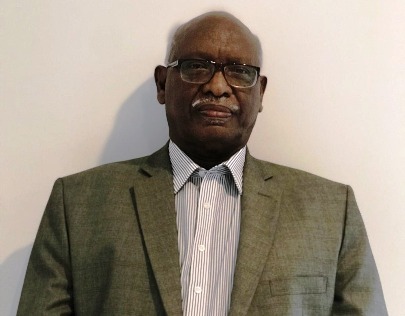
By Zain Al-Abidin Saleh Abdul Rahman
Periods of political and social transformation in a nation’s history are moments when influential forces within society begin charting a new path, one distinct from what came before. Conservative forces may dismiss such change as impossible, pointing to the many challenges and obstacles in the way. But their resistance is rooted in intellectual stagnation and a political culture built on a legacy of repeated failures under successive regimes. Their desire is to preserve the same environment across eras. A rigid mindset, incapable of self-criticism or re-evaluating past experiences, cannot produce a new reality that paves the way toward success.
Today, war has compelled Sudan’s youth to take up arms—an act that is reshaping prevailing modes of thought in Sudanese society and laying the groundwork for new ways of thinking. Ultimately, it is the outcomes of these battles that will dictate solutions and drive change on the political stage.
For advocates of change to succeed, they must think beyond accumulated failures and create openings that allow light to pass into society. Transformation requires new ideas, not recycled ones that repeatedly collapsed under previous regimes. The current war, by necessity, forces Sudanese to revisit outdated approaches and to propose fresh visions. The younger generations, in particular, embody the language of rejection against the old order. Their defiance pushes them to advance new frameworks. Fighting alongside the army and other groups on the same front has broken barriers, gradually moving them from hostility to rational dialogue—dialogue that can overcome obstacles and lay the foundation for building Sudan’s “Second Republic.” Only such dialogue, rooted in mutual understanding, can disable the instruments of violence and replace them with tools aligned with reason and coexistence.
Yet, conservative forces remain a serious obstacle to change. The guardians of outdated doctrines—failed even in their countries of origin—together with their unthinking followers, obstruct democratic transition. Though they raise slogans of democracy and peace, they offer no concrete ideas for realizing them. Their contradictory rhetoric only perpetuates a culture of incitement and stagnation. After the war, Sudan will urgently require a qualitative political shift rooted in dialogue, one that nurtures reconciliation, dismantles violence, and enables everyone to participate in producing a new culture and new ways of thinking. This inclusive process must replace political monopolization and paternalism, which some forces still seek to preserve.
Sudan’s long record of political failure stems from attempts by certain ideological factions—and even some inexperienced new groups—to monopolize the political process. Their overriding goal is power at any cost, with little interest in inclusive governance. Despite repeated historical failures of this approach, they have not learned; even the war has not awakened them. By contrast, it is the younger generations who have awakened. They have borne the brunt of the conflict, losing comrades in battle, yet remain determined to carve out a new path. Across liberated areas, it is these same youth who now oversee services: operating solar-powered generators to provide drinking water, lighting schools, clinics, and places of worship.
The entrenched mindsets and failed political legacies still pose challenges, but the outcomes of military confrontations are steadily diminishing their influence. The war now dictates a single path for Sudan’s secure and stable future: the complete defeat of the militia and its networks. Such a defeat will mark the collapse not only of the militia’s political project but also of the foreign states that fueled it. Every victory for the army and popular resistance is a step closer to stability and reconstruction.
Meanwhile, some cling to the illusion that solutions will come from America, the West, or other external actors—an escapism that spares them from facing the collapse of their fantasies. Others continue to recycle outdated slogans, their tools rusted, their ideas obsolete, rendering them irrelevant to the political scene. Still others imprison themselves in hollow phrases devoid of meaning or vision. Yet daily events continue to impose a new reality—one that aligns with fresh thinking and rational dialogue capable of producing a genuine national consensus.
The younger generations, having carried the heaviest burdens of war, now stand as the backbone of Sudan’s national reconstruction. May God grant them clarity of vision.