European Research Center Outlines Steps to Prevent “Genocide” in El Fasher
Sudan Events – Agencies
A detailed article published by the Polish Institute of International Affairs (PISM) has drawn attention to the plight of the besieged city of El Fasher, warning that allowing rebel forces to advance could pave the way for ethnic cleansing against the population that has so far remained there.
As an advisory body to the European Union, the Warsaw-based think tank outlined specific measures the EU should take to end the crisis. Chief among them, it argued, is curbing the influence of the United Arab Emirates and shutting down the flow of weapons from the UAE, eastern Libya, Somalia’s Puntland region, and South Sudan.
The significance of the article lies in PISM’s reputation as a leading Central European research center, operating at the crossroads of politics and independent analysis. The institute provides analytical support to policymakers and diplomats, fosters public debate, and disseminates specialized knowledge on contemporary international relations. Its work rests on the conviction that decision-making in world affairs must be grounded in accurate and reliable research.
A City Under Siege
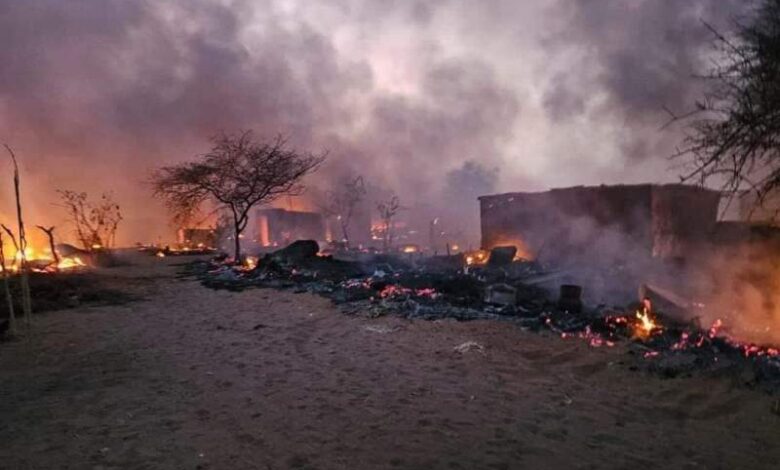
The article opened by noting that after more than 500 days of siege by the Rapid Support Forces (RSF), which have cut off food supplies to El Fasher, the city is now on the verge of collapse. Should the militias seize control, they are likely to carry out mass killings of both the city’s defenders and its civilian population—some 260,000 people, including 120,000 children, remain trapped inside.
El Fasher is the historic capital of Darfur and the last major city in the region outside RSF control. The militias hope capturing it will bring them closer to international recognition, mirroring General Khalifa Haftar’s de facto authority in eastern Libya. The city’s defense is being mounted by Sudan’s Sixth Infantry Division and former Darfuri rebel factions—collectively known as the Joint Forces—who have inflicted heavy losses on the RSF.
Conditions on the Ground
According to the report, the RSF has carried out at least 230 attacks on El Fasher since the siege began, destroying the city’s medical infrastructure. El Fasher is isolated, subjected to constant artillery fire and drone strikes. Advanced anti-aircraft weapons in RSF hands have blocked government resupply efforts. In April, RSF forces attacked the nearby Zamzam refugee camp, displacing 400,000 people.
Food has run out, pushing residents into famine conditions; many now survive on leftover livestock fodder. Women have taken up arms alongside male defenders, fearing mass sexual violence if the RSF breaches the city. Meanwhile, the RSF continues to receive arms, equipment, and mercenaries—reportedly including fighters from Colombia—with the support of the UAE.
Warning Signs of Genocide
The RSF is largely drawn from Arab nomadic tribes straddling the Sudan–Chad border and is driven by an extremist ideology rooted in ethnic supremacy over Darfur’s non-Arab populations. Their stated objective is to alter the region’s demographics and expel African communities.
Since 2023, the RSF has carried out massacres in El Geneina against the Masalit people, killing between 10,000 and 15,000, according to UN figures—an atrocity the U.S. government has already classified as genocide. RSF fighters have openly discussed plans for similar massacres in El Fasher, a multi-ethnic city.
The militia’s leaders routinely document and publish evidence of their crimes, from targeting civilians attempting to flee to blocking access to food and water. Recently, the RSF has built earthworks encircling El Fasher, designed to prevent escape once defenses fall.
What Can Be Done?
The UN Security Council has been regularly briefed on El Fasher. In May 2024, the U.S. ambassador to the UN and the UK’s foreign secretary warned of a potential large-scale massacre. On June 13, the Council adopted its first resolution calling on the RSF to lift the siege. In September 2024, the EU’s High Representative for Foreign Affairs declared that the bloc “will not witness another genocide.” The African Union echoed similar calls in August 2025. None of these statements, however, have altered the situation on the ground.
According to PISM, decisive pressure on the UAE—the only state with direct influence over the RSF, yet also a valued Western partner and investor—could have a critical impact.
The UN General Assembly and the Way Forward
The upcoming UN General Assembly presents an opportunity to forge a broad coalition on Darfur. Such a move could also help secure a humanitarian truce and ensure food deliveries to the city—efforts that have so far failed, as seen in June when an entire World Food Programme convoy was destroyed before reaching El Fasher.
PISM recommends replicating mechanisms used by UNICEF in August to deliver aid to the besieged city of Dilling. It further stresses the need to prepare for a worst-case scenario: should El Fasher’s defenses collapse, the only way to save civilians would be the opening of an internationally protected humanitarian corridor to Tawila, some 60 kilometers away, where hundreds of thousands of displaced people already reside.
In the short term, cutting RSF supply lines—supported by the UAE, eastern Libya, Puntland, and South Sudan—remains essential. A recent proposal in the U.S. Congress to designate the RSF as an international terrorist organization could also strengthen efforts to isolate the group.