The Siege of El Fasher in Sudan Threatens Another Genocide
Sudan Events – Agencies
Why is the city under siege?
El Fasher has been under siege since April 2024 by the Rapid Support Forces (RSF), a key party in Sudan’s civil war. The RSF is seeking to consolidate its authority in western Sudan, particularly in Darfur. El Fasher is the historical capital of Darfur and the last major city in the region outside RSF control. The militias hope that capturing the city will bolster their chances of gaining international recognition for their “government,” akin to General Khalifa Haftar’s de facto administration in eastern Libya.
The RSF also aims to crush the Sudanese Armed Forces’ Sixth Infantry Division, which is entrenched inside the city and backed by the “Joint Coalition,” a force of former Darfuri rebels. These defenders have inflicted heavy losses on the RSF and tied down large numbers of its fighters—paralleling Russia’s costly assaults on Bakhmut in Ukraine—weakening the group significantly.
In early September, Sudanese airstrikes halted RSF advances. At the same time, government forces in North Kordofan, 600 km away, launched an offensive against the RSF to break the siege. But the fighting may last for months, as previous attempts have failed.
What is the situation inside El Fasher?
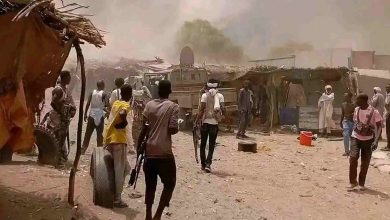
For over 500 days, the RSF has carried out at least 230 attacks on El Fasher, destroying the city’s entire medical infrastructure. The city is cut off from supplies and remains under constant artillery fire and drone strikes. The RSF possesses advanced anti-aircraft systems that hinder Sudanese attempts to air-drop food, while government drones target these weapons in return.
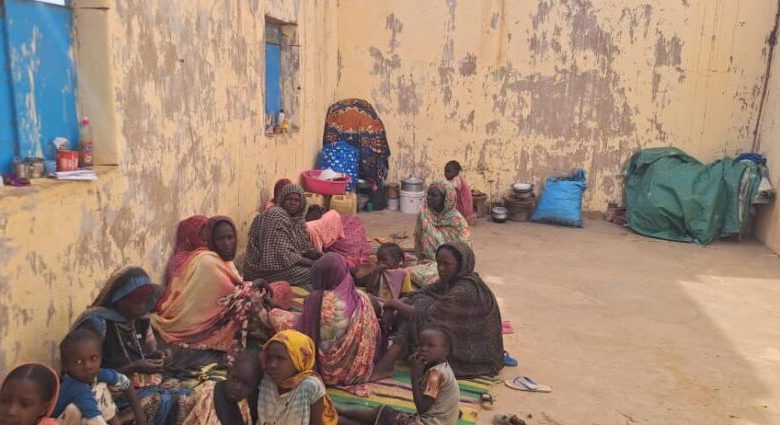
In April 2024, RSF forces stormed and razed the adjacent Zamzam IDP camp, displacing nearly 400,000 people. UNICEF estimates around 260,000 civilians, including 120,000 children, remain trapped inside El Fasher. Food supplies have run out, and hunger is rampant; in recent weeks, residents have been forced to survive on leftover animal feed.
Among the defenders are women who have taken up arms to avoid rape. Yet, they know the Sudanese army lacks the strength and willpower to lift the siege. Meanwhile, the RSF continues to receive weapons and foreign mercenaries—including fighters from Colombia—supplied with the backing of the United Arab Emirates. In recent weeks, the RSF has captured several neighborhoods inside the city and closed in on the Sixth Division’s headquarters.
Why is there a risk of genocide?
The RSF is largely composed of Arab pastoralist tribes along the Sudan–Chad border who espouse an extremist ideology of ethnic supremacy over indigenous African communities. Their goal is demographic engineering: removing non-Arab groups from Darfur.
In 2023, the RSF carried out massacres against the Masalit people in El Geneina, killing between 10,000 and 15,000 civilians, according to the UN—atrocities the U.S. government has labeled genocide. RSF fighters now openly declare their intention to commit mass killings in El Fasher, a multiethnic city with a large Zaghawa population. The Zaghawa are seen as hostile because many government-aligned armed groups hail from this community.
RSF commanders and fighters document and broadcast their crimes with impunity, including the ethnically targeted killing of fleeing civilians or those carrying food. They have repeatedly tried to cut off the city’s main water supply. Recently, they began constructing a ring of earthen barricades around El Fasher to trap civilians and defenders when the city’s defenses collapse—further heightening the threat.
What can be done to prevent genocide?
The UN Security Council has been receiving regular updates on El Fasher through its panel of experts. In May 2024, the U.S. ambassador to the UN and the British foreign secretary both warned of a looming massacre. On June 13, the Security Council adopted its first resolution demanding the RSF lift the siege. In September 2024, the EU’s foreign policy chief declared that Europe “will not stand by in the face of another genocide,” and in August 2025, the African Union called for an end to the blockade. Yet, none of these statements have changed the situation on the ground.
The most consequential step would be to exert decisive pressure on the United Arab Emirates—the only actor with real leverage over the RSF. But the UAE is also a strategic partner and major investor for Western powers. The upcoming UN General Assembly offers an opportunity to forge a broad coalition on this issue. This could also help secure a humanitarian truce to deliver aid to the city, something that has failed so far—most recently in June, when a World Food Programme convoy was destroyed before reaching El Fasher.
UNICEF’s successful August 24 delivery of aid to the RSF-besieged town of Dilling shows that targeted humanitarian corridors are possible. The international community must also prepare for the worst-case scenario: if El Fasher’s defenses collapse, civilians will need an internationally protected humanitarian corridor to Tawila, 60 km away, where neutral forces already shelter hundreds of thousands of displaced people.
In the medium term, RSF supply lines must be disrupted. These stretch through the UAE, eastern Libya, Puntland in Somalia, and South Sudan. This objective would be reinforced by the U.S. Congress adopting a pending proposal to designate the RSF as a Foreign Terrorist Organization.