Actions Speak Louder Than Words – Sudanese Dismiss Hollow Declarations
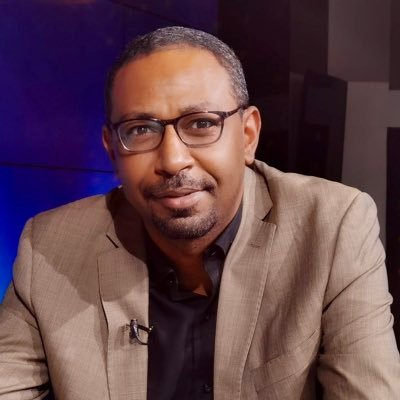
By Amjad Farid Al-Tayeb
Ending the war in Sudan is an urgent necessity that cannot be delayed—first and foremost for the Sudanese people, and by extension for the entire region. Yet such an end cannot be achieved through externally imposed settlements or backroom deals driven by foreign interests.
The Quartet could have paved a reasonable path toward a genuine peace process, but its course has been clouded by political score-settling, preconditions, and collusion with foreign actors—chief among them the United Arab Emirates. Such maneuvers are not only futile, but dangerous: they do not end the war, they deliberately prolong it.
Any serious beginning to a genuine Quartet effort must start with the Quartet itself. If their statement reflects real political will, then they must prove it through action, not words. That begins with halting foreign support that fuels the fires of war. The U.S. Congress has repeatedly and clearly affirmed that the financial and military backing provided by one of the Quartet members—the UAE—to the Rapid Support Forces is the main driver of Sudan’s ongoing war. Without addressing this factor, no statement issued with Emirati involvement can have any credibility.
Lives must come before politics. Sudan’s tragedy cannot be reduced to a game of regional interests or political bargaining. The true starting point for ending the war—or even reaching a ceasefire—lies in El-Fasher: lifting the siege, aiding the besieged, and alleviating their suffering before sinking into the mire of deals and compromises. This humanitarian imperative must not be buried under layers of diplomatic rhetoric or used as a bargaining chip.
The Quartet must apply direct pressure on the UAE, as a member of its own grouping, to compel its proxies in the RSF to lift the siege, open humanitarian corridors, and break the suffocating blockade. There is no room here for diplomatic concealment or double-speak. The international community must also translate its resolutions into concrete action, beginning with Security Council Resolution 1591, by imposing sanctions on the UAE for its unlawful supply of arms. If the Quartet is unwilling to take decisive steps, it should cease pretending to play the role of mediator.
El-Fasher is not a side issue; it is the litmus test. Any serious talk of a ceasefire must begin with ending the siege. The use of starvation as a weapon is nothing but political blackmail. If the Quartet and its members cannot demonstrate their ability here, they forfeit all credibility on any other front. Meanwhile, attempts by some international actors—notably British officials—to normalize or downplay the situation in El-Fasher for narrow political or military calculations amount to complicity in a war crime.
Actions speak louder than words. As the world turns a deaf ear to the truth about Sudan, Sudanese themselves no longer care for hollow declarations. The only language still understood by all is the language of action.
Today, Sudan does not need more statements. It needs more action.