The Quartet’s Statement… Far From Credible!
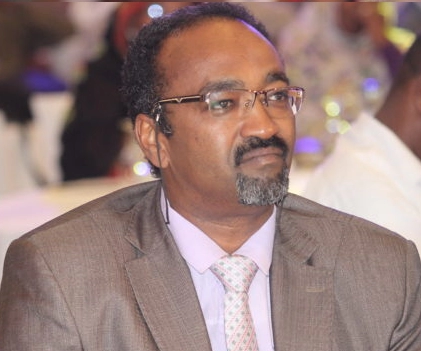
By Dr. Muzammil Abu Al-Qasim
Before delving into the numerous contradictions within the Quartet’s statement, and before unpacking its blatant interference in Sudanese affairs and its flagrant violation of national sovereignty, it is important to note that the statement was not issued following a meeting of the foreign ministers of the four countries (the U.S., Saudi Arabia, Egypt, and the UAE). Rather, it was released after what the statement called “extensive consultations on the Sudanese conflict,” following the Quartet’s failure to convene the high-profile meeting that the U.S. State Department had called for at the end of July.
The conflicting nature of the statement is immediately apparent: each of the four countries ensured that its own concerns and priorities were reflected, without harmonization or coordination to remove obvious discrepancies in their positions. The statement initially affirms that “Sudan’s sovereignty, unity, and territorial integrity are essential for achieving peace and stability.” In simple terms, this clause implicitly rejects the so-called Transitional Charter and government, and implicitly opposes the militia leadership’s unilateral declaration of the so-called “Government of Peace.” Can the UAE alone credibly endorse such a clause, given that it is internationally recognized as the largest and most influential backer of the militias in Sudan?
The statement’s greatest and most dangerous contradiction lies in its first clause, which emphasizes “Sudan’s sovereignty,” while its fourth clause asserts that “Sudan’s people determine the future of governance in their country.” Yet the statement then proceeds to overstep these principles by arrogantly prescribing how Sudan should be governed, by whom, setting a nine-month timeline for the political transition, and specifying who may participate in the process and who should be excluded. If this is not blatant interference and a total violation of Sudanese sovereignty, what is?
The statement acknowledges that “external military support to the warring parties in Sudan fuels the conflict, prolongs it, and undermines regional stability,” and explicitly calls for its cessation as essential to ending the conflict. Will the UAE abide by this clause? Will it halt the supply of weapons and military equipment to the rebels? Evidence implicating the UAE in arming the militias comes not only from the Sudanese government, but from dozens of international and UN sources, including the UN Darfur Experts Panel, the U.S. State Department, multiple U.S. Congress members, and international media outlets such as The New York Times and The Guardian.
Notably, the Humanitarian Research Lab at Yale School of Public Health released a detailed report on January 16, 2025, confirming the UAE’s continued supply of arms to the militias despite prior assurances to the contrary. The report documented advanced UAV drones at Nyala Airport, under militia control, noting that the UAE provided these drones from December 9, 2004, to January 14, 2025. Furthermore, the report highlighted that UAE-based ADASI, part of the EDGE Group, signed an agreement in 2024 with China’s Cobtec to produce Sunflower-200 drones with modification potential—corroborating suspicions of UAE-facilitated delivery of advanced technologies to the militias.
The Quartet—or any of its members—cannot simultaneously be a party fueling Sudan’s war and claim to possess the solution, asserting a desire to end the conflict and restore peace and stability for the Sudanese people. Those who arm the militias with lethal weapons for killing, torture, displacement, and the destruction of Sudanese infrastructure (electricity, fuel depots, and essential services) cannot credibly claim concern for Sudan’s safety. The truth is inescapable, and attempts to obscure responsibility only expose the hypocrisy of the so-called mediators.
The statement, riddled with contradictions reminiscent of a “Halabi-style farce,” leaves no room for acceptance by the Sudanese government, and the overwhelming majority of Sudanese will undoubtedly reject it. They have witnessed firsthand the disastrous legacy of previous Quartet interventions: imported political solutions that produced devastating wars, destruction, and subjugation of their country to foreign embassies and intelligence apparatuses. Far from providing a solution—the Quartet’s statement is yet another hollow gesture.