From Abu Dhabi to Bogotá to Darfur: The Mercenary Files at the Heart of Sudan’s War
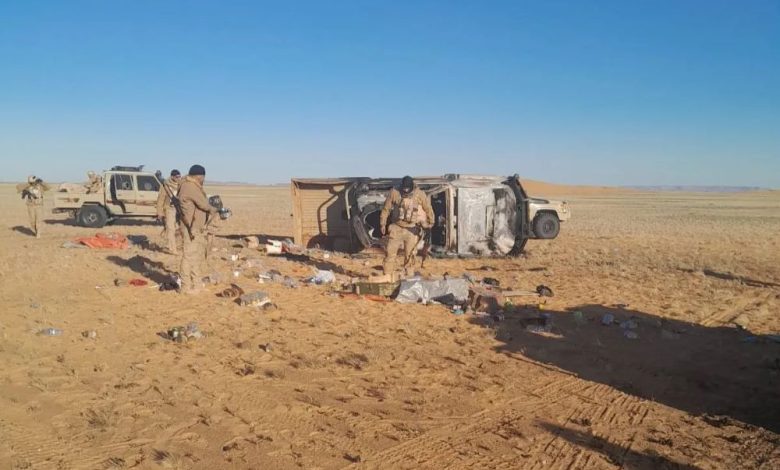
Sudan Events – Agencies
By accusing the UAE of financing atrocities through Colombian fighters, Sudan has reframed its conflict as a transcontinental proxy war—one with repercussions for Gulf rivalries, Red Sea security, and the fragility of the Sahel.
Mercenaries for Hire
On September 5, Sudan lodged a formal complaint with the UN Security Council, accusing the UAE of direct involvement in its war.
The six-page letter, submitted by Sudan’s permanent representative Elharith Idriss Elharith, was circulated by South Korea’s ambassador, who chairs the Council for September, along with 13 annexes of purported evidence.
The envoy presented what he described as “disturbing and well-documented” proof of Abu Dhabi’s role in prolonging the war, calling it “a grave violation of Sudan’s sovereignty” and “a direct threat to regional peace and security.”
The UAE has consistently denied providing any military support to either side of the conflict.
According to Sudan’s submission, between 350 and 380 former Colombian soldiers were recruited through UAE-based private security firms, including Global Security Services—chaired by Emirati businessman Mohammed Hamdan Al-Zaabi—and the International Services Agency, founded by retired Colombian colonel Álvaro Quejano.
The documents claim the fighters were first sent to Somalia, then to Benghazi under the protection of General Khalifa Haftar, before being transported overland through Chad into Darfur.
Sudan further alleges that at least 248 chartered flights from the UAE, between November 2024 and February 2025, ferried men, weapons, and equipment into the country—amounting to more than 15,000 flight hours.
The forces, Sudan says, were grouped under the name “Desert Wolves” and took on direct combat roles, operating drones and artillery, leading assaults on Sudanese army positions, and even training children to fight.
Khartoum claims it recovered Spanish-language documents authorizing the use of white phosphorus, as well as weapons requests, Starlink devices, and maps of army positions.
Alleged Crimes
The UAE-backed mercenaries are accused of war crimes, including the killing of 73 civilians in El Fasher earlier this year and the recruitment of children as young as ten.
Sudan also accuses Emirati aircraft of smuggling gold, gum arabic, and livestock—linking the war to organized looting operations.
Such allegations sharply undercut the image the UAE has long promoted of itself as a stabilizing force in Africa. By casting Abu Dhabi as the “dark engineer” of the war, Khartoum is challenging one of the Gulf’s key power players.
Hisham Madani, a political analyst and founder of the Sudanese Civil Society Movement, noted that Sudan had already attempted to expose the UAE’s role at the International Court of Justice.
Although the ICJ dismissed the case due to Abu Dhabi’s reservations over the genocide clause, Madani argued that Sudan forced the UAE to stand before the “court of international public opinion.”
“Sudan’s latest complaint to the Security Council, backed by evidence on the mercenary pipeline, has further tarnished the Gulf state’s image,” he said.
The UAE’s Response
The Emirati foreign ministry rejected Sudan’s complaint, dismissing it as baseless and “politically motivated.”
In comments to The Africa Report, the ministry stated:
“It is noteworthy that the Port Sudan authorities circulated this letter through their usual channels on social media and disinformation networks for propaganda purposes before its official release at the United Nations—an obvious attempt to manipulate public opinion and bypass official procedures.”
The ministry added that Khartoum’s file was just “one of several fabricated letters” previously debunked with evidence, accusing Sudan of relying on “distortions and doctored videos with no proven connection to the UAE.”
It urged Khartoum to stop “misusing international platforms” such as the Security Council and the ICJ, and instead focus on “ending its role in harming and killing the Sudanese people during this devastating civil war.”
The Colombian Connection
The Colombian link gives Sudan’s case a global dimension.
With one of the world’s largest pools of battle-hardened veterans—shaped by decades of internal conflict—Colombia has long been fertile ground for private security recruiters.
Thousands of former soldiers have signed contracts to work abroad, in the Gulf, Central America, and beyond, often driven by limited economic opportunities at home.
Sudan claims many were lured with promises of lucrative security jobs in the UAE or other Gulf states, only to be redeployed to the frontlines of Darfur.
For Khartoum, this practice highlights not only the exploitation of Colombian veterans but also the hidden infrastructure that enables an African war to draw manpower from Latin America.
In Bogotá, the allegations struck a nerve. Local media investigated the trafficking of veterans and exposed the murky role of recruitment agencies.
Families of the dead and missing demanded answers, with widows and relatives recounting how loved ones left for “security guard” jobs only to vanish into Sudan’s war.
President Gustavo Petro confirmed that at least 40 Colombians had been killed, denouncing the practice and urging veterans not to “sell themselves for money” in foreign wars.
He described the deaths as not only a humanitarian tragedy but also a stain on Colombia’s global reputation.
What Sudan Wants
Khartoum is pressing the Security Council to launch a full investigation into mercenary recruitment, to designate the Rapid Support Forces as a terrorist militia, and to formally condemn the UAE for war crimes.
Sudan insists that without such steps, the RSF will continue to operate with impunity while foreign sponsors exploit the country’s resources under the cover of war.
But diplomats see little chance of binding action, given the UAE’s close ties to Washington, Moscow, Paris, and London in trade, energy, and security cooperation.
In New York, the expectation is for the Council to stall, with major powers reluctant to confront Abu Dhabi over Sudan.
Madani concedes that labeling the RSF a terrorist group is unlikely for the same reason, but argues the strategy remains important:
“Even without enforcement, the effort to expose Abu Dhabi’s interference inflicts reputational damage, which is why we’re seeing constant Emirati attempts to muddy the waters and question Sudan’s evidence.”
Regional Fallout
If Sudan’s accusations prove true, the consequences could reverberate across the region.
In the Gulf, analysts suggest Saudi Arabia might seize the moment to position itself as a responsible mediator through the Jeddah process, while Egypt—anxious over its western border under RSF control—could deepen support for Sudan’s army.
Turkey and Qatar, traditional rivals of the UAE, may see an opening to reassert their influence in the Horn of Africa.
Along the Red Sea, already a theater of Gulf competition, Sudan’s claims sharpen the struggle over ports from Port Sudan to Eritrea.
“The race for control over these strategic points has become more urgent, raising the risk of militarizing one of the world’s most vital shipping lanes.”
The implications could also destabilize the Sahel. Analysts warn that the Colombian mercenary pipeline risks normalizing the use of foreign fighters in African wars, lowering the cost of violence and prolonging conflicts in fragile states like Chad and the Central African Republic.
But the biggest casualty may be the UAE’s carefully cultivated reputation.
For years, Abu Dhabi presented itself as a humanitarian donor and investor in Africa.
Now, allegations of training child soldiers, using banned weapons, and systematically looting resources stand in stark contrast to that image.
Source: The Africa Report