Reflections on the Quartet Statement
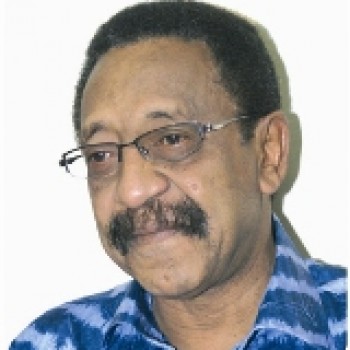
By Al-Wathiq Kameir
On September 12, 2025, the Quartet group—comprising the United States, Saudi Arabia, Egypt, and the United Arab Emirates—issued a joint statement that quickly dominated the political scene in Sudan. The statement, and particularly its proposed “roadmap” to end the war, became the subject of heated debate among political leaders, commentators, and even in casual social gatherings.
Reactions ranged from praise to outright rejection, depending largely on political alignments. I have followed closely the diverse responses to the statement across traditional and digital media, as well as social platforms. While avoiding a detailed analysis of the various opinions—or the contradictions embedded in the statement—I offer here some brief reflections that may help in grasping its core implications.
Broadly speaking, the Quartet statement has deepened political polarization in Sudanese society, sharpening divisions over three critical issues: the position on the Rapid Support Forces (RSF), the role of Islamists, and attitudes toward the regional and international community. The key question is whether the Quartet can realistically advance its roadmap: a three-month humanitarian truce, followed by a permanent ceasefire, and then a nine-month comprehensive transition.
From my reading of reactions, particularly among pro-army forces and Islamists, the timing seems inopportune—even for a temporary truce—given the ongoing siege of El-Fasher. Many believe the statement was deliberately released as the army was gaining ground, especially in Kordofan. As is often the case, a permanent ceasefire depends on a balance of power between the warring parties, compelling them to halt hostilities. U.S. sanctions against Finance Minister Jibril Ibrahim and the “al-Baraa bin Malik Brigade” are seen by some as inflammatory, likely to complicate rather than resolve the conflict.
Meanwhile, most opposition groups have treated the statement as a tool in their political rivalry with Islamist currents, without offering a balanced or substantive position of their own. Yet Sudan has a long history of navigating international involvement in its domestic crises, and this legacy must be used wisely to serve national interests. Over-reliance on external actors, absent a coherent national vision, is a gamble. Indeed, the Quartet, the Troika, and the “Trilateral” have all failed to produce a viable political settlement, a failure that helped pave the way to the April 15, 2023 war.
The Sudanese government’s official response, issued by the Ministry of Foreign Affairs on September 13, welcomed the effort but voiced several reservations: rejection of external interference; denunciation of the UAE’s role, given its alleged military support to the RSF; criticism of U.S. complicity in arms flows through its allies; and refusal to negotiate with the RSF. For Khartoum, the timing remains unsuitable as long as the military balance is unsettled.
Realistically, the Quartet does oppose separatist ambitions linked to the “Ta’sis” alliance, but at the same time, it acknowledges the RSF’s inevitable role in ceasefire talks to safeguard certain interests. These positions are not necessarily contradictory. The proposed ceasefire is meant to facilitate humanitarian aid—consistent with the government’s acceptance of a seven-day truce in El-Fasher, proposed by the UN Secretary-General and endorsed by Sudan’s Sovereign Council on June 27, 2025.
The U.S. sanctions accompanying the Quartet’s statement can be read through the lens of American strategic interests, particularly Sudan’s growing ties with Iran. The message intertwines concerns over Iran with unease about Sudan’s Islamist movement—an amorphous entity often used as a political label.
Perhaps most noteworthy is the penultimate paragraph of the Quartet statement, which signals openness to dialogue: “In this regard, the ministers support the efforts of Saudi Arabia and the United States through the Jeddah process to secure a permanent ceasefire in Sudan, as well as Egypt’s initiative through the Forum of Sudanese Civil and Political Forces, which held its first round in Cairo in July 2024.”
Conclusion
In my view, the Quartet’s roadmap should be approached as an “offer,” not an “imposition.” Ultimately, the choice lies with Sudan’s government and the RSF—whether to accept or reject it. Ironically, just as I completed drafting this commentary, I watched U.S. presidential advisor Musaad Boulos, speaking in Addis Ababa on September 18, confirm that the Quartet does not impose solutions but rather serves as a supportive platform, complementing African Union initiatives. This reinforces the point that the Quartet lacks both the mandate and the means to enforce its roadmap.
Equally important is the Quartet’s own internal fragility. Diverging interests among its members have repeatedly delayed their meetings. The U.S. itself lacks a clear strategy on Sudan, treating the crisis less as a priority than as part of its wider geopolitical rivalry with Russia and China in the Red Sea and the Horn of Africa.
For Sudanese actors, the prudent course is to engage cautiously with such initiatives, while remaining open to efforts that genuinely help end the war—provided they do not become a gateway for external agendas aimed at reshaping internal power balances.
From a pragmatic standpoint, if the government believes the military option remains more effective than negotiations, it should communicate clearly that the Quartet’s offer fails to meet Sudan’s current needs and contradicts its national interests. If, however, military gains prove elusive, the Quartet’s proposal—despite its flaws—may still be worth considering, at least as a temporary measure.