The Independent Fact-Finding Mission on Sudan (2023): A Critical Reading of its Recommendations and Prospects
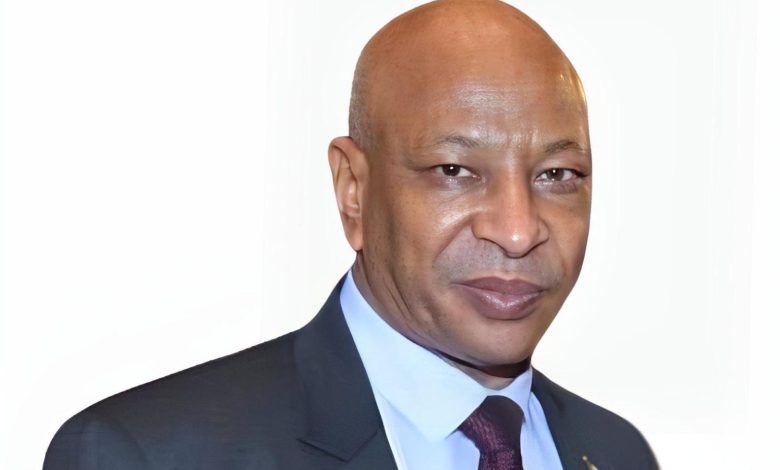
By Ambassador Dr. Moawia El-Bukhari
Introduction
More than two years into the war in Sudan, which erupted in April 2023 following the rebellion of the Rapid Support Forces (RSF), the United Nations Human Rights Council (UNHRC) in Geneva adopted Resolution A/HRC/RES/54/2 on October 12, 2023, establishing an Independent Fact-Finding Mission on Sudan. The mission’s final report (A/HRC/57/23), released in July 2024, presented grave findings of violations that may amount to international crimes and offered a set of recommendations directed at the Sudanese state, the warring parties, and the international community.
While the report is significant in documenting atrocities, it raises pressing questions regarding its consistency with international law, its credibility, its sources, and its reflection of Sudan’s political and humanitarian reality—especially given Khartoum’s early rejection of the mission and refusal to cooperate. Another issue concerns the feasibility of implementing the recommendations on the ground amid the ongoing war, its devastating legacy, and the turbulent international and regional context.
This paper offers a critical reading of the report by analyzing its key recommendations, assessing their feasibility, and comparing them with similar regional experiences, in order to evaluate the effectiveness of UN mechanisms in addressing complex crises often mired in politicization.
I. Key Recommendations of the Report
The mission’s recommendations were structured across several areas, including:
1. An immediate and sustained ceasefire as the primary step to protect civilians and halt violations.
2. An arms embargo on all parties, expanding the UN Security Council’s existing Darfur embargo to cover all of Sudan.
3. Strengthening accountability through extending the jurisdiction of the International Criminal Court (ICC) across Sudan, and recommending the establishment of a new international judicial mechanism.
4. Empowering women and youth in peacebuilding, in line with UNSC Resolution 1325 (2000).
5. Recognizing sexual violence and child recruitment as war crimes and crimes against humanity, and demanding their immediate cessation.
6. Ensuring the protection of civilians and humanitarian workers, with unhindered access to aid.
7. Supporting host communities of refugees and internally displaced persons (IDPs), while commending their humanitarian response.
8. Advancing a comprehensive transitional justice process rooted in national dialogue and community consultations
II. Critical Analysis and Feasibility
1. Lack of Political Will and Structural Complexity of the Conflict
Implementation of key recommendations, particularly the ceasefire, has been undermined by political deadlock and the absence of an enforcement mechanism. The failure of the Jeddah Declaration in May 2024, despite government willingness, reflects the RSF’s continued reliance on military escalation to impose outcomes on the battlefield.
2. Recommendations Without Enforcement Tools
While humanitarian in nature, the report falls short by not proposing mechanisms for monitoring or follow-up, nor an institutional framework for implementation, leaving many recommendations as moral appeals rather than actionable steps.
3. Weak Transitional Justice Approach in the Sudanese Context
The suggestion to establish an independent judicial mechanism alongside ICC jurisdiction neglects sensitivities around national sovereignty, the Sudanese Armed Forces’ legitimacy in countering an armed rebellion, and the ICC’s challenges in comparable cases such as Libya and Syria.
4. Ignoring Regional and International Drivers of the War
The report omits direct mention of states supplying arms and logistical support to the belligerents, despite international media coverage, NGO reports, and even statements by U.S. lawmakers. This gap undermines the inclusivity of accountability and weakens the report’s credibility.
III. Comparisons with Regional Experiences
Libya (2020): The UN Fact-Finding Mission documented serious violations, but political divisions and parallel governments prevented implementation—paralleling Sudan’s current trajectory.
Syria: Despite accurate documentation, Security Council vetoes blocked ICC referral, a likely outcome in Sudan’s case.
Myanmar: Reports exposed crimes against the Rohingya but yielded little political traction, reinforcing the lesson that strong reports without enforcement mechanisms remain ineffective.
IV. Alternative Recommendations and Practical Proposals
1. Integrate the mission’s recommendations into a national and African Union–led regional initiative prioritizing civilian protection, ending the war, and holding perpetrators accountable.
2. Establish a Sudanese-led independent transitional justice commission, engaging with regional or international partners and ensuring victims’ participation.
3. Create a neutral monitoring mechanism on arms flows into Sudan, under joint regional and international supervision, with sanctions on violators.
4. Recognize and strengthen Sudanese civil society’s central role in justice and democratic transition.
5. Expand accountability to include external actors financing or arming the RSF, through sanctions and boycotts.
V. Developments at the Human Rights Council’s 60th Session
At the Council’s 60th session, UN experts reported deliberate targeting of civilians by the “conflicting parties,” alongside widespread violations including war crimes and destruction of infrastructure. A separate expert panel visiting Port Sudan expressed concern over worsening rights conditions.
Sudan’s Attorney General, Intisar Ahmed Abdel-Aal—also chair of the national investigative committee on war crimes—briefed the Council on domestic prosecutions and ongoing cases. She urged condemnation of the UAE’s support for the RSF, citing evidence of arms supplies and mercenary recruitment, and demanded an end to such assistance. She also called for terminating the UN Fact-Finding Mission’s mandate, describing it as politicized and biased, while affirming Sudan’s judiciary is capable of ensuring accountability.
Conclusion
The Fact-Finding Mission’s report aspires to be a landmark document in legal and human rights terms, yet it is not free from political bias, lacks a concrete implementation plan, and overlooks the complex political and regional realities underpinning Sudan’s conflict. Its true value lies in preserving a rights-based historical record and opening the door to broader debate on justice and accountability.
However, meaningful impact depends on intersecting national, regional, and international willpower—particularly in condemning and penalizing those who fueled the war—and on enabling Sudanese people to determine their future in peace and justice, in accordance with their traditions, values, and sovereignty. International support remains essential in providing technical assistance, capacity-building, and training to strengthen Sudan’s human rights framework, despite the grave legacy of atrocities committed by the RSF with external backing.