The Difference Between the Libyan and Sudanese Cases: A Strategic Reading

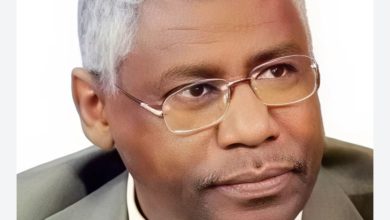
By: Umayya Youssef Hassan Abu Fadaya
Both Libya and Sudan underwent turbulent transformations after the outbreak of what became known as the “Arab Spring.” Yet, developments in each country took diverging paths, even if they shared some superficial similarities. While both experienced power struggles, the proliferation of arms, and the rise of non-state actors, there are fundamental distinctions that set the Libyan case apart from the Sudanese one—particularly in terms of the nature of the warring parties, institutional legacies, regional and international backing, as well as the legitimacy of control and its perception by local communities.
1. Institutional Legacy After Regime Collapse
In Libya, the fall of Muammar Gaddafi in 2011 left behind a deeply fragmented landscape. Despite its authoritarianism, the regime never built a unified national army. Instead, it relied on security units and loyalist brigades, often commanded by Gaddafi’s sons. When the state collapsed, no “national army” was present to fill the vacuum or maintain cohesion. This allowed dozens of militias to emerge across towns and regions, each with its own agenda and alliances.
Sudan, by contrast, retained a longstanding national army with roots tracing back to the British colonial period. Despite being affected by repeated coups, it remained the central institution of the Sudanese state. This is what makes Sudan unique: its current conflict pits a professional army led by General Abdel Fattah al-Burhan against a paramilitary force—the Rapid Support Forces (RSF)—commanded by Mohamed Hamdan Dagalo, widely known as Hemedti.
2. Military Leaders: Discipline vs. Rebellion
Another key difference lies in the profiles of military leaders. In Libya, Field Marshal Khalifa Haftar emerged as a career officer with a classical military background. A graduate of Libya’s military academy, he fought in regional wars, including the Libyan-Chadian conflict. Haftar embodies the traditional model of a military commander, seeking to consolidate militias under the so-called Libyan National Army (LNA) in the east.
Hemedti, however, lacks formal military training. He rose through tribal militias, his name tied to atrocities in Darfur in the early 2000s as a Janjaweed commander. He later transformed into the leader of the RSF, which was nominally integrated into Sudan’s security apparatus but, in practice, operated as an independent force loyal to him personally.
3. Armament and External Support
Haftar’s forces, though more cohesive and structured, initially suffered from shortages of equipment. Over time, however, they secured substantial support from regional powers such as Egypt, the UAE, and Russia, enabling them to dominate eastern Libya, including its oil crescent.
The RSF, by contrast, was born heavily armed, financed by revenues from gold mines under its control in Darfur and South Kordofan. It forged complex ties with various international and regional actors (excluding Egypt and Eritrea), while its participation in the Saudi-led coalition in Yemen bolstered its funding, networks, and armament.
Unlike Libya, this support did not aim to strengthen state institutions or enforce stability. Instead, it entrenched the RSF’s autonomy from the state, creating a fragile and destabilizing reality.
4. Social Legitimacy and Territorial Control
In Libya, Haftar’s forces enjoy a degree of popular acceptance in the east, particularly after restoring relative stability in cities like Benghazi and Derna, despite international criticism over human rights abuses.
Sudan presents a starkly different picture. While the RSF controls vast swaths of Darfur—estimated at around 80% of the region—its rule lacks social or political legitimacy. It is widely rejected, even within Darfur itself, due to repeated violations against civilians, including killings, looting, displacement, and sexual violence.
This represents a decisive difference: no political or military project can endure without social legitimacy. Even if Hemedti consolidates military control over parts of Sudan, such dominance will remain fragile and contested, making it nearly impossible for him to be accepted as a legitimate national leader.
5. Prospects for Stability and Resolution
Despite Libya’s complexity, the relative cohesion of a political-military axis in the east has provided a measure of stability. Haftar positions himself as a key stakeholder in any national settlement, ensuring his place within the political equation.
Sudan’s trajectory is different. The RSF lacks a coherent political vision or a state-building agenda. It seeks to impose control through force, gold wealth, and cross-border networks. Yet, with mounting public hostility—especially after atrocities in Khartoum, Gezira, and Darfur—its chances of governing or gaining national legitimacy are virtually nil.
Conclusion: Strategic Outlook
The essential difference between the two cases lies not only in leaders or organizations, but in institutional architecture, social legitimacy, and the capacity to build a state. Libya, despite its chaos, still hosts political and military elites attempting—albeit partially—to frame a state structure. Sudan, however, faces the graver threat of complete disintegration due to the rise of unrestrained militias with no national project.
For regional and international actors, the lesson is clear: backing militias, under any pretext, cannot produce stability. It only entrenches long-term chaos with spillover effects across the region. A recalibration is needed—one that prioritizes legitimacy, state-building, and governance rooted in citizenship and the rule of law.