Sudan… A Historic Address—If Only They Would Listen!
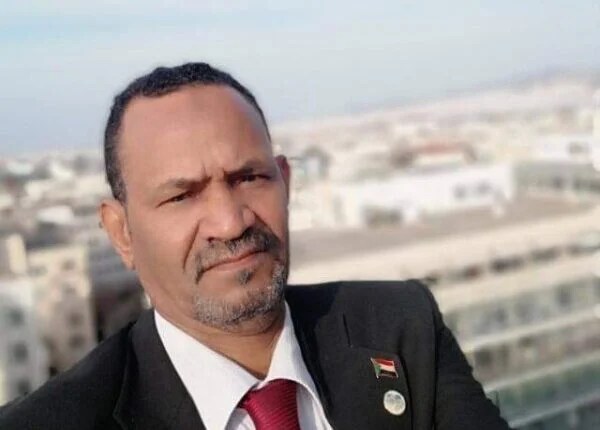
By Abdelmalik Al-Naeem
Sudan’s participation in the 80th session of the United Nations General Assembly in New York, led by Prime Minister Dr. Kamal Idris, marks a turning point in how the international community and the UN Security Council engage with Sudan and its crises—or at least it should, if the world truly abides by its own laws and resolutions on human rights, war crimes, genocide, and the preservation of international peace and security. These are issues that have prompted the creation of dedicated mechanisms within the United Nations, the Security Council, and even the African Union.
Sudan’s presence at this session also delivers a strong rebuttal to the joint U.S.-UAE “Quartet Statement,” which rejected recognition of General al-Burhan’s leadership and Dr. Idris’s government—at a time when the wider international community, across its institutions, has done precisely the opposite.
Dr. Idris’s historic address before the General Assembly—alongside his meetings with Secretary-General António Guterres and several heads of state and government—brought Sudan’s war and the conduct of certain states, as well as the UN and its Security Council, directly into the spotlight. His speech laid bare the role of the UAE, the Quartet, and regional actors that enabled mercenaries to enter Sudan through their airports and ports.
Delivered before more than 180 world leaders, the Prime Minister’s speech was forceful, direct, and historic. It reaffirmed Sudan’s position—both government and people—on the war ravaging the country, while naming the violations and crimes perpetrated by militias with documented regional and international backing. In doing so, Dr. Idris placed the international community squarely before a test of moral responsibility, adherence to international law, and respect for the rule of law.
Perhaps the most telling line of his address was this: “Sudan will not accept any dictates that undermine its sovereignty, national security, or ownership of the peace process.”
This statement underscored Sudan’s rejection of foreign interference, while signaling its determination to pursue a wholly Sudanese dialogue among political, social, and civic forces to craft a unified vision against external threats. It also conveyed Sudan’s unwillingness to entertain foreign initiatives that ignore the Sudanese people’s right to decide their own future.
Dr. Idris further called on the United Nations to enforce its own roadmap on Sudan—one that includes critical provisions: the immediate lifting of the siege on El Fasher, the withdrawal of militias and mercenaries from all occupied territories, and unhindered humanitarian access to war-affected populations in Darfur and parts of Kordofan.
The speech did not neglect domestic priorities either. It highlighted the “Government of Hope” program, focused on meeting citizens’ basic needs, revitalizing essential services, fostering rural development, advancing balanced growth, ensuring transitional justice, and preparing for elections to entrench democracy beyond the transitional period. All of this, Dr. Idris stressed, is being pursued with the united support of the Sudanese people for their army and government until the rebellion is defeated.
The address represents a direct challenge to those questioning the legitimacy of Sudan’s leadership and to regional and international institutions that toyed with the so-called “Founding Government”—a construct now firmly rejected. It was also a message to the African Union: lift Sudan’s suspension immediately. Continued intransigence serves no purpose other than to damage the AU’s credibility, especially given the open support some African states are providing to the insurgency—support that threatens the very peace and security the AU claims to safeguard.
So, with this historic address, has the international community, the African Union, and the Arab League finally learned the right lessons from Sudan’s war? Or does the balance of power still await a “clarifying memorandum”?