Linking Jeddah and Port Sudan: A Gateway to Mutual Benefits
Sudan Events – Rehab Abdullah
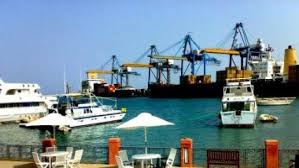
Experts say the Saudi Ports Authority’s announcement of a new direct shipping line connecting Jeddah Islamic Port with Port Sudan—featuring a capacity of 1,118 TEUs—signals a shift in the regional maritime transport map. In Sudan, the move is seen as a practical alternative to Dubai’s Jebel Ali Port, particularly amid recent diplomatic tensions that have disrupted trade flows between the UAE and Sudan. The decision also aligns with Riyadh’s broader strategy to boost national exports and expand its logistics partnerships across the Red Sea.
An Economic Lifeline
Economist Dr. Haitham Fathi stressed that linking Jeddah Islamic Port with Port Sudan directly supports Saudi exports and positions the Sudanese port as an alternative to Jebel Ali. He explained that the corridor offers Sudan a much-needed economic outlet after trade with the UAE came to a halt. The move strengthens Port Sudan’s role as a pivotal supply hub in the Red Sea and opens new horizons for Sudanese-Saudi trade amid regional volatility.
Fathi noted that the line allows containers from China and Asia to reach Port Sudan via Jeddah, reducing shipping costs and transit times. This strengthens Port Sudan’s position as a commercial gateway to Africa, facilitates smoother cargo flows, and enhances Saudi Arabia’s export capabilities. It also raises Jeddah Port’s competitiveness as a global logistics hub linking Europe, Asia, and Africa—especially given its annual capacity of 130 million tons, 62 berths, and integrated facilities. Sources added that the new line will significantly cut costs by routing cargo directly to Port Sudan, which is geographically closer to Saudi Arabia.
Economic Gains
For Sudan, the Saudi decision represents a much-needed economic boost, particularly after the UAE suspended maritime trade with Port Sudan in response to worsening diplomatic relations. The new shipping route is expected to offset part of the lost trade, offering Sudan alternative access points for imports and exports at a time of severe economic crisis. Observers view this cooperation as a practical step toward regional integration, helping Sudan ease the impact of trade isolation triggered by recent political developments.
Lower Costs, Faster Delivery
Economist Abu Obeida Ahmed Saeed highlighted that the direct route will cut transport costs by an estimated 20–30% compared to traditional paths and reduce delivery times by 4–5 days on average. This gives Sudan a secure and stable outlet to global markets while consolidating Saudi Arabia’s role as a fast-growing regional logistics hub.
Saeed described the Jeddah–Port Sudan line as a sustainable alternative for Sudan, ensuring uninterrupted cargo and export flows without the complications of intermediate ports. The corridor is particularly significant for food, pharmaceutical, and agricultural trade, while also opening opportunities for transshipment to West Africa. This strengthens Saudi-Sudanese trade ties and enhances the strategic position of both countries’ ports.
He further noted that Jeddah Islamic Port holds natural advantages in the region thanks to its location on the Red Sea near the Suez Canal and African markets, as well as its massive handling capacity of 130 million tons annually across 62 berths. These strengths make it a strong contender to expand its share of global trade and emerge as a gateway to Africa, Asia, and Europe.
For decades, Jebel Ali dominated as the regional hub for re-export. However, experts now see the Jeddah–Port Sudan corridor as a viable and cost-effective alternative—reshaping competition and gradually redrawing regional trade routes.