Why Does Sudan Need a Presidential System?
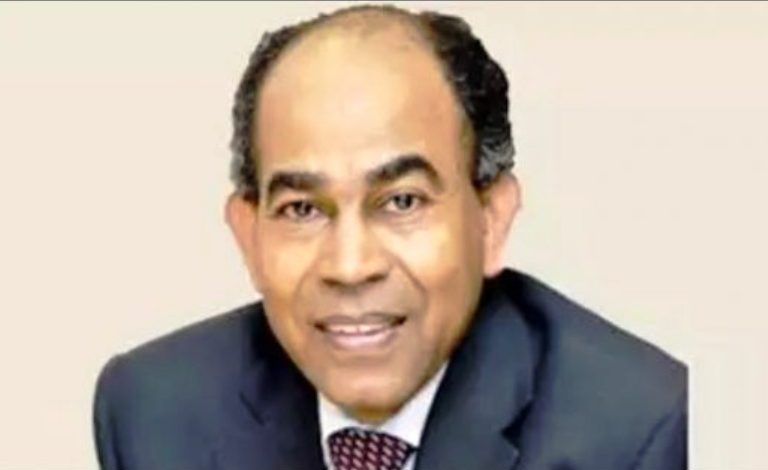
Othman Mirghani
For decades, Sudan has suffered from a chronic crisis of governance. Problems have accumulated due to instability and a cycle of short-lived democratic governments, toppled either by military coups or swept away by popular uprisings. Citizens remain in search of a stable political system—one capable of uniting the country and offering them a genuine opportunity to practice democracy. Every parliamentary experiment in Sudan has been short-lived, collapsing under the weight of fragile coalitions, partisan fragmentation, and weak institutions. This leaves us with a clear reality: the Westminster parliamentary model has failed in Sudan, and it is time to reconsider and search for a system more suited to the country’s conditions.
In my view, what Sudan needs is a presidential system—one that ensures strong executive leadership, clearer accountability, and greater resilience in times of crisis. This could provide a pathway toward a stable and enduring democracy. After all, democracy is not a one-size-fits-all garment. The Westminster system thrives in Britain because of its entrenched traditions, disciplined parties, and robust institutions. Sudan lacks these prerequisites, and insisting on replicating Westminster here is akin to building on sand.
It is true that this model has been adopted elsewhere—in Canada, India, and Australia—with varying degrees of success. But it has also failed in many countries such as Ghana, Zambia, and pre-1958 Iraq, where it succumbed to political fragmentation, instability, and weak party structures.
Sudan’s political history demonstrates the unsuitability of a parliamentary system. After independence in 1956, the country adopted Westminster, but the political environment was fragile and parties were weak. Democracy was never given the chance to grow roots. Instead of stable governance, Sudan witnessed recurrent government collapses. Within just two years of independence, a military coup brought the first democratic experiment to an end.
The same tragedy repeated itself. In 1964 and again in 1985, popular uprisings toppled military regimes and restored parliamentary rule. But in each case, partisan rivalries soon led to another collapse, followed by yet another coup.
Even the December 2018 revolution that ousted Omar al-Bashir has not yet reached its conclusion. The transitional period quickly stumbled under the weight of chronic political infighting and limitless rivalries, plunging the country into its current devastating war.
Experience shows that a parliamentary system requires strong parties capable of sustaining democracy and forming stable governments. In Sudan, however, most parties have remained trapped in personal loyalties, sectarian ties, or tribal divisions rather than substantive political programs. The result has been repeated cycles of instability and unrest.
Why is the presidential system better suited for Sudan?
A presidential system provides clear and stable executive leadership. A directly elected president ensures continuity of governance even when parliament is divided. Citizens know exactly who holds power and who is responsible for decisions. Unlike fragile coalition governments that collapse every few months, a president serves a fixed term, allowing for the pursuit of long-term national plans.
In Sudan’s case, the separation of powers would be an asset rather than a weakness. Even if parliament becomes gridlocked, the executive branch can continue functioning. For a country grappling with war, humanitarian crises, poverty, and development challenges, the uninterrupted operation of the state is a matter of survival.
Moreover, a presidential system offers unifying symbolism. A president elected by the entire nation—not just a fragile parliamentary majority—carries a broader national mandate. In a vast and diverse country like Sudan, such a popular mandate could serve as a cornerstone for forging a unified national identity.
Sudan is not alone in facing this dilemma. Many nations have asked themselves the same question: which system of governance suits us best? Those that adopted models tailored to their realities achieved stability, while those that copied ill-suited frameworks descended into chaos.
Of course, the presidential system has its pitfalls. Sudan’s history includes painful experiences of authoritarianism and military dictatorship. Any presidential system without checks and balances risks reproducing the same pattern of despotism.
But the solution is not to reject it outright. Rather, Sudan should design its presidential model with caution: impose strict term limits, establish an independent judiciary capable of curbing excesses, and empower parliament with strong oversight powers—including impeachment mechanisms for extreme cases.
Sudan deserves a democracy suited to its own realities and a stable system of governance that can shield it from repeated failure and endless coups. The presidential system is not a cure-all, but it presents a genuine chance to break the cycle of collapse—provided it is safeguarded by robust accountability mechanisms and constitutional guarantees.