The Quad Must Stop Outsiders from Prolonging War in Sudan
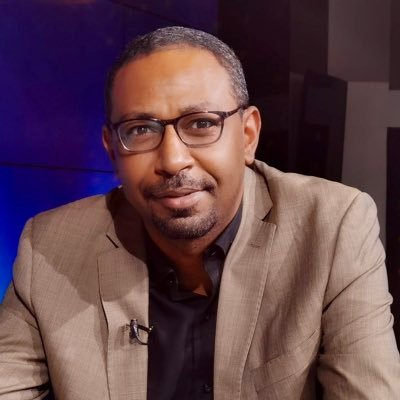
By Amgad Fareid Eltayeb
In a striking convergence of diplomatic actions on September 12, 2025, the Quad group composed of Egypt, Saudi Arabia, the United Arab Emirates, and the United States issued a joint statement on restoring peace and security in Sudan. On the very same day, accusing them of connections with Iran, the U.S. government announced sanctions against Sudan’s Finance Minister Gibril Ibrahim and the Al-Baraa Bin Malik Brigade, an Islamist militia fighting alongside the Sudanese army.
The fact that the two actions happened on the same day appears to be the result of the UAE’s support for its proxy in Sudan’s war, the paramilitary Rapid Support Forces (RSF), which is fighting against the governmental Sudanese Armed Forces (SAF). These moves raise serious questions about the impartiality of the Quad’s efforts.
The events of September 12 are particularly perplexing given that, for the first time since the war erupted in 2023, U.S. sanctions have targeted one side of the conflict without measures against the other. The absence of sanctions against military groups and militias fighting alongside the RSF, which claimed public responsibility for recent drone attacks against Khartoum, highlights a significant imbalance.
Previous U.S. statements, which designated the RSF’s actions as genocidal, were careful to include language clarifying that this should not be interpreted as support for the SAF. The skewing of U.S. and Quad positions, likely under Emirati pressure, may risk derailing the U.S./Sudan bilateral normalization track inaugurated when U.S. Africa adviser Massad Boulos met with Sudan’s Sovereign Council chair, Gen. Abdel Fattah al-Burhan, in Switzerland on August 11, 2025.
The Quad statement itself, while underscoring a shared commitment to ending Sudan’s conflict, included controversial polarizing language accusing “violent extremist groups part of or evidently linked to the Muslim brotherhood” of fueling violence and instability across the region. Conspicuously absent from the statement was any mention of the RSF’s coup attempt on April 13-15, 2023 that initially sparked the war, nor it did denounce the UAE’s well-documented support of the RSF, which the U.S. Congress has repeatedly identified as a decisive factor prolonging the conflict.
This one-sided narrative was the result of UAE pressure, particularly given that the statement’s release was delayed for weeks due to disagreements over its wording. The initial high-level meeting of the Quad on Sudan was postponed in late July 2025, reportedly due to U.S., Saudi, and Egyptian objections to certain phrasing and the UAE’s insistence on specific political language, further highlighting the internal struggles and external influences at play. Later in the UN General Assembly’s high-level week (September 23–29, 2025), the Quad failed to issue a follow-up statement or agree on next steps on Sudan despite multiple attempts. The deadlock stemmed from the UAE’s push to insert political conditions and its refusal to endorse any clear condemnation of the RSF’s siege of El Fasher or the militia’s strike on a mosque during dawn prayers. That attack, on September 19, killed around 75 civilians—just days after the Quad’s initial statement.
However, on a positive note and for the first time since the war erupted, the Quad’s statement unequivocally acknowledged the role of foreign intervention in fueling the conflict: “external military support to the conflict parties in Sudan serves to intensify and prolong the conflict and contribute to regional instability. Accordingly, an end to external military support is essential to ending the conflict.” This phrasing clearly points to the Emirati role in fueling the war. Yet, despite this recognition, the statement notably failed to include a concrete commitment from its signatories to cease such support, rendering the acknowledgment hollow.
Ending Sudan’s war is an urgent imperative for the Sudanese people and for the whole region. But it will not come through dictated settlements imposed by foreign powers. The Quad could have offered a reasonable roadmap toward a genuine peace process. Instead, it has been derailed by score-settling, political preconditions, and complicity with foreign enablers—chiefly the UAE. Such maneuvers are intolerable because they cannot resolve the conflict or deliver peace; instead they are effectively prolonging it.
The signatories should begin with themselves. They must first honor their own stated commitments by ending the foreign support that sustains the war. The U.S. Congress has repeatedly and explicitly identified UAE material and financial support to the RSF as the decisive factor keeping Sudan’s war alive. Any credible effort must start here.
Ending the crisis of Sudan’s war is not a matter of political gamesmanship and must begin by alleviating the suffering in El Fasher, where the major hospital has been bombed 30 times, before diving into the political mud. This humanitarian necessity cannot and should not be buried by ideological struggles. The humanitarian situation in El Fasher is catastrophic, with families trapped by the siege reportedly resorting to eating animal fodder and food waste for survival. The forced starvation of a civilian population is a war crime under international law.
Complicity often takes the form of a deliberate project of “blood laundering”—an attempt to scrub the blood of victims from the hands of the perpetrators to absolve the latter. Reports show that the UK government has, at times, sought to suppress criticism of the UAE’s role in supporting the RSF and sustaining the ongoing war.
Pressure from Quad must be applied to the UAE as a Quad member to order its RSF proxies to end the siege, permit humanitarian relief and break this blockade. The international community must walk the talk of UNSC Resolution 1591 by sanctioning the UAE for its illegal arms supplies to the RSF.
El Fasher is not a side issue; it is the test case. Any serious talk of ceasefire must begin with breaking the siege and ending the weaponization of starvation. If the Quad and its members cannot behave responsibly here, they have no credibility elsewhere. Those within the international community attempting to normalize the situation in El Fasher or bury it within cynical political and military calculations—particularly representatives of the UK government—are complicit in a war crime.
Deeds are louder than statements. As the world grows deaf to the reality of the war in Sudan, the Sudanese are also growing numb to the statements of international diplomats. Action is the only language that remains universally clear. Sudan needs less talk and more action.