When America Falls
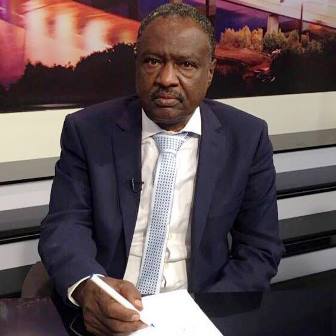
By Rashid Abdel Rahim
When the United States wanted to deliver aid to rebel-held areas in South Sudan, it imposed the “Lifeline Sudan” project on the government of Sadiq al-Mahdi at the time.
Washington used international organizations to implement it, tasking the World Food Programme with transporting supplies.
Back then, a WFP plane was caught after mistakenly landing in areas controlled by John Garang’s rivals. Onboard were not relief materials but soldiers and weapons for the rebellion. The plane was piloted by an American, assisted by a Kenyan.
Today, the United States has no desire to deliver aid or rescue the people of El-Fasher. Instead, it procrastinates and maneuvers under the pretext of the “Quad.”
No reasonable person can believe that Washington is incapable of delivering assistance to a city besieged for nearly a year. If an American aircraft were to fly aid into El-Fasher, the rebel militias would not dare attack it. At the very least, they would hesitate, fearing some American shift—though everyone knows that renaming the Pentagon the “Department of War” was just another theatrical stunt in the second term of its eccentric president, Donald Trump.
America is now desperate to rehabilitate its image, tarnished by its stance toward the people of El-Fasher. It seeks an international voice to echo in global forums, dressing up its president’s speeches with false claims about protecting the right to life and promoting peace.
By contrast, the Sudanese army is the one delivering aid and support, exposing the hollow rhetoric of the superpower and laying bare the role it plays in enabling the killing of nations. Our forces have embraced Sudanese society in a unified stance—without exploiting the war to strip citizens of their civil or human rights, without launching political trials, silencing peaceful expression, or halting civic life. If the U.S. were sincere, this alone would be reason enough to stand with and strengthen Sudan’s position.
Those who kill without trial, dispossess without law, and commit rape are the militias—militias that enjoy America’s direct and indirect protection. All the violations that have taken place, and continue to take place in Sudan, could never have occurred on this scale without the tacit approval of the self-proclaimed guardian of human rights.
Washington’s true aim is to isolate Sudan and block Islamists from governance, a policy rooted in its long-standing prejudice against the country. Yet the U.S. has never substantiated its claims that Sudanese Islamists engaged in terrorism.
The United States is no longer the power capable of imposing choices on nations, because what it offers is not grounded in universal values or rights. Nor does it have the strength to dictate outcomes in Sudan.
If the foremost global power cannot act, it means the international community itself is paralyzed. Just as we succeeded in airdropping aid to our people in El-Fasher, we will succeed in everything we set out to achieve—whether foreign backers of the rebellion like it or not.
And if Sudan has already expelled the rebellion from the capital, the central region, and the north, it is equally capable of driving it out of Kordofan and Darfur.
Sudan is capable of upholding justice, security, and development—just as it has defeated a rebellion backed by wealthy nations and great powers, large in size and name, yet poor in values, like the United States.