September Floods: The Final Scene
Sudan Events – Agencies
The first half of the 2025 rainy season — from June to mid-August — unfolded at a slow pace. Rainfall levels in the Blue Nile Basin were below average, though they began to rise in the Atbara River Basin at the start of August. This sluggish start distracted many observers from anticipating the dramatic turns the second half of the season would bring, despite expert forecasts warning of increased rainfall from late August through the end of September.
The sudden floods that struck Sudan’s Nile belt states in mid-September — driven by a rapid rise in Blue Nile water levels — were no surprise to environmental and climate experts. On May 20, the IGAD Climate Prediction and Applications Centre (ICPAC) issued a report forecasting a delay in the onset of the rainy season in western Ethiopia.
The September floods reflected the interplay between two major factors: climate change and the Grand Ethiopian Renaissance Dam (GERD). The interconnectedness of global environmental and climatic systems plays a key role in shaping rainfall patterns in Sudan. The Indian Ocean serves as the main driver of Sudan’s rainy season, bringing moist winds to the Ethiopian highlands. Rainfall there largely depends on ocean temperatures, which generate the so-called Indian Monsoon Low — the warmer the ocean, the greater the evaporation of moisture-laden air that travels northwestward, cools over the highlands, and falls as rain.
This year, however, shifting climate patterns delayed the usual warming of the Indian Ocean, which typically occurs in June. Consequently, the rainy season in northern Ethiopia — particularly the Tekeze (Atbara) River Basin — began late, resulting in a strong surge of river flow by late season.
The Blue Nile Basin — the main source of water feeding the GERD — experienced intense rainfall through August and mid-September, which then tapered off. This sequence can be described as part of a natural climatic fluctuation.
Yet the GERD introduced a new variable to the river’s dynamics: nature no longer acts alone in regulating the flow of water into Sudan.
Filling the GERD reservoir requires massive quantities of water — up to 74 billion cubic meters — while the Blue Nile’s annual flow averages only about 48.3 billion cubic meters, 80% of which occurs during the rainy season (June–September). Thus, Ethiopia’s only window to fill the dam is during those months. The dam’s waters are non-consumptive, intended for hydropower generation rather than irrigation — meaning the stored water eventually returns downstream.
However, this year’s floods cannot be viewed apart from 2024, when Ethiopia nearly completed filling the GERD reservoir, taking advantage of high rainfall during the 2020–2024 period. Rather than releasing part of last year’s stored water to make room for new inflows, Ethiopia retained large quantities ahead of the 2025 rains, fearing a weak monsoon after below-average rainfall in June and July. This was likely an effort to safeguard its annual quota for filling, even as Sudan and Egypt — with their respective shares of 18.5 and 55.5 billion cubic meters under the 1959 Nile Waters Agreement — maintained their claims.
As a result, the GERD reservoir reached full capacity before the current rainy season ended. Any additional inflow into the Blue Nile Basin was therefore discharged directly downstream through the dam’s spillways into Sudan. By mid-September — days after Ethiopia’s grand inauguration of the GERD on September 9 — residents of Blue Nile State began noticing rising water levels that quickly overflowed riverbanks, inundating towns such as Damazin and Roseries. Within days, social media filled with images and calls for help. A week later, on September 22, Sudan’s Ministry of Irrigation and Water Resources issued its first public warning on Facebook.
Water levels continued to rise until September 29, when the ministry reported a gradual decline at Roseries Dam. Rain-fed inflows had already surpassed flood thresholds at most monitoring stations along the Blue Nile.
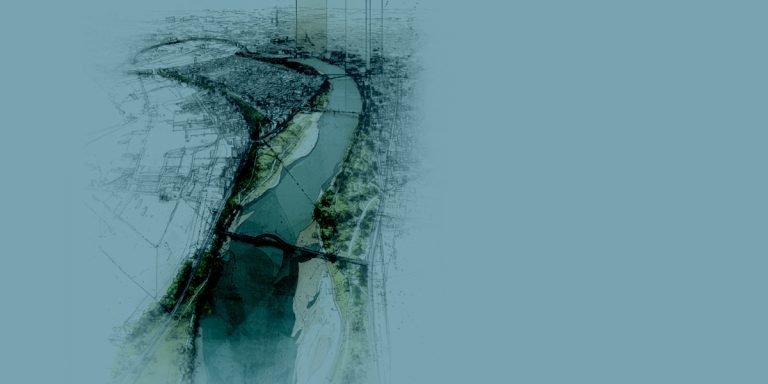
A curious phenomenon unfolded farther north in Khartoum and Omdurman — located on the White Nile — where water levels also surged, despite the GERD’s influence being on the Blue Nile. Two interlinked factors explain this: heavy rainfall over the Ethiopian highlands raised levels in the Sobat River, a major tributary of the White Nile that joins it near Malakal in South Sudan. When this coincided with the Blue Nile’s massive inflow, their confluence at the Khartoum junction became turbulent. The Blue Nile’s powerful current created a “water wall” that effectively trapped the White Nile between the junction and Jebel Aulia, transforming it into a shallow, widening lake that overflowed its banks, submerging southern Khartoum and Omdurman neighborhoods.
Topography plays a critical role in flood patterns. Satellite imagery showed the White Nile widening, while the Blue Nile’s narrow, deep course — despite carrying four times as much water — allowed for faster, more contained flow. In recent weeks, the Blue Nile carried an estimated 750 million cubic meters of water daily, yet impacts varied: parts of Blue Nile State, East Nile in Khartoum, and Wad Ramli north of Bahri were inundated, while Al-Jazira State remained largely unaffected — a difference rooted in terrain and geology.
Flood intensity cannot be reduced to the GERD alone, nor politicized without distorting scientific understanding. Data from Sudan’s Ministry of Irrigation show that this year’s Nile levels did not surpass those of 2020 — the year of record floods, predating the GERD’s filling. The 2022 season also saw devastating floods. Thus, the 2025 floods were far from unprecedented. Some non-Nile floods, such as last year’s heavy rains in eastern and northern Sudan linked to the El Niño phenomenon, occurred even as the GERD helped moderate Blue Nile levels by storing excess inflows.
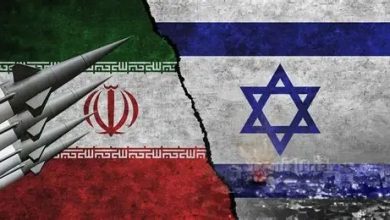
September’s floods are certain to become fodder for political grandstanding. Egyptian media have already seized on the issue, expressing concern for Sudan while selectively hosting anti-GERD voices and concluding with familiar refrains that “this is what Egypt warned of” and that “Ethiopia is acting with intent to harm.” Yet Egypt itself faced no real flooding threat, protected as it is by the High Aswan Dam — whose massive 162-billion-cubic-meter capacity ensures safety. What Egypt truly fears is losing long-standing privileges over Nile management.
Despite the current controversy, the GERD remains, at its core, a potentially transformative opportunity for Sudan — if managed through transparent regional cooperation. Ethiopia has already achieved its goal of making the dam an irreversible reality, while Egypt stands secure behind its high dam. Sudan, meanwhile, remains the most vulnerable party, exposed to any fluctuation in discharge or uncoordinated releases. The September floods underscored the cost of stalled negotiations: Khartoum now lacks even the most basic safeguard — early access to data on storage and release rates. Timely information could have enabled preemptive action through early warning systems to mitigate disaster.
Still, there is a silver lining. Once the GERD’s turbines reach full operational capacity, regular power generation will release roughly 133 million cubic meters of water daily throughout the year — naturally lowering reservoir levels ahead of each rainy season and reducing flood risks.
The critical question now confronting Sudan’s policymakers is whether they can overcome the entrenched intransigence that has stalled negotiations — and whether rumors of political or military concessions exchanged for wartime support hold any truth. Whatever the case, one fact remains: Sudan’s salvation lies in transforming the GERD from a symbol of dispute into a tool for regional integration — a goal that is far from impossible, once political stability returns.
Source: Atar