Sudan: Are the Army and the RSF Moving Closer to Negotiations?
Sudan Events – Agencies
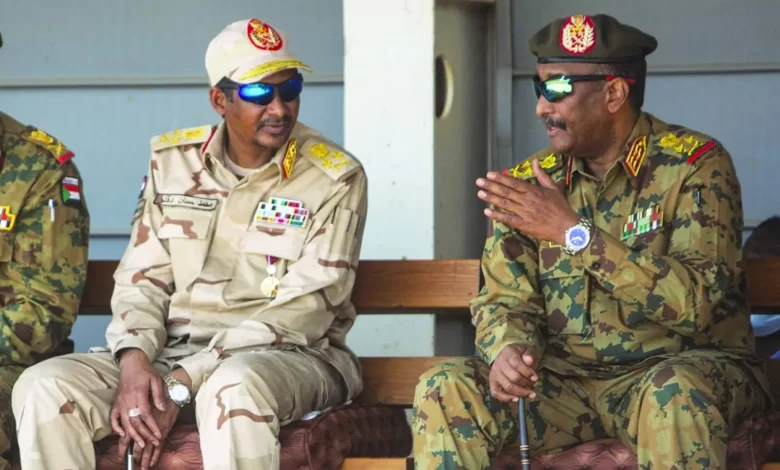
Since the release of the “International Quartet Mechanism” roadmap in September—which brings together the United States, Saudi Arabia, Egypt, and the United Arab Emirates—intense regional and international consultations have been underway to open channels of communication between the Sudanese Armed Forces (SAF) and the Rapid Support Forces (RSF). This has fueled growing speculation that the two warring sides may be nearing the negotiating table.
Mossad Bolos, the U.S. President’s Special Advisor on Africa, has stated on multiple occasions that the parties in Sudan are edging closer to direct talks, noting that Washington is in discussions with both the SAF and the RSF to establish broad principles for negotiations.
Last month, the Quartet urged both sides to accept a three-month humanitarian truce as a step toward a permanent ceasefire, leading into a comprehensive nine-month transition process culminating in the formation of a civilian government free from the control of any armed faction.
The visit of Egypt’s Foreign Minister, Badr Abdel Aaty, to Port Sudan on Wednesday, where he met with the head of the Sovereign Council and army commander Abdel Fattah al-Burhan, underscored this unified Quartet position. Abdel Aaty said the meeting focused on Egypt’s efforts to end the war in Sudan by mobilizing support across international platforms—including the Quartet—to achieve a humanitarian truce, followed by a permanent ceasefire as part of a Sudanese-led political process.
Sources familiar with the file confirmed ongoing Quartet engagement with the warring parties at multiple levels, though declined to provide further details.
The Jeddah Platform
Babiker Faisal, head of the Federal Gathering’s Executive Office, said all indications point to the SAF and RSF soon returning to the Jeddah talks.
Writing on Facebook, Faisal—who is also a leading figure in the anti-war “Sumood Alliance”—argued that agreement on a humanitarian truce would pave the way for a permanent ceasefire and a political process led by civilian forces to restore democratic transition. The greatest challenge for the civilian camp, he stressed, lies in its ability to build a broad front, warning that no political process can succeed unless it is fully owned and driven by civilian forces themselves.
“The decisive factor for peace is internal will,” Faisal noted, adding that sustainable peace cannot come from bilateral deals between the belligerents, but rather through a comprehensive solution that addresses the root causes of Sudan’s wars. He also warned that the former regime’s Islamist movement would likely attempt to derail efforts to stop the war, urging unity to isolate and thwart such attempts.
While the army-led government welcomed the Quartet initiative, it rejected equating the SAF with the RSF. For its part, the RSF—which leads a parallel authority in parts of the country—welcomed international efforts that address the root causes of the conflict.
A former Sudanese diplomat told Asharq Al-Awsat that Washington has shown unusual seriousness in seeking a resolution, aiming to build consensus within the Quartet to support a peaceful, agreed-upon settlement. He stressed that “there is no escape for the warring parties but to engage positively with this initiative,” which he described as a shared vision backed by influential regional and international actors to end Sudan’s war and address one of the world’s worst humanitarian crises.
Mounting Pressure
Journalist and political analyst Abdullah Rizq told Asharq Al-Awsat that the Quartet’s initiative “has garnered unprecedented international support from the United Nations, the African Union, and the European Union, alongside strong backing from regional and global powers—a critical factor for its potential success.”
According to Rizq, direct and indirect contacts with both the SAF and RSF are already underway at various levels, preparing the ground for high-level negotiations. He added that the Quartet plan closely aligns with the demands of Sudanese civil forces and growing public calls inside the country: a truce to enable humanitarian aid and protect civilians, followed by Sudanese-Sudanese dialogue to revive the transition. “These are issues around which there is little disagreement, domestically or internationally,” he said.
Rizq also suggested that the international community, led by the United States, may increase pressure on whichever side proves unwilling to commit to peace talks, particularly given the broad consensus that neither the SAF nor the RSF can achieve outright military victory.
He concluded that prospects for negotiations “appear stronger now than at any previous time, and both sides face a narrowing window: seize this chance for peace, or risk political irrelevance.” He also highlighted a recent meeting in New York on the sidelines of the UN General Assembly, where the AU, EU, and foreign ministers of France, Germany, and the UK urged the Sudanese parties to resume direct talks toward a permanent ceasefire.