What Mohamed al-Faki Suleiman Did Not Say
By Othman Jalal al-Din
(1)
The issues raised at the Sudanese Communist Party’s Fourth Congress in October 1967 formed a mirror image of two currents: the late Abd al-Khaliq Mahjoub’s group, and the position of lawyer Ahmed Suleiman, who advocated a tactical alliance between the Communist Party and the progressive current within the Sudanese army to reclaim the objectives of the October 1964 revolution — objectives that, he argued, had been usurped by a semi-feudal bourgeois alliance. The late Abd al-Khaliq Mahjoub opposed this line in a series of articles titled Post-Fourth Congress Issues, dismissing the coup tactic as the mindset of the desperate and the reckless — impatient with the slow, painstaking work of intellectual and political struggle within a mass movement.
(2)
Abd al-Khaliq Mahjoub’s firm conviction was that the masses are the locus of change, although a revolutionary leap — in Lenin’s phrase — might open the path toward democratic advance. He had earlier diagnosed an internal symmetry with the grouping around Awad Abd al-Razzaq, which viewed the dissolution of the Communist Party’s identity into unionist parties as a struggle between petty-bourgeois ideology and Marxism. Abd al-Khaliq expressed this by saying: “Any conflict within our party is merely a reflection of the external class struggle, and every tendency hostile to Marxism is an expression of a specific class’s ideology; the party, in fighting interests alien to the working class, must uproot not only the ideas but also the shadows of those ideas.” This intellectual rigor suggests that the party leader may have faced the option of a coup twice — on 25 May 1969 and again on 19 July 1971.
Returning to the present, a cadre of opportunistic leftist activists penetrated deep into the unionist parties, into other parties, fragile student bodies, and civil-society organizations. They became both origin and echo; their slogan, as Professor Abdullah Ali Ibrahim put it, was “opportunism is my profession.”
(3)
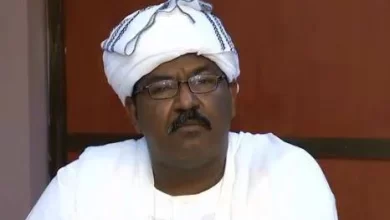
Mohamed al-Faki Suleiman’s statements about allying with the army and the al-Daqlo militia to uproot the national Islamist current reveal the outlook of this opportunistic left within the Unionist Gathering — a group cut off from genuine intellectual and popular roots that adopted a tactic of disassembling the national military institution, which it regards as the vanguard in safeguarding national identity and the pillars and constants of Sudanese society. Thus, when al-Faki despaired of the defeat and disintegration of the army through collusion with al-Daqlo’s militia in the 15 April 2023 campaign, he returned to the tactical slogan of alliance with the army and the Rapid Support Forces to eradicate Islamists — whom he views as the largest intellectual and social current supporting the army in its battles, victories, wounds and sacrifices.
(4)
What the brave man al-Faki did not say is the most dangerous element: it reveals the strategic orientation of the clique of opportunistic leftists led by Yasir Arman and Bakri al-Jak within the Sudanese Congress. Their plan, after eliminating every honorable civilian who supported the army in the Battle of Dignity and exposing its rear, is to continue the alliance with the criminal Mohamed bin Zayed and the mercenary Hemeti to implement the Zionist project in Sudan — namely, by liquidating the Sudanese army, whose soldiers and commanders raise the cry “Allahu Akbar” in every confrontation, defense, wounded groan and funeral march — and by forming a new army whose hard core would be the al-Daqlo terrorist militia and the Popular Movement’s faction led by the mercenary Al-Hilu, to guard a model secular, laic state patterned after the French model, with hoof on hoof, step by grim step.
(5)
Mohamed al-Faki Suleiman and his band of opportunistic leftists will ultimately fail and drift away. The Islamist current, the wider society, the armed liberation movements and the national political forces will continue to cohere with the army in the Battle of Dignity until the criminal militia is decisively destroyed or surrenders. The Sudanese army will remain the guardian of national identity and the pillars and constants of society.