A New Kind of Management…!!
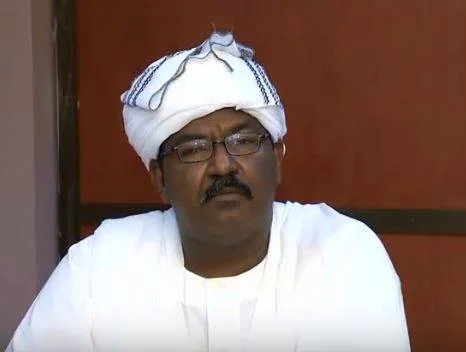
By Altahir Satti
A few weeks ago, the Prime Minister issued a decision to establish a special irrigation unit for the Gezira Scheme — one that would report to the project’s administration technically, financially, and administratively.
But there’s another version of the story: reports say the Minister of Agriculture and Irrigation has issued a counter-decision canceling the Prime Minister’s order, forming a committee for the unit headed by the Undersecretary of Irrigation, with the Gezira Scheme Governor as his deputy, and restoring the unit’s authority to the Ministry of Irrigation.
The minister’s move to overturn the Prime Minister’s decision isn’t, by itself, shocking or shameful — the issue runs deeper than comprehension.
The late Hassan Mukhtar once attended a fierce Al-Hilal vs. Al-Merreikh football match, where the field was dusty and the players exchanged punches. Saddened, a friend sighed, “Imagine what Europeans would think if they saw this!”
Mukhtar calmly replied: “They’d think it’s a new sport.”
So yes — the minister’s cancellation of his superior’s order isn’t strange at all; it only shows that the country is entering a new era of “innovative management” — imported straight from Switzerland.
And yet, the irony remains: if the Prime Minister truly wants to create a separate irrigation unit for the Gezira Scheme, why did he abolish the Ministry of Irrigation in the first place by merging it with Agriculture?
Perhaps he did so just to establish an irrigation unit for every single agricultural project — all part of this new management model.
Ask any irrigation expert and they’ll tell you:
Back in 1991, when Prof. Ahmed Ali Qunif was Minister of Agriculture and Dr. Yaqoub Abu Shura was Minister of Irrigation, the country produced enough wheat in a single season to feed Sudan and export the surplus — to Egypt and Kenya, some 600,000 tons.
It was the first and last time Sudan achieved self-sufficiency in wheat — through national will and effective coordination.
After God, the Ministry of Irrigation played a decisive role in that success.
The late Abu Shura crisscrossed the country, expanding irrigated farmland from 2 million to 2.8 million feddans within just three years — including an increase in Gezira’s irrigated area from 1.3 million to 1.7 million feddans.
All this was achieved under a unified Ministry of Irrigation, not through special project-based units.
The abolition of the Ministry of Irrigation was a grave mistake.
Had the Prime Minister looked closely at the institutional structures of the other ten Nile Basin countries, he would have found that every single one maintains an independent Ministry of Irrigation — not a department buried under another ministry.
All the prime ministers of the Nile Basin nations, except Kamal Idris, understand that irrigation ministries are no longer mere technical offices tasked with opening canals and watering crops, people, and livestock.
Not anymore.
This is the era of water wars — fought over rivers and seas alike.
That’s why the Ministry of Irrigation, across all Nile Basin states, has become a strategic body with security dimensions and foreign policy relevance.
But Kamal’s government doesn’t seem to realize that — or perhaps it does, and has instead chosen to replace a national ministry with a separate irrigation unit for every farm plot, as part of its “new management” vision.