Former Central Bank Officials Present Proposals for Exchange Rate Management
Sudan Events – Rehab Abdallah
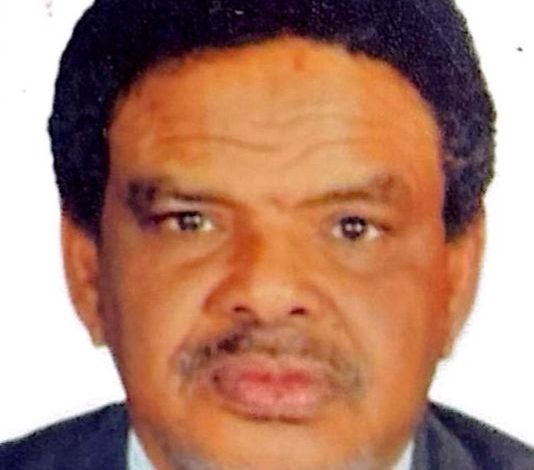
Dr. Badr Al-Din Qureshi, former First Deputy Governor of the Central Bank of Sudan, proposed the adoption of a managed flexible exchange rate system, based on realistic mechanisms that enhance market efficiency, curb manipulation, encourage foreign currency inflows, and rebuild investor confidence. The approach, he said, should also stimulate remittances from Sudanese expatriates and maintain balance in the foreign exchange market through clear and practical measures.
In an interview with Al-Ahdath on monetary policy, Qureshi noted that amid Sudan’s current economic challenges, managing the exchange rate has become one of the key pillars of monetary stability and sustainable growth. He emphasized that successful policies depend on the ability to adapt to both local and global changes while maintaining transparency and efficiency in execution.
Meanwhile, banking expert and former Central Bank official Malik Al-Rashid said that experience has proven the failure of short-term interventions in the foreign exchange market by the Central Bank of Sudan. He explained that when the Bank adopts a managed float policy and injects a foreign deposit—typically around USD 500 million—from a friendly central bank, the exchange rate drops only temporarily before rising again at a faster pace.
According to Al-Rashid, this failure stems from the Bank’s lack of accurate assessment of aggregate supply and demand and their distribution across the country’s monetary zones. He added that the actual demand for foreign currency, particularly for imports and exports, has consistently exceeded the Bank’s expectations—rendering such interventions short-lived and ineffective. The result, he said, is a persistent imbalance between total demand for foreign currency and the limited supply available.
He stressed that stabilizing the exchange rate requires achieving equilibrium between aggregate supply and demand, relying on steady export revenues from goods with stable markets, and increasing non-traditional inflows—particularly expatriate remittances—by rebuilding trust in the banking system and monetary policy. He also called for adopting “moral suasion” to persuade Sudanese abroad to participate in the official financial system.
Al-Rashid further pointed to a structural weakness: the lack of integration of Sudan’s banking system with international payment networks, despite the lifting of sanctions. Many had expected this to yield immediate positive effects on the exchange rate, but that has yet to materialize.
Qureshi concluded that economic reform requires an integrated package of fiscal, monetary, and trade policies targeting real GDP growth through an expansionary monetary policy that encourages agricultural and industrial production, exports, and import substitution.
He added that the success of a managed flexible exchange rate system hinges on building adequate reserves of foreign currency and gold at the Central Bank, alongside measures to curb export revenue manipulation, smuggling, currency speculation, and luxury imports, as well as strict monitoring of external transfers.