The Dissolution of the Armed Forces Would Be a Grave Mistake

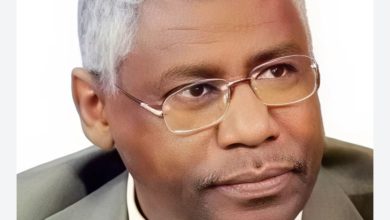
By Abdullah Ali Ibrahim
Summary
“The wise are cautioned by the rebuke of others.”
If what we have reviewed above is the record of the “No to War” forces and their pattern of dissolving institutions that they grew to resent, then they must pause before calling for the dissolution of the Sudanese Armed Forces. Every institution they dismantled eventually returned—sometimes more aggressive than before. But the army is a different kind of beast. To dissolve it, especially under current conditions with the Rapid Support Forces in existence, would unleash consequences no one can predict.
A broad consensus has emerged among the “No to War” groups — including “Sumood” (Steadfastness) led by Abdullah Hamdok — calling for the dissolution of the Sudanese Armed Forces. In their Addis Ababa Declaration of January 2, 2024, signed jointly with the Rapid Support Forces (RSF), the army was described merely as one element in Sudan’s “plurality of armies,” alongside the RSF and various Darfur rebel movements. The declaration called for dissolving all these forces and forming a single, professional, national army.
Their rationale is well known: they see the army as a hotbed of coups that ushered in dictatorships, burdening the nation for most of its post-independence history. They blame it for protracted internal wars, for spawning the RSF to fight on its behalf when it failed to shoulder the military burden itself, for turning its guns on its own citizens and losing precious parts of the homeland such as Halayeb and Shalateen, and for its failure to protect civilians from RSF atrocities when called upon to defend their honor.
Some advocated dissolving the army long before the current war, while others have only recently embraced the idea.
Before the conflict, academic Dr. Haidar Ibrahim said in a “Kobayat Shai” (Cup of Tea) talk hosted by Al-Tayar newspaper that, once peace is achieved, Sudan will have no need for an expensive army — not even to pay the pensions of its overpaid officers.
Journalist Rasha Awad, in her article “Dissolving the Army: The Long-Overdue National Duty,” argued that the Sudanese Armed Forces are neither national nor professional, and that if the country had true founding fathers, their first act on January 1, 1956, would have been to dissolve an army “designed to guard colonial power and suppress the people.”
But beyond such reasoning — much of which may contain elements of truth — one must ask:
Is this the first time these forces have demanded the dissolution of a state or civil institution that frustrated them?
Is their call to dissolve the army today the result of careful analysis, or merely another expression of a habitual political impulse — a reflex to abolish every institution that provokes their anger?
In short, is this a policy or a pattern?
Upon examining the record of the “No to War” movement, one finds that their impulse to dissolve the armed forces stems from habit, not strategy.
They have repeatedly dismantled institutions — both governmental and civic — out of resentment rather than statecraft. Each time, the institutions they thought buried forever returned to life, often stronger and more menacing than before.
Their comeback reveals what those who dismantled them failed to grasp: that each had a logic and function essential to the fabric of state and society. Recognizing that logic is the hallmark of a statesman.
The “No to War” camp and its predecessors have dissolved several key institutions:
Omdurman Islamic University (1969), the University of Khartoum Students’ Union (1969), the Native Administration (1971), and the National Security Service (1984).
The Dissolution of Omdurman Islamic University (1969)
When President Nimeiri came to power in 1969, he was backed by the leftist forces that are today’s political ancestors of Sumood and the Radical Bloc — particularly the Communist Party.
His regime reduced Omdurman Islamic University to its earlier status as a “Scientific Institute,” limiting its curriculum to religion and Arabic language.
The university had long been politically hostile to the left. Its scholars had supported the government’s 1965 dissolution of the Communist Party and the 1968 ruling by the Supreme Sharia Court that declared Mahmoud Mohammed Taha, founder of the Republican Brotherhood, an apostate.
But by 1971, when the Communists broke with Nimeiri, the university was reinstated as before.
What those who dismantled it failed to see was that it had matured into a vital institution.
Its students — largely from poor rural families — had for decades fought to upgrade their institute to university status, seeking the same career opportunities monopolized by graduates of Gordon Memorial College and the University of Khartoum.
For them, an Islamic University was not merely a religious aspiration but a path to social mobility and dignity.
The Dissolution of the Native Administration (1971)
The same leftist camp dissolved the Native Administration in 1971.
Their resentment ran deep against this system, which had been restructured by the British colonial administration in the early 20th century.
Modernist forces viewed tribal chiefs and Sufi leaders — the rural elites — as collaborators of the British and as obstacles to national progress.
They despised their influence over rural constituencies, which empowered traditional parties and blocked leftist access to the countryside.
But the decision to abolish the system was driven by spite, not policy.
One minister who attended the cabinet session later recalled that the proposal was presented orally, without discussion, and that President Nimeiri had already approved it behind the scenes.
By 1981, the Native Administration had been restored by law after the replacement structures collapsed — and it has remained, crooked but enduring, ever since.
The Dissolution of the University of Khartoum Students’ Union (1969)
In the same year, students aligned with the left — today’s forerunners of the “No to War” groups — dissolved the University of Khartoum Students’ Union, aiming to exclude the Muslim Brotherhood, who had taken an anti-Nimeiri stance.
At that time, left-leaning students dominated the campus under the banner of the Progressive Front Secretariat.
The Union operated on a system of proportional representation, which guaranteed minority groups, including Islamists, a share of seats.
To silence them, the left dissolved the Union altogether, vowing that “the university shall not be a reactionary island in a revolutionary sea.”
Yet by 1973, the Union was restored — this time under a winner-takes-all system — which allowed a single bloc to sweep all 40 seats.
From then on, the Islamists dominated almost every election, to the point where one observer remarked that “elections at Khartoum University have ceased to be an event.”
The Dissolution of the National Security Service (1985)
Following the April 1985 Uprising, the new government dissolved President Nimeiri’s National Security Service within 24 hours.
Ironically, the officer tasked with securing its headquarters and files was none other than Major Omar al-Bashir, Sudan’s future president.
The opposition’s hatred of the agency was understandable; its abuses were notorious, and its name had become synonymous with repression.
Rumors that it was plotting a coup with a force of 5,000 men sealed its fate. In reality, it had only 3,100 personnel — barely 60 of them combat-trained.
It had kept detailed surveillance files on 18,675 dissidents and had even facilitated the airlift of Ethiopian Jews (Falasha) to Israel, offending many Sudanese sensibilities.
Yet the rush to dismantle it ignored its non-political intelligence functions.
Suddenly, Sudan lost networks of foreign and economic intelligence, and sleeper agents embedded in neighboring countries and within the SPLA.
The institution was soon resurrected — fiercer than ever — under the Islamist regime of 1989, evolving into the National Intelligence and Security Service (NISS) with its infamous “Operations Authority” of 18,000 men and the torture chambers known as “Ghost Houses.”
Conclusion
“The wise are cautioned by the rebuke of others.”
If this is the record of the “No to War” movement — dismantling institutions out of anger only to see them return stronger — they should refrain from calling for the dissolution of the armed forces.
Every institution they have destroyed has come back, often more brutal.
But the army is unlike any other.
Its return after dissolution — especially under the current reality of the Rapid Support Forces — is a scenario too perilous for anyone to even imagine.