Ambiguous Diplomacy: Sudan Between a Grey Discourse and a Regional Power Project

By Sabah Al-Makki
Diplomacy is not merely words spoken on podiums—it is the mirror of sovereignty when storms rise. At a time when Sudan faces a subtle attempt at disintegration under the banners of “mediation” and “peace,” the battle is fought with language before weapons; words themselves become a frontline. When diplomats choose a foggy, ambiguous tone over clarity, sovereignty becomes the first casualty of rhetoric.
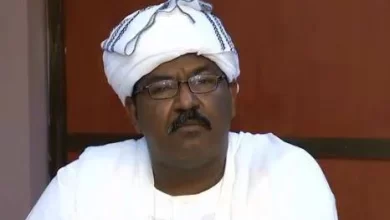
Not all wars are fought with weapons; some are waged with words, statements, and the language that redefines crime until the criminal loses his name. In a recent interview on Al Jazeera Mubasher, former Sudanese Foreign Minister Ambassador Ali Youssef presented what he believed to be a “rational” analysis of the war in Sudan, dressing it in the guise of a “civil war” by comparing it to earlier internal conflicts in the country. But does the former minister truly see this war as a civil war—and not as an external aggression waged through local proxies, where a foreign-backed militia fights a national army defending its sovereignty?
In doing so, the minister did not offer a balanced political analysis but embodied Sudan’s diplomatic crisis at its most ambiguous: speaking of a homeland being slaughtered with a tongue too timid to name the butcher. In an existential war against a foreign-sponsored militia, political discourse becomes a test of allegiance before it is an expression of opinion; language itself turns into a battlefield where meanings are contested as fiercely as territory.
Thus, the former minister’s interview exposed the widening gap between a forthright national discourse and a grey diplomacy that seeks to please everyone in a moment that tolerates no equivocation.
Who Is the Minister Speaking To?
Ambassador Ali Youssef appeared on Al Jazeera Mubasher embodying the “neutral diplomat” persona—speaking in a circular, noncommittal tone, “splitting hairs while trying to heal wounds,” as Sudanese say: many words, no stance; diplomatic phrases that touch every side without belonging to any.
His rhetoric aligned neatly with certain Arab capitals that prefer silence about the UAE’s role in Sudan’s war and promote “neutrality” as a safe political position. Yet that supposed neutrality ignores a fundamental fact: Sudan is fighting an imposed war, not a quarrel between partners over power.
His words came across as a mix of appeasement and denial—neither a defense of Sudan nor an honest reading of reality—as if spoken from abroad, not from within the country.
The question that immediately arises: Who is the minister speaking to? To a nation fighting for survival? To an Arab audience seeking comfort in a language that offends no one? Or to a regional environment that shapes his worldview? Does he speak for the conscience of the state he once served, or for a timid diplomacy afraid to upset the capitals that still treat Sudan as a “file,” not a nation?
At a moment when he should have spoken as a statesman aware of the cost of sovereignty, the former minister chose the language of accommodation. He described the UAE’s participation in the “Quartet” as positive—though Sudan has officially classified the UAE as an aggressor state and cut diplomatic ties with it.
He ignored the fact that the UAE is effectively leading the war on Sudan from behind the curtain—arming, funding, and staffing the Rapid Support Forces (RSF) with mercenaries and weapons. He also ignored how Abu Dhabi orchestrates regional encirclement through neighboring regimes, facilitating arms routes via Chad, Libya, the Central African Republic, Ethiopia, and South Sudan; mobilizing Kenya and Uganda; and even recruiting mercenaries through Bosaso in Puntland and Somaliland—all the way to Colombian fighters flown in by Emirati aircraft.
By overlooking these realities, the minister seemed blind to the regional project directed against Sudan’s army and people. He ignored the blood of civilians in Darfur and the Sudanese public’s refusal to whitewash those responsible for igniting this war.
The “Quartet” Paradox: Roadmap or Blueprint for Influence?
The minister began where others wanted him to start—with the “Quartet Statement” involving the U.S., Egypt, Saudi Arabia, and the UAE—calling it a “roadmap worth building upon.” He even described it as an extension of Sudan’s own “national roadmap.” But that statement alone exposes the gulf between national logic and dependency. How can a national roadmap mirror one drafted abroad? And how can a plan be credible when one of its signatories finances the militia fighting the Sudanese army?
The minister admitted that the UAE is “subject to criticism” yet claimed its inclusion was “useful” because it would “commit it to what it signs.” Since when do sponsors of war police themselves? This is not diplomacy—it is self-deception. The aggressor cannot become guarantor simply by changing titles.
Most troubling is the clause on “halting military support to warring parties.” The minister read it as an implicit warning to the UAE to stop arming the RSF, though the text does not mention the UAE and equates the national army with the insurgents. It effectively criminalizes any military aid to Sudan’s own forces while shielding illicit flows to the militia. In essence, it asks the Sudanese army to stop defending its country while the RSF continues to receive external arms under the radar.
This misreading exposes the heart of the problem: mistaking coercive diplomacy for goodwill. The clause that forbids Sudan from arming itself while ignoring mercenary weapons is nothing short of a codified erosion of sovereignty disguised as peace.
Language as a Tool of Legitimization
When asked about the term “warring parties,” the minister called it “a diplomatic expression” that doesn’t imply moral equivalence between the army and the militia. But words are not innocent—they define legitimacy. Once aggression against Sudan is reframed as a “conflict between parties,” the crime vanishes linguistically, and the national army is recast as just another “Sudanese faction.”
Notably, such language is never used to describe Russia’s invasion of Ukraine or Israel’s occupation of Gaza. The terminology is political, not neutral—crafted to dilute the aggressor’s responsibility and equate the state with the insurgent.
Thus, the phrase “warring parties” is not a neutral term; it is a subtle instrument for stripping Sudan of legitimacy and preparing the international audience to view its sovereignty as negotiable.
Peace Without a Balance of Power
The minister repeated that “there is no sustainable military solution,” adding, “unless a quick victory is possible.” In that paradox lies the essence of ambiguity—denial and admission in the same breath. But peace is not achieved by wishful thinking; it is enforced by power. Even the United States, which preaches diplomacy, maintains global peace through military dominance. Israel does the same under the slogan “peace through strength.” Why then should Sudan alone be asked to disarm while the militia continues to receive foreign support?
True peace follows the battlefield, not precedes it. Every historical precedent—from World War II to Bosnia—proves that negotiations succeed only after a decisive shift in the balance of power, not before.
Calls for premature dialogue, while militia-controlled airports still receive foreign planes, merely freeze the imbalance and extend the conflict under the guise of peace.
The Mirage of Integration and Forgiveness Without Justice
The minister declared: “There can be no peace while the RSF exists as a parallel force.” A patriotic stance, it seemed—until he added that the solution lies in “a unified professional army incorporating all armed groups.” Does that include the RSF itself? If so, this is not reform but amnesty without accountability—forgiving atrocity under the banner of unity.
To integrate those who burned Khartoum and massacred civilians is to embed corruption into the state’s core. Such discourse is not about peace, but about resurrecting the threat in uniform.
The Absent Perpetrator
The minister spoke of “the destruction of infrastructure” without naming the destroyer—as though Khartoum were struck by natural disaster, not rockets. Erasing the subject is not a linguistic slip; it is complicity with a narrative that equalizes aggressor and defender.
Who bombed the hospitals, looted banks, and torched neighborhoods? Not the Sudanese army—but those now being courted under the name of “national reconciliation.” To erase the perpetrator from speech is to erase accountability from history.
Against Exclusion—even for Betrayal?
The minister rejected “total exclusion” and called for “dialogue with everyone.” But what does inclusion mean if it extends to those who funded and waged war? Genuine reconciliation must begin with justice; otherwise, it becomes a transaction upon the corpse of truth.
By echoing the phrase “Islamists in power,” the minister blurred definitions and revived partisan language long exploited by anti-Sudan lobbies abroad. His call for an “inclusive Sudanese-Sudanese dialogue” implicitly reopens the door to the very figures aligned with foreign agendas—an act of political whitening for betrayal.
Reconciliation without accountability is not healing—it is rewriting treason as tolerance.
Diplomatic Missteps and the Crisis of Professionalism
At the 2025 Munich Security Conference, in a session on “The Continuing Nightmare: Sudan’s Political and Humanitarian Crisis,” what could have been a platform to expose RSF atrocities turned into a courtroom against the Sudanese Armed Forces. The Sudanese foreign minister sat silently as the stage was dominated by anti-Sudan voices—including former UN envoy Volker Perthes—without objection or withdrawal.
Such silence was not prudence but paralysis. Whether from ignorance or intent, it revealed a deeper institutional flaw: a lack of professional training in political and media security.
In diplomacy, what is unsaid can be as damaging as what is done. The microphone, in times of war, is no less a weapon than the rifle.
Sovereignty Cannot Be Managed Through Ambiguous Diplomacy
The minister’s interview revealed not a communication lapse but a crisis of vision. “Fog diplomacy”—neither position nor principle—mirrors the discourse of dependency that equates the state with the militia and the aggressor with the mediator. Sudan today does not need polite neutrality; it needs clarity. In war, neutrality between truth and falsehood is itself falsehood. Sovereignty is not maintained through flattery but through resolve.
To speak in grey tones amid bloodshed is not diplomacy—it is betrayal dressed as balance.
Diplomacy, in times of war, is not a courtesy; it is an instrument of defense.
And those who fail to wield the word have no right to speak in the name of a nation bleeding for its survival.
Source: Brown Land – Arabic Edition