As the Sudanese Pound Continues to Plummet… Gold Monopoly Becomes the Winning Card
Report by: Rehab Abdullah
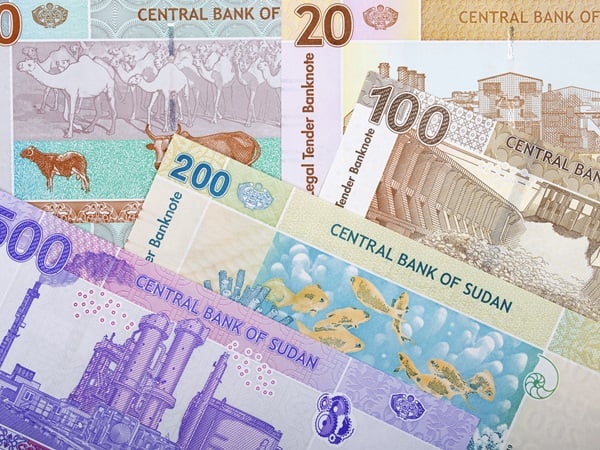
Sudan has lost its financial balance as foreign reserves have eroded and external cash inflows — including remittances from expatriates — have declined by nearly 70%. The Sudanese pound continues its steep fall against foreign currencies, reaching a record low of 3,600 pounds to the US dollar for the first time, far exceeding all expectations. Other currencies, such as the Emirati dirham and the Saudi riyal, have also neared the 1,000-pound mark.
Analysts predict that the dollar could surpass 5,000 pounds by the end of this year, amid worsening essential services, soaring prices, suspension of imports, capital flight, and rampant corruption across most institutions in the absence of oversight — while the government continues to tighten its fiscal and commodity controls on markets and citizens, aggravating the domestic crisis.
Banks Run Out of Foreign Currency Reserves
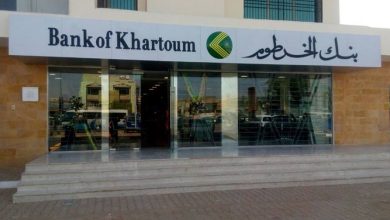
The disparity between official and parallel exchange rates reveals the extent of the banking sector’s struggles and its growing disconnect from the Central Bank. Most banks have lost their foreign currency reserves, with the Central Bank’s official dollar rate now at 2,600 pounds, while some banks sell at 2,700 pounds, underscoring the widening gap between the official and black markets — and confirming the government’s continued loss of monetary control in the absence of effective policy tools.
A New Trajectory
Experts describe the collapse of the Sudanese pound as the fastest in the country’s history, driven by the ongoing war, which has pushed the Sudanese economy onto a new and uncertain path.
They warn that without an end to the conflict — which began in 2023 — no signs of financial or economic stability can emerge. Others note that the war has opened the door to exploitation of national resources, intensified smuggling, and diverted all state capabilities toward the war effort, deepening the fiscal and economic crisis.
Financial expert Abdel Hakim Al-Nour attributes the currency’s collapse to disruptions in supply chains, production, and exports in key sectors such as agriculture and industry, in addition to institutional breakdown and the erosion of trust in the banking system.
He stresses that restoring confidence in state institutions requires a flexible financial system that engages investors positively while enforcing strict oversight of key state entry points — a goal he deems unattainable amid ongoing political conflict and war, particularly in resource-rich and export-producing regions such as livestock, gold, oil, and agriculture.
International Reports
A recent report by the International Crisis Group warned that the ongoing armed conflict threatens a total collapse of Sudan’s economy and could push the country toward a “financial famine,” in the absence of any clear international rescue plan. Analysts at Africa Economics describe the Sudanese pound as “extremely fragile,” cautioning that any delay in ending the conflict will trigger hyperinflation and a complete loss of purchasing power, widening the gap between the official and parallel markets.
Similarly, the Economist Intelligence Unit (EIU) reported in August that Sudan’s economy is experiencing a “double contraction” due to the war — with GDP shrinking by 18% in a single year and inflation exceeding 400%. Production and supply chains have nearly collapsed, with agricultural and industrial output at a standstill in most states.
The IMF, in its September 2025 report, noted that Sudan is facing a “complete monetary breakdown,” as the pound loses its basic functions as a medium of exchange and store of value. Inflation has exceeded 130% year-on-year, while over 80% of daily transactions are now conducted in dollars or through barter, amid a total loss of confidence in the local currency.
The International Crisis Group also revealed in an August briefing that Sudan is experiencing a “monetary divide,” with army-controlled areas refusing to accept new banknotes, while the Rapid Support Forces (RSF) ban circulation of old ones. This division threatens to entrench economic fragmentation across regions and further weaken the already paralyzed financial system, as the Central Bank has ceased operations since May 2023.
Forced Repatriation
With the pound’s steep devaluation, many Sudanese families in Egypt and Libya say the collapse has forced them to register for voluntary repatriation programs. The Egyptian pound now trades for over 75 Sudanese pounds, up from 50 earlier this year, while remittance values from the UAE and Saudi Arabia have fallen sharply — losing over 90 pounds in relative value.
Many returnees said they came back to Sudan despite the war and disease outbreaks because life abroad had become unsustainable. Sitt Al-Nafr Mahmoud, a returnee, said her family relied on remittances via banking apps, but the pound’s collapse made living abroad impossible. “Rent, food, and daily expenses in neighboring countries became unbearable,” she said, adding that despite the lack of basic services and a collapsing education and health system in Sudan, “we had no choice but to return.”
Hard Labor
Many Sudanese in neighboring countries, particularly Egypt and Libya, have resorted to working in farms and factories to survive. Nizar Ahmed, one of them, said: “We used to rely on family support from Sudan and other countries, renting an apartment for about 200,000 pounds. But with the currency’s collapse, we had to find work. Many of us, including our children, left school to support our families. We earn around 200 pounds a day — barely enough for food — but it’s our only option.”
He added that returning to Sudan is equally difficult: “There are no jobs back home — everyone is unemployed. So we’re trapped, forced to work wherever we can.”
Searching for Stability
Banking expert Ayman Ahmed urged authorities to adopt innovative financial mechanisms to stabilize the exchange rate, proposing the issuance of international participation bonds backed by underutilized natural assets such as gold, oil, and gas.
He explained that Sudan currently applies a managed flexible exchange rate system, but it has failed to curb inflation or stabilize the pound due to the disruption of traditional monetary tools amid war. He argued that leveraging untapped resources could provide foreign reserve backing for the pound and cover import bills without relying solely on gold, through internationally certified asset-backed instruments.
Cautious Anticipation
All eyes are now on the new economic policies recently announced by the Economic Emergency Committee, chaired by Prime Minister Professor Kamal Idris, as citizens await whether these measures can halt the country’s financial freefall.