Uncertain Future for the Juba Peace Agreement in Sudan
Report by: Al-Noor Ahmed Al-Noor
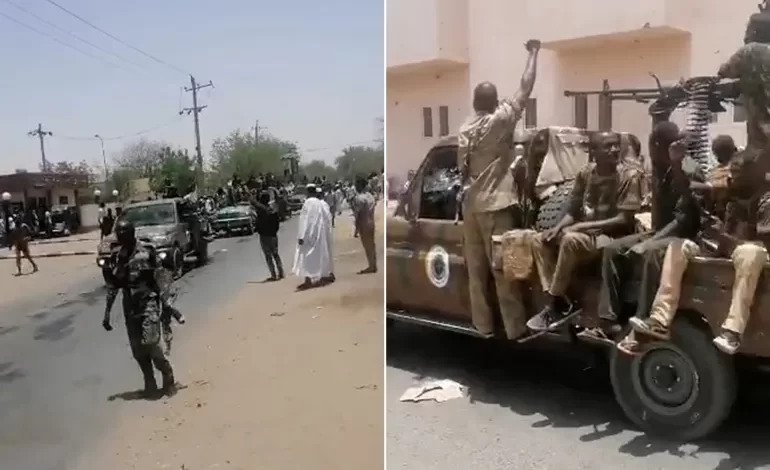
Five years after its signing, the parties to the Juba Peace Agreement in Sudan have acknowledged that its implementation has largely been limited to the political dimension — specifically, power-sharing — while security arrangements, wealth distribution, and development commitments remain stalled.
Observers note that the armed movements which signed the deal have avoided transforming themselves into political parties, instead keeping their forces and weapons as leverage to safeguard the gains they achieved. Many analysts believe that the ongoing war, which erupted in mid-April 2023, may render the agreement obsolete.
Signed in early October 2020 between the Sudanese government and several armed groups, the Juba Peace Agreement aimed to achieve a comprehensive peace, ensure fair power-sharing in the Darfur region and the Two Areas (South Kordofan and Blue Nile), and protect local resources in northern and central states.
Agreement Timeline
Key signatories to the deal include the Justice and Equality Movement (JEM) led by Jibril Ibrahim, the Sudan Liberation Movement (SLM) headed by Minni Arko Minnawi, and the Sudan People’s Liberation Movement–North (SPLM–N) led by Malik Agar, alongside other factions under the Sudanese Revolutionary Front (SRF) coalition.
The agreement was initially set to expire at the end of the transitional period, which was extended to 39 months from the date of ratification and incorporated into the constitutional declaration. In February 2024, the transitional period was extended for another 39 months following constitutional amendments.
A government official told Al Jazeera Net that the peace deal was not entirely tied to the duration of the transitional period — only the power-sharing clause was. The official explained that the agreement envisions the armed movements transforming into political parties whose participation in governance would be determined by their electoral weight. Other provisions, he said, were meant to be implemented over a ten-year period.
While acknowledging that five years have passed since the signing, the official — who requested anonymity — said unforeseen circumstances had hindered implementation, though signatories would remain part of the government until the end of the renewed transitional phase.
Regarding the future of the deal, he noted that even if the war ends and a political settlement is reached, the agreement’s provisions would largely remain in place, except for national-level power-sharing arrangements which could be revised to suit any new political framework.
Government Lapses
Former Minister of Minerals and chief negotiator for the Sudan Liberation Movement, Mohamed Bashir Abu Namo, said that only the political power-sharing aspect of the Juba Agreement has been implemented, while the rest of the protocols remain unfulfilled due to the war and lack of financial resources.
Reflecting on the deal five years later, Abu Namo told Al Jazeera Net that the initial transitional period expired, but the constitutional document was amended to extend it for another 39 months. He expressed hope that the war would soon end so that the state could resume full implementation of the agreement’s commitments.
He rejected claims that the armed groups were only interested in retaining government positions, asserting that their inability to fulfill promises to displaced persons and refugees stemmed from objective circumstances beyond their control — chiefly the war and the government’s reluctance to implement the deal.
Meanwhile, Al-Murdi Abu al-Qasim Mukhtar, head of peace negotiations for the Justice and Equality Movement, described the anniversary of the agreement as a national occasion to honor the sacrifices of thousands of Sudanese who fought for freedom, dignity, and justice.
He noted that although the agreement addressed issues across all regions of Sudan, its implementation has been hampered by war and scarce resources. Progress has varied across the different “tracks,” but overall, the deal has not been executed according to the timetable outlined in its implementation matrix.
Implementation Challenges
Regarding the Northern Sudan Track of the Juba Agreement, Mohamed Sayed Ahmed “Al-Jakoumi”, the track’s leader, criticized the government’s failure to honor its commitments, calling it a political backslide against the people of the north.
Speaking to Al Jazeera Net, Al-Jakoumi urged residents to rise up and demand their legitimate rights, saying that “silence is no longer an option” in the face of deliberate government inaction. He stressed that the agreement must be translated into tangible outcomes — developmental projects, legal reforms to protect land and resources, and fair power-sharing.
Political analyst Mohamed Alaa Al-Din argued that the Juba Agreement has been plagued by practical and structural complications that stalled most of its provisions. He noted that Mohamed Hamdan Dagalo (Hemetti), the former Deputy Chairman of the Sovereign Council and Commander of the Rapid Support Forces (RSF), who led the negotiations and signed on behalf of the government, pursued “secret deals” with some rebel leaders and sought to co-opt others.
Alaa Al-Din identified several core challenges:
The inclusion of the eastern, central, and northern tracks — which were not originally armed conflict zones — diluted the agreement’s focus on Darfur and the Two Areas. Representatives of those regions were not officially mandated to negotiate.
Despite international and regional support for the deal, many partners failed to deliver the promised financial assistance, while Sudan’s struggling economy hindered the implementation of development provisions.
Armed movements, particularly those in Darfur, resisted security arrangements such as disarmament and integration into the national army, preferring to maintain their forces as a bargaining chip. Only the SPLM–N led by Malik Agar proceeded with troop integration.
The agreement’s introduction of new administrative structures, such as the reinstatement of regional governance in Darfur and Blue Nile, created confusion alongside the existing state-based system. No law has yet defined the powers of these regional authorities.
Key armed factions, including the SLM led by Abdel Wahid al-Nur in Darfur and the SPLM–N faction led by Abdelaziz al-Hilu in South Kordofan and Blue Nile, rejected the agreement entirely, leaving it incomplete.
Eight Protocols
The Juba Peace Agreement comprises eight protocols covering transitional justice, reparations, land ownership, pastoral development, power and wealth sharing, and the return of refugees and internally displaced persons.
It allocated the Sudanese Revolutionary Front three seats on the Transitional Sovereign Council, five ministerial posts, and 75 seats in the Transitional Legislative Council. It also mandated the integration of rebel fighters into the national security forces in three stages to be completed by the end of the transitional period.
In Darfur, the deal granted 40% of power to the region’s factions, 30% to transitional authorities, 10% to other Darfur movements, and 20% to local stakeholders. Additionally, 20% of civil service, judiciary, prosecution, and diplomatic positions were reserved for the Revolutionary Front.
Source: Al Jazeera Net