Reading The Financial Times: Escalating Crises in Sudan — Blockades, Gold, and Regional Rivalries

Sudan Events – Agencies
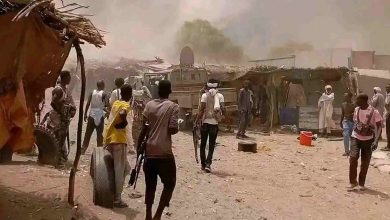
U.S. efforts to deliver humanitarian aid into the besieged city of El Fasher are faltering, as both the Sudanese Armed Forces and the Rapid Support Forces (RSF) maintain their blockade and reject official statements.
Sources in Washington reported that the U.S. president’s advisor claimed an agreement had been reached with the RSF. Yet, on-the-ground developments — including the bombing of a hospital in El Fasher and attacks on displaced persons’ camps — reveal the failure of this supposed deal.
Today, El Fasher stands as one of Sudan’s most desperate humanitarian hotspots: nearly 260,000 civilians remain trapped, facing catastrophic food and health conditions.
Oil and Shipping Sector on Hold
In a blow to the country’s fragile economy, Sudan’s oil exports were disrupted after the United Arab Emirates suspended shipments, triggering a severe logistical crisis for global firms such as Vitol.
Vitol reportedly diverted some imports to Malaysia as a temporary alternative — a stark reminder of Sudan’s reliance on Port Sudan and its fragile export network.
Gold: A War Resource or a Stalled Economy?
According to The Financial Times, surging global gold prices have fueled massive smuggling operations from Sudan, providing warring factions with new financial lifelines to sustain the conflict.
The report implicates the UAE and Russia as key destinations for smuggled gold, while Sudanese officials lament the lack of effective international coordination in enforcing sanctions on these networks.
From Space: El Fasher Under Satellite Surveillance
In an investigative report, The Financial Times used satellite imagery to monitor structural damage and urban shifts around El Fasher, showing that the war is far from invisible.
This form of observation adds a layer of transparency to the conflict, exposing the changing patterns of bombardment and territorial expansion in the besieged city.
Modern Tools of War: Drones and Imported Weapons
A Financial Times defense briefing revealed that the Sudanese conflict has entered a new phase of advanced militarization, with the increasing use of drones and imported weaponry from China, Turkey, and the UAE.
These technologies have altered the rules of engagement and intensified risks for civilians and critical infrastructure.
Why Is Any Breakthrough Elusive?
Divergent Regional and International Agendas
Sudan’s war is no longer a purely domestic struggle. It is now shaped by entangled strategic interests — from the UAE and Russia to other regional powers — complicating every attempt at negotiation.
Siege Tactics and the Weaponization of Food
The siege of cities such as El Fasher has become a slow weapon of war, forcing civilians to surrender or flee under the conditions imposed by dominant forces.
Conflict Financing from Within
Gold smuggling provides both sides with sustainable self-funding, reducing their dependence on external aid and weakening the impact of international economic pressure.
The Gap Between Declarations and Reality
Many announcements — such as humanitarian ceasefires — remain symbolic, with little to no implementation on the ground, as seen in the El Fasher aid standoff.
Broader Context and Field Transformations
Sudan’s crisis has entered a more brutal and multifaceted stage, marked by expanding frontlines, sophisticated weaponry, and the central role of gold in war financing.
The Financial Times highlights two pivotal developments:
1. The failure to break the siege on El Fasher.
2. The rise of gold smuggling as a key financial artery of the war.
To grasp the full depth of the conflict, one must consider overlapping local and international dynamics:
Satellite evidence revealing evolving bombardment patterns and urban destruction.
The deepening reliance on illicit gold trade, undermining sanctions.
U.S. diplomatic initiatives to open humanitarian corridors — stymied by on-ground resistance from the RSF.
Warnings of Sudan’s potential collapse into a “failed state” or gradual partition.
Key Fronts of the Conflict and Its Shifting Tools
Siege as a Weapon
El Fasher has become a test case for siege warfare: civilians are held hostage between bombardment and forced displacement.
Satellite data confirm systematic attacks on hospitals and IDP camps — a direct effort to delegitimize humanitarian access.
Gold as the Engine of War
Record global gold prices have become a financial lifeline for both the army and RSF.
Informal mining and cross-border smuggling provide autonomous funding, blunting the effects of international sanctions and expanding zones beyond state control.
Regional and Global Entanglement
The Sudanese conflict now reflects regional power contests:
The UAE faces accusations of obstructing oil exports, worsening the logistics crisis for companies like Vitol, which rerouted shipments to Malaysia.
Abu Dhabi is also accused of supplying military support to the RSF — claims it denies.
The United States positions itself as a humanitarian-political mediator, but its agreements have yet to yield tangible results.
Through this complex web of interests, Sudan has become a strategic battleground in the Horn of Africa — a contest over resources, influence, and regional order.
Possible Scenarios and Major Challenges
A Worsening Humanitarian Catastrophe
If sieges continue, Sudan faces a looming famine, mass internal displacement, and mounting pressure on neighboring states.
The Financial Times cited that 25 million Sudanese are at risk of severe hunger.
Meanwhile, Khartoum’s withdrawal from the IPC food security classification system signals a dangerous erosion of transparency and international oversight.
Fragmentation or De Facto Partition
Warnings of Sudan’s breakup are no longer far-fetched.
With armed groups entrenching control over vast regions and a weakened central government, a de facto division — particularly in Darfur — could gradually emerge, backed by regional patrons.
Escalation in Military Technology
The war has taken a technological turn, with reports of drones, air defense systems, and advanced weaponry.
This evolution has broadened the conflict beyond ground battles to aerial and surveillance warfare, amplifying civilian risks.
Diplomatic Stalemate or Foreign Intervention
Despite international mediation efforts, the gap between diplomatic rhetoric and field reality persists.
If humanitarian access remains blocked, foreign powers may escalate measures — from tougher sanctions to potential military intervention under the pretext of civilian protection or a no-fly zone.
Source: Mowatinoun