Can Sudan’s Agricultural Sector Withstand the War’s Fallout?
Sudan Events – Agencies
Amid the ongoing war in Sudan that has persisted for more than two years, the foundations of daily life are eroding, with the agricultural sector emerging as one of the most affected. The sector, described as a lifeline for millions of Sudanese, faces numerous challenges.
While a large portion of the population relies on agriculture for their livelihoods, green fields have turned into battlefields, and farmers into displaced persons—some even into combatants—raising pressing questions about the war’s impact on Sudanese agriculture.
Looting and Risks
A grim reality that defies belief, according to Osman Ibrahim, a farmer in the southern section of the Gezira Scheme. He reported that 85,000 out of 102,000 irrigated acres missed the summer crop for the third consecutive season.
Speaking to Al Jazeera, Osman said that the Rapid Support Forces (RSF) had looted both planted fields and stored supplies, forcing local residents to flee. “After returning in January, we hoped for a successful summer season to recover losses,” he added.
Farmers planted seeds on credit, yet due to the failure of irrigation channels, crops relied solely on rainwater and were scorched. Replanting efforts yielded little hope of irrigation. Osman warned that the winter season would fail without stabilizing electricity from the Merangan power station.
The Sudanese Farmers’ Association – Rainfed Sector, stated that the RSF looted over 4,000 agricultural machines across Blue Nile, Sennar, Gezira, White Nile, and South Kordofan states, paralyzing production and severely undermining food security.
Ghareeq Kambal, the association’s vice president, told Al Jazeera that although the planting season has begun in many areas, activity is limited to small plots, resulting in drastically reduced yields. He stressed the urgent need for government intervention and comprehensive solutions to enable farmers to resume full-scale production.
Losses and Destruction
Extensive damage has struck infrastructure and resources in production states previously under RSF control.
The Ministry of Agriculture and Forestry’s Agricultural Production Department revealed massive financial losses in Gezira, Sennar, and White Nile states.
Fatima Youssef, the department’s director general, told Al Jazeera that estimated losses in the Gezira Scheme exceed $200 million, approximately $40 million at the Agricultural Research Station, and over $100 million in other projects and sectors.
The ministry accused the RSF of completely destroying infrastructure in agricultural research bodies in areas under its control, including:
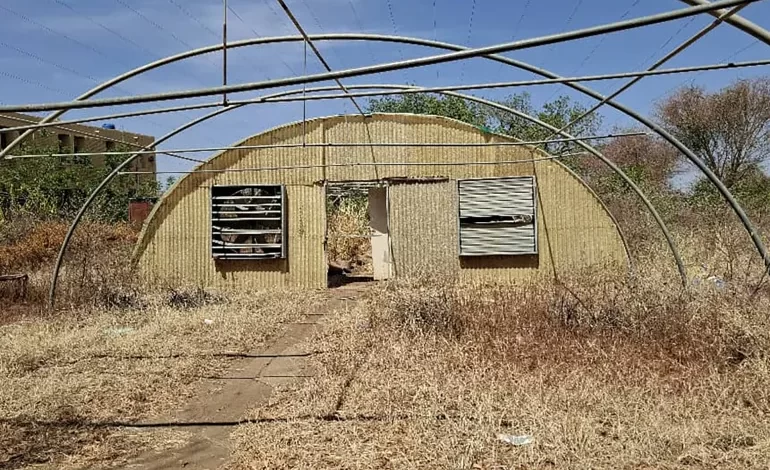
Agricultural Research Authority: Offices and headquarters were entirely destroyed, including the central office in Wad Medani, Gezira Research Station, project offices, the Ministry of Irrigation and Water Resources, and hydraulic research institutes. Equipment, furniture, agricultural machinery, laboratories, transport, and stored inputs (fertilizers, seeds, pesticides, fuel) were also destroyed.
Research Stations: Partial and total destruction affected Sennar Agricultural Research Station and Abu Naama in Sennar.
Agricultural Projects: Complete destruction of equipment, transport, and inputs at the Sukki Agricultural Project; partial destruction and looting at the Rahad Project.
Crops: Widespread destruction affected critical agricultural areas.
Youssef explained that the 2023–2024 winter crops were destroyed due to water shortages from damaged irrigation channels, along with looting of stored crops and prevention of harvest. The 2024–2025 summer season in the Gezira and Sukki schemes, and parts of the Rahad Project, was entirely destroyed. She added that the rainfed sector suffered total devastation in Gezira and partial in Sennar due to restrictions on farmers, looting of inputs and machinery, broken irrigation channels, looted banks and financial institutions, and mass displacement of farmers.
Attempts at Recovery
Gezira farmers incurred devastating losses after two consecutive failed seasons during RSF control, which ended when the Sudanese army regained control in January.
The Gezira and Managil Farmers’ Association reported loss of machinery and critical agricultural inputs, particularly fertilizers.
Association head Tariq Ahmed accused the government of neglecting agriculture and criticized the Agricultural Bank for failing to provide fertilizer, citing low capital and farmers’ inability to repay debts. He told Al Jazeera that full support is crucial for wheat cultivation during the winter season, with a target area of 600,000 acres in the Gezira Scheme requiring all necessary inputs. Failure to meet this target, he warned, could lead to famine.
Conversely, the federal Ministry of Agriculture affirmed its efforts, in cooperation with state ministries, to compensate for inaccessible agricultural areas by increasing yields and expanding cultivation in safe states previously untapped, especially maize and millet in Gedaref, Kassala, Delta, Tokar, Northern State, and the Nile.
The ministry distributed 10,000 tons of free seeds to small farmers through the UN Food and Agriculture Organization (FAO) and applied various agricultural technologies.
The Agricultural Production Department estimated about 40 million acres cultivated in safe states and projects, including maize, millet, peanuts, sesame, cotton, watermelon, beans, legumes, fodder, and vegetables, with maize alone covering roughly 17 million acres.
War and Its Effects
According to Youssef, the rainy season allowed extensive cultivation in the rainfed sector in Gedaref, Kassala, Nile, and Red Sea states, as well as irrigated projects in Gezira, Sukki, and northern Khartoum, yielding over 6.5 tons this season (2024–2025).
The Agricultural Production Department confirmed that Sudanese agriculture has suffered like other sectors, due to:
Attacks on agricultural inputs in project and private sector warehouses.
Theft and destruction of machinery and equipment.
Financial strain on farmers and disruption of trade networks.
Forced displacement and direct attacks on farmers, farms, and irrigation channels, causing crop losses.
Inability to plant early in the season due to water shortages.
Abandonment of cultivated land due to temporary displacement.
Agricultural journalist Rehab Farini told Al Jazeera that irrigated agriculture in Sudan was most affected, with damage exceeding 95%, alongside the exclusion of five states in Darfur from production due to RSF control, as well as parts of Kordofan.
Source: Al Jazeera