A Message from Hakim: A Call to End Dependency
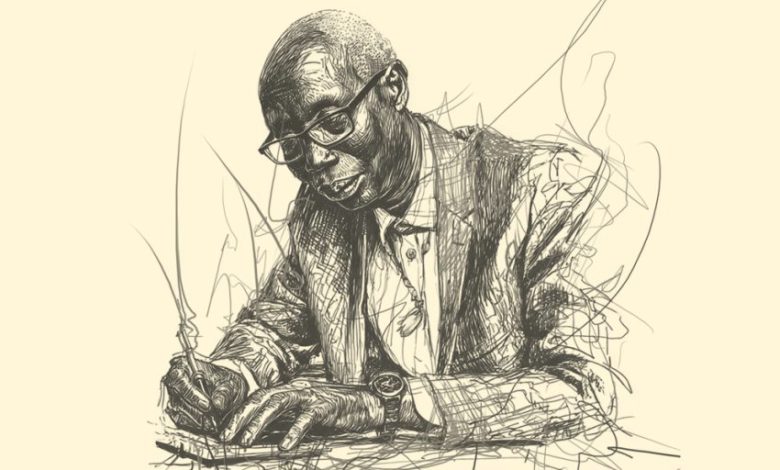
By Francis Madeng Deng
From my perspective as a member of a generation whose star is gradually fading, my role lies in offering counsel and advice—especially given that the core ideas of our generation are grounded in experience. Personally, I have had the honor of serving my country—which has now become two countries, Sudan and South Sudan—in high-ranking domestic positions as well as on the diplomatic stage abroad. Complementing this, I also gained experience through two United Nations missions, having served as the Special Representative of the Secretary-General for Internal Displacement, and as Under-Secretary-General and Advisor on the Prevention of Genocide. Both roles afforded me the opportunity to travel extensively around the globe. In each mission, our country—Sudan, particularly its South—and the African continent were among the most severely affected regions. I must acknowledge at the outset that I intend to rely heavily on these experiences.
For the voice of a wise person to be heard and to carry weight, it must speak with honesty, credibility, and integrity, without fear or favoritism, as the saying goes. In both my personal and public life, I have consistently been guided by two sets of principles. The first is that pessimism leads to dead ends and should therefore be avoided; optimism, if grounded in sound foundations, is a challenge that encourages corrective action. The second principle is that crises, however painful, offer opportunities that can be harnessed to explore and implement strategies addressing the challenges they present.
Emerging Global Disorder
The world today is experiencing a state of emerging global disorder. The old international order is unraveling, while no new system has yet been fully established. President Donald J. Trump’s “America First” declaration reverberated globally, particularly as the United States had long been the principal donor to numerous countries and international and regional organizations, including major humanitarian aid agencies. This declaration carried an implicit threat of U.S. withdrawal or reduction of international commitments, based on the claim that other countries and international organizations exploit the United States for their own benefit.
Despite existing mutual geopolitical interests between the U.S. and its international partners, this trend must be viewed as a warning to countries reliant on external support: their crises fundamentally stem from internal factors and require locally generated solutions. This is the essence of the principle of “Sovereignty as Responsibility,” which I developed alongside colleagues within the African Studies Program at the Brookings Institution—a program I founded and directed for twelve years. Later, the International Commission on Intervention and State Sovereignty reformulated this into what is now known as “Responsibility to Protect” (R2P). This responsibility rests on three pillars: the state’s responsibility to protect its citizens; the international community’s responsibility to assist states in protection; and the international community’s responsibility to intervene when a state clearly fails to protect its people. Emphasis, however, must be placed on the first pillar—state responsibility—as the foundation of sovereignty. The R2P framework became the reference point I relied upon in dialogues with governments during my UN missions addressing internal displacement and genocide prevention.
The Dilemmas of Unfulfilled Liberation
Since the wave of independence from colonial powers in the 1950s, African countries have remained in a fragile state, caught between achieving independence and remaining effectively dependent on their former colonizers. Despite considerable efforts over decades, the pan-African aspiration for self-reliance and unity largely remained aspirational. Sudan was the first African country to achieve official independence on January 1, 1956. More recently, three West African countries—Burkina Faso, Mali, and Niger—have pursued the African awakening by establishing the “Sahel States Alliance,” aimed at ending dependence on external powers and building a union based on self-reliance, with a common market, unified currency, and integrated regional infrastructure. This bold initiative, despite its inherent risks, offers valuable lessons: prioritizing self-reliance, controlling national resources, enhancing regional integration and cooperation, and paving the way toward genuine self-determination, full-fledged independence, and liberation from dependency.
It is crucial for the world to recognize that African nations are endowed with immense natural resources, which historically fueled European imperial competition across the continent. Independence sought not only to liberate Africa from colonial yoke but also to reclaim ownership and effective utilization of resources. Yet, despite these riches, Africa remains afflicted by a paradox: regions rich in natural wealth often suffer extreme poverty and dependency on foreign aid, even in critical sectors such as food security. In conflict-affected areas, vulnerable rural populations face food insecurity due to their inability to cultivate land amid persistent violence and insecurity. External assistance, while necessary at times, can exacerbate dependency and undermine national pride and dignity. Peace, security, stability, and development are interlinked existential priorities. Ensuring citizens’ security, supporting local food production to meet subsistence needs, and generating surplus for economic resilience are essential not only for local development but also for curbing urban migration and external emigration.
The Paradoxes of South Sudan’s Liberation
During my tenure as Under-Secretary-General and UN Advisor on Genocide Prevention, my wife and I hosted President Salva Kiir Mayardit of the newly independent South Sudan and his delegation during a UN General Assembly session. Despite his health challenges, President Kiir honored us with his presence at a dinner, where I delivered a welcome address emphasizing two key points relevant to the challenges inherent in newly achieved independence. First, we collectively recognized that South Sudan’s independence faced strong opposition from influential voices in Africa and the international community, concerned that the new state might fail and pose a threat to regional and international peace and security. We had to actively dispel these misconceptions through our daily work. Second, I stressed that a nation blessed with immense natural resources must rely on itself and reduce dependence on external aid, which had been vital during years of struggle. President Kiir expressed agreement, affirming that South Sudan would not be a failed state, and his Foreign Minister, Nhial Deng, echoed this sentiment, highlighting the importance of self-reliance going forward.
Yet, our post-independence aspirations were largely undermined by wars that erupted just two years after independence, degenerating into societal violence that devastated the country on multiple fronts.
Peace Processes versus National Dialogue
After my UN tenure, I had the honor of becoming South Sudan’s first Permanent Representative to the UN. I adhered to the principle that foreign policy is an extension of domestic policy; diplomats must leverage positive domestic resources internationally to gain support. However, the early outbreak of civil war revealed this principle to be more aspirational than practical. Upon returning to domestic assignments, I engaged in two major initiatives: peace processes and national dialogue. Both were plagued by deficiencies, including mutual suspicion, sharp polarization, and underlying resentment. These tensions mirrored the conflict between external interventions and internal initiatives. Opposition parties involved in externally supported peace efforts viewed national dialogue—fully funded and managed by the government—as a facade for political image enhancement. Conversely, proponents of nationally led dialogue, involving grassroots consultations and regional conferences culminating in a national convention, perceived the externally driven peace process as favoring opposition interests.
I endeavored to integrate the two processes, leveraging their relative advantages. While the peace process relied on regional and international support, the national dialogue derived legitimacy internally. Yet both sides met integration efforts with suspicion, viewing me as biased toward the other. Ironically, even the term “integration” became toxic. While national dialogue involved two-way grassroots consultations, the peace process focused primarily on power-sharing and centralized security arrangements, leaving rural areas mired in internal violence, agricultural disruption, and forced urban migration, fostering dependency on foreign donors. Ultimately, neither the revitalized peace agreement nor the national dialogue fully delivered; the former remained an externally imposed obligation, and the latter, though documented in a five-volume UNDP-supported report, merely eased public pressure and left a limited legacy for future generations. Meanwhile, insecurity, instability, and social disruption persisted.
The Paradox of Extreme Poverty in a Resource-Rich Land
South Sudan, rich in natural resources, expansive arable land, livestock, forests, rivers, lakes, and wildlife, paradoxically suffers extreme poverty, food insecurity, and developmental stagnation. A proud, self-reliant people, renowned for their natural talents and dignity, have been reduced to dependence on foreign aid, including food assistance. As a member of the Joint Monitoring and Evaluation Commission (R-JMEC), I was shocked to hear national leaders, from both government and opposition, requesting international assistance for supplying military uniforms and food to troops. I openly expressed: “Shame on us!” I also criticized leaders and international partners, including UNMISS, for focusing on security in central areas while rural populations burned.
At a meeting of the ruling Sudan People’s Liberation Movement, President Kiir lamented: “When we gained independence, we were a proud nation, respected and dignified. Now, we have lost that pride and respect.” He rhetorically asked, “Why?” answering himself: “Because of what Kiir himself did. Why did we do this to our people?” I later told him that his words would guide my discussions with international dialogue partners.
The Futility of Sanctions
Later, President Kiir asked me to chair the newly established Presidential Advisory Committee on Sanctions (PACS). I explained my principled opposition to sanctions, noting they rarely achieve their objectives and often harm innocent civilians. I emphasized that sanctions reflect internal shortcomings, advocating for a candid dialogue with international partners to acknowledge and address these internal errors. The President endorsed this strategy, emphasizing the need to open a new chapter through recognition of mistakes and cooperation for correction. Achieving peace and comprehensive security must be the cornerstone for fostering self-reliant development.
The Challenge of Constructive Diversity Management
During my UN service, I observed that identity-based conflicts represent a global challenge. In our continent, particularly in Sudan and South Sudan, these conflicts were especially acute. The problem lies not in differences themselves, but in their mismanagement, which generates conflict. Mismanaged diversity often leads to discrimination, marginalization, and exclusion. Preventing and addressing identity-based conflicts requires ensuring inclusion, equality, and dignity for all. This principle guided my constructive dialogues with governments. The first five minutes of any meeting with a head of state or minister were crucial to convey that national sovereignty must be understood not as a wall against external intervention, but positively, as a responsibility to protect and assist citizens, utilizing international support when needed. Fulfillment of sovereign responsibilities is the best safeguard of sovereignty itself. This approach, grounded in constructive management of diversity, resonated with many governments and aligns with the SPLM’s vision for a new Sudan, which called for equality and the rejection of discrimination based on ethnicity, religion, culture, or gender. South Sudan’s separation reflects the failure to realize this vision, deepening internal conflicts in both Sudan and South Sudan. Sustainable resolution requires arrangements based on mutual benefit, not winners and losers.
Power Belongs to the People; Service Serves the People
We must activate the SPLM’s original call to use oil revenues to boost agriculture, decentralize cities to rural areas, and build roads connecting communities nationwide. Peace processes must reach rural populations, alongside social services and urban-centered infrastructure. Authorities should delegate powers to local communities to exercise self-governance, leveraging human and material resources, traditional institutions, local leaders, and civil society, including men, women, and youth, to foster internally driven development. Governors and county administrators must be accountable, linking tenure to tangible achievements in peace, security, stability, and self-reliant development within a defined timeframe. This approach curbs rural-to-urban migration, restores self-sufficiency, and revives national pride and dignity.
Concluding Words
Let us honor President Kiir’s acknowledgment of South Sudan’s post-independence failures, and let us lift our heads high—not with hollow pride, but with genuine merit. Let us heed the words of the late Dr. John Garang de Mabior, who stated that self-determination is defined by what one does to shape one’s destiny, not what is granted. Let us rise above divisions, join hands, and craft a better future for our people, consolidating peace, unity, and stability for a nation that has long suffered for its freedom. Let us harness our immense natural resources to promote self-reliance, development, and prosperity in a process of empowerment from within.
source: Atar