After Deportation Campaigns, Tensions Simmer Between Juba and Khartoum

Sudan Events – Agencies
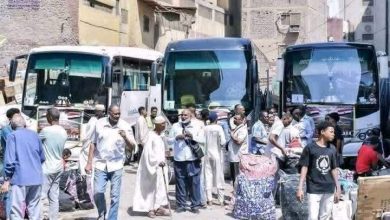
As joint Sudanese forces—comprising the army, police, intelligence services, and allied units—move to tackle the issue of foreign nationals and dismantle informal settlements, several neighboring capitals have begun to express concern. Among them, Juba has voiced dissatisfaction following the arrival of thousands of South Sudanese nationals deported from Sudanese cities for lacking valid residency permits or identification papers.
Many of these deportees were born and raised in northern Sudan, have never visited South Sudan, and know little about their country of origin.
The irony, observers note, is that while more than 90% of South Sudanese voted for independence in 2011, millions continued to live in northern Sudan without legal documentation or residency permits—treated in practice as citizens. Authorities largely turned a blind eye to the situation until the outbreak of Sudan’s current war, during which many South Sudanese reportedly joined the Rapid Support Forces (RSF) militia, fighting against the Sudanese army.
This, analysts say, forced the government to confront the issue head-on: enforcing immigration laws and deporting all foreign nationals residing illegally—chief among them South Sudanese, Chadians, and Ethiopians, whose numbers together are estimated in the millions. The latest operations took place yesterday in Salha, southwest of Omdurman, where dozens of undocumented foreigners were arrested, some in possession of weapons and narcotics—a pattern that has been repeated in nearly every campaign.
As the deportations continued, Juba’s media began to react sharply, calling on South Sudan’s Foreign Ministry and presidency to take a firm stance. Some commentators even urged a severing of diplomatic ties with Khartoum, describing the deportations of “millions” of South Sudanese as “harsh and inhumane.”
However, retired Major General Salah Al-Din Doshka dismissed such rhetoric as “emotional overreaction,” saying the South Sudanese government understands that Sudan’s actions are internal legal measures. “Those deported are, with the full knowledge of their own embassy, in violation of residency laws—let alone their participation in the conflict alongside militias,” he said. “Even ignoring the war issue, they broke immigration laws and were rightfully deported. South Sudan itself deports foreigners who violate its residency rules.”
He added: “Juba enforces strict immigration controls—so how can it expect Khartoum to keep hosting millions of undocumented South Sudanese without IDs, jobs, or clear legal status? I don’t believe the South Sudanese government would go so far as to cut ties over this issue. It knows those deported violated the law, and that Sudan, despite its economic crisis and ongoing war, hosted millions of South Sudanese for years and deported them humanely—without trials, unlike what happens elsewhere.”
Political analyst Dr. Osama Hanafi, a professor of political science at the University of Sudan, noted that while the deportations might stir some sensitivities between Juba and Khartoum, he does not expect a major diplomatic escalation.
“The decision affects all foreign nationals, not just South Sudanese,” Hanafi said. “Juba understands why Khartoum is taking these steps—addressing illegal immigration and clearing informal settlements. Sudan has both the legal and moral right to expel foreigners violating its residency laws.”
He added that there are ongoing communications between the two governments, but he doubts Sudan will reverse its policy.
“Let’s be clear,” he said. “Most foreigners who had legal papers left when the war began. Those who remain are undocumented. It’s illogical for Sudanese citizens to flee the war while foreigners stay—and many of these foreigners have even taken up arms alongside militias. I find it hard to believe that South Sudan’s intelligence isn’t aware of their citizens’ involvement.”
Hanafi concluded that some South Sudanese activists and media figures are attempting to politicize the issue and pressure their government into an emotional reaction.
“But the facts are clear,” he said. “Sudan is within its sovereign right to deport any foreigner residing illegally on its soil.”