The Separation of Darfur
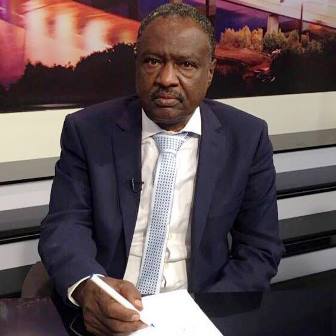
By Rashid Abdelrahim
In his address before what he called the Presidential Council for the Founding Government, Mohamed Hamdan Dagalo (known as Hemedti) laid out the initial framework for establishing his own state in Darfur.
Hemedti announced that Nyala would become the official capital, not merely the administrative one. He made a point of emphasizing Nyala’s superiority over El Fasher, the historical capital of Darfur and the seat of Sultan Ali Dinar, founder of the Darfur Sultanate.
According to Hemedti, Nyala is “better than El Fasher” because it borders foreign territories, has a stronger economy and trade network, enjoys access to railway transport, and is, in his words, “a beautiful city.”
This declaration clearly signals Hemedti’s intention to assert control over Darfur and all its tribes — including the Zaghawa, who have played a prominent role in the region’s history — while also symbolically sidelining the Fur tribe, whose ancestor Sultan Ali Dinar ruled from El Fasher, the city bearing his name (“Fasher Al-Sultan”).
To further justify his vision for an independent Darfur, Hemedti highlighted the region’s resources — from agricultural products in Geneina to tourism potential in Jebel Marra and other areas.
It is evident from Hemedti’s speech that he is pursuing a new regional identity, aligning his envisioned state with the Mahariya Arab sphere of influence that spans Darfur, Chad, Niger, and the Central African Republic. The new state, in this context, would also draw closer to its allies in South Sudan, Kenya, and Uganda.
Hemedti’s unilateral declaration of Nyala as a full-fledged capital mirrors his autocratic decision-making style, often exercised without consultation — decisions that have repeatedly brought disaster upon his own tribe, allied groups, and the entire region of Darfur. These same tendencies led him to declare war unilaterally, appoint family members to top positions — with his brother Abdelrahim as deputy, and another relative, Al-Gouni, as financial chief — consolidating power within his inner circle.
Hemedti has also taken it upon himself to forge foreign alliances, flying across the region — from Chad to South Sudan, Kenya, and Uganda — to strike deals and sign agreements on his own terms. As a result, the interests and positions of rebel movements have become fragmented across Chad, Niger, Kenya, Uganda, and Ethiopia, with relationships shifting as quickly and unpredictably as a game of cards — formed by immediate convenience and dissolved just as swiftly.
Hemedti concluded by issuing a decree that effectively dissolved the Founding Government before it could complete its appointments. It remains unclear whether the same officials will retain their posts now that Nyala has become the official capital, or if a new round of appointments will follow.
Those earlier appointments had faced fierce opposition from the Rizeigat and other Arab tribes, with dissent crushed through force — including against senior figures within the Rapid Support Forces (RSF) and Rizeigat themselves, such as “Ya’jooj and Ma’jooj” and others. The question now arises: will the new government have even harsher enforcers as the “State of Nyala” grows in power — and ambition?
Ultimately, the emergence of a Nyala-based state may reveal to the people of Darfur that this rebellion is steering them toward an uncertain destiny — one that risks separating the region from Sudan itself. Hemedti’s steps come at a time when he is at his weakest, having been driven out of Khartoum and reduced to seeking refuge in Darfur — a man now struggling even to rule the region, let alone the entire country.