Civilians Between the Fire of War and the Illusion of International Justice
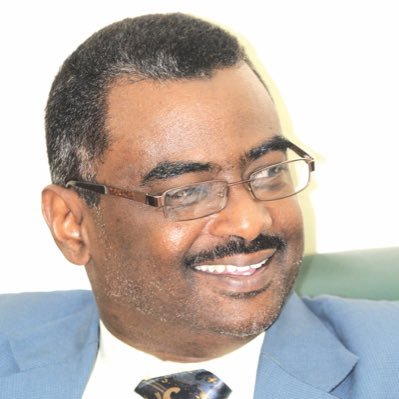
By Dr. Yasser Mahjoub Al-Hussein
Over Sudan’s horizon, clouds of death and destruction continue to thicken, heavy with the scent of gunpowder and betrayal. From Darfur and Kordofan to Gezira State and Khartoum, tragedies converge despite the distance between them. Villages are erased from the map, families annihilated in silence, and cities that once sheltered the displaced have turned into swamps of blood. Behind every harrowing image lies a human tragedy—forgotten or deliberately ignored. Neither justice serves it, nor memory preserves it.
In North Darfur, the city of El Fasher lies on a bed of embers. A suffocating siege has choked its breath for months, imposed by the Rapid Support Forces (RSF). Humanitarian, food, and medical supplies are blocked, leaving more than one and a half million people—many of them displaced from earlier waves of violence—trapped and starving under relentless bombardment.
Indiscriminate shelling makes no distinction between homes and hospitals, the wounded and the armed. El Fasher has become a canvas of annihilation. UN reports confirm that medical facilities have been deliberately targeted, rendering most of them inoperable—a blatant violation of international humanitarian law. When hospitals are destroyed, pain itself becomes incurable, and the wounded are left captive to time and death.
By September 2025, the number of internally displaced persons had reached over 10.2 million—one-fifth of the country’s population. Civilian deaths have exceeded 25,000 since April 2023, including thousands killed on ethnic grounds. A tragedy told in numbers, yet written in the tears of children, who make up nearly 40% of the victims.
This war is but a new chapter in an old story, where marginalization becomes the fuel of conflict. The difference today is that violence has evolved from a political struggle into a profitable enterprise run by militias trading in human suffering. Ethnic rhetoric has become a convenient veil for a fierce race over gold, land, and the fertile wealth of Gezira’s fields and Darfur’s mines. It is a war for resources, marketed under the banner of identity.
Recent human rights reports speak of war crimes and atrocities that may amount to crimes against humanity—deliberate attacks on civilians, systematic destruction of infrastructure, and even alleged use of chemical weapons by the RSF. Such acts not only place the perpetrators in direct violation of international law but also threaten peace and security far beyond Sudan’s borders.
According to the International Justice Report 2025, fewer than 2% of war crimes committed since 2003 have been investigated. Justice in Sudan remains a faint whisper amid the roar of gunfire.
Yet amid this inferno, flickers of hope persist. Youth-led initiatives and civilian emergency rooms operate in secrecy—documenting crimes, treating the wounded, and weaving fragile threads of life through a torn social fabric. These young men and women are not merely witnesses to tragedy; they are guardians of the idea of a homeland in an age of fragmentation. In the absence of the state, civil society has become the only state possible—the final thread connecting people to justice and citizenship.
But the gravest danger is that a growing number of Sudanese no longer believe in a shared national identity. This marks the beginning of a collapse in meaning, not just geography.
Some whisper, almost furtively, about dividing Sudan into “culturally homogeneous” entities, arguing that diversity is a burden rather than a strength. Yet such a notion, however pragmatic it may appear, is nothing but an escape forward—a confession of failure to reform the state. Unity is not built on wishes, but on fair institutions that protect everyone and on a national army that does not discriminate among its citizens.
History exposes the myth of “homogeneity.” India, with its countless languages and faiths, has endured. The United States, with its immigrant mix, has led the world. Even Ethiopia, despite its conflicts, has remained intact. Diversity becomes a curse only when justice is absent.
Let us ask honestly: what did Sudan gain from the secession of the South? Did it bring the promised stability, or did it deepen the wounds? The split was a false promise of salvation that instead opened new doors to war and hunger. Division does not end racism—it reproduces it within new borders.
The solution lies not in fleeing the homeland but in rebuilding the state—confronting ethnic and regional bigotry through education, culture, and strong institutions. Certain elites must stop promoting the rhetoric of fragmentation as if it were a cure. Nations are not built on bitterness, but on citizenship and equality.
The real challenge is not who rules, but how we rule. What Sudan needs is a new social contract—one that restores trust among its components and makes justice the norm, not the exception.
Today in Sudan, the war is not only against the rebel RSF militia, but against the very loss of meaning. Civilians are the fuel of this conflict, while justice remains imprisoned by international hypocrisy. Yet hope endures, as long as hearts still beat in the open and journalists continue to write with both ink and blood.
Silence in the face of atrocity is complicity in its making, and neutrality in times of horror is betrayal of conscience. There can be no peace without justice, and no future without memory.
In the end, we will either write our history with truth—or others will write it for us, in blood.