Militia struck him with a drone — “Kikl”: the mysterious man in Sudan’s war
Sudan Events – Agencies
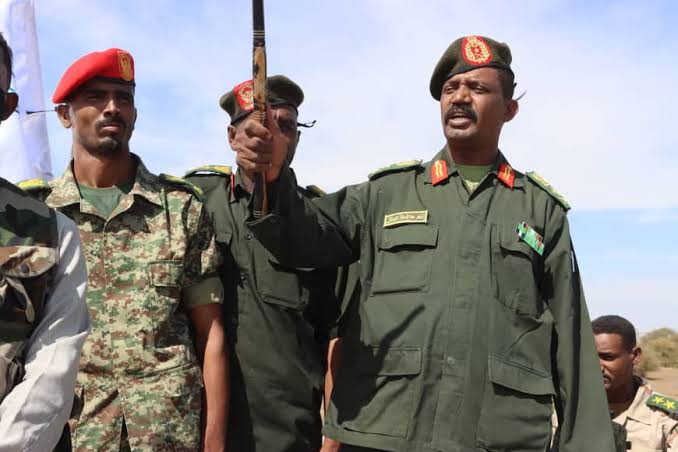
Days ago the Rapid Support Forces (RSF) said it had targeted Shield of Sudan commander Abu Aqila Kikl with a drone in East Nile, raising questions about the militia’s ability to pinpoint his whereabouts and its determination to hit him after he defected from its ranks to fight alongside the Sudanese army. Powerful voices inside the militia had downplayed his military weight and combat capabilities when he left, yet the militia still stalks his locations and strives to reach and eliminate him.
Kikl joined the militia when the war erupted and fought within its ranks; he was a commander when its forces entered Al-Jazirah. At some point he broke with the group, joined the army and subsequently led large-scale operations against it in Al-Jazirah and Khartoum. He continues to fight the RSF in Kordofan and in a recent video spoke about El Fasher, saying he would soon link up with the army holding out there. Despite numerous accusations that he ordered the killing of civilians in Al-Jazirah during his time as a militia commander, Kikl appears unconcerned by the allegations and presses on with military operations. He cloaks his movements and the locations his forces advance toward in secrecy; few reports of his movements surface except those he announces himself — such as previous hints that his forces would move into East Nile in Khartoum and his stated intention to enter El Fasher.
Saleh, a tribesman from Kikl’s home area and a member of the same tribal group, says the fifty-something commander received no formal military training and only a modest academic education. He belongs to groups traditionally engaged in trade, livestock and farming in central Sudan, Saleh says, but he became known for his courage and tactical instinct. As an Arab sheikh, his tribal standing granted him privileges that time has shown he could live up to. “Some areas paid dearly for Kikl’s presence in the RSF, and others paid dearly when he left the militia,” Saleh added, noting that the militia unleashed its wrath on some villages after his defection, and dozens lost loved ones in massacres that are well known locally.
Brigadier General Yasser Saad al-Din said Kikl’s break with the militia was very complex and went through difficult stages. “The presence of Kikl and Shield of Sudan forces among the army’s auxiliary units added a not inconsiderable strength,” he told reporters, “because his forces know how to cope with the militia’s fighting methods, excel in rapid maneuvers and flanking, and benefited from being integrated with an army that provides logistics — which helped Shield of Sudan and all fighting forces achieve victories in Al-Jazirah and Khartoum and now in Kordofan.” Yasser described Kikl as a seasoned man who leads his troops in person. “He may not seem to many like someone who cares about details, but he does — he knows how to impose discipline and how to deploy his forces,” he said.
Yasser added that Kikl is aware he may one day be asked to explain himself or even stand trial over accusations made against him by some parties and citizens during his militia leadership in Al-Jazirah. “He knows that, yet he continues military operations against the militia and appears determined to defeat it,” the brigadier said. He also noted that Kikl has formed alliances in northern Sudan, has camps filled with recruits whom he is drawing into the Shield to fight in Kordofan, and seems to enjoy strong backing from the army commander and head of the Sovereignty Council, Lieutenant General Abdel Fattah al-Burhan.
Kikl’s first public military appearance came in 2022, when he staged a parade in East Nile reportedly numbering 35,000 troops, before joining Hamidti and his forces the following year. Although he has lost an unquantified number of commanders and soldiers since then, his forces are active in forward positions in Kordofan and are fighting fiercely. Kikl moves freely between those forward positions in Kordofan and his rear areas in Omdurman and Al-Jazirah, yet he surrounds his movements with a high degree of secrecy — appearing suddenly and disappearing just as quickly — which makes him hard to track or predict. As one observer put it: “If you manage to track him, know that you have walked into an ambush, and it is hard to get out of it unscathed.”