On the Stage of the Political-Diplomatic War (1-2)
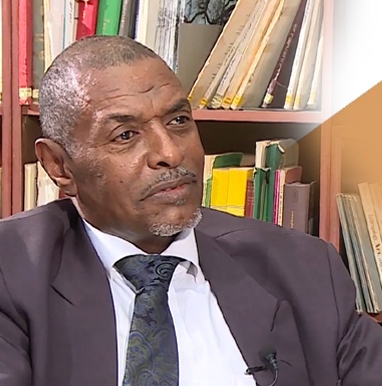
Ambassador Dr. Ibrahim Al-Kabbashi
No war in history on the scale of the current Sudanese conflict takes place on only one stage.
There is a temporary, military-combat stage — which may last longer or shorter — and there is a political-economic-ideological stage: far longer, deeper, and more enduring in its effects on the lives of peoples. It is for those strategic ends that armies are mobilized and wars are waged. Clausewitz was right when he said, “war is the continuation of politics by other means.”
Sudan’s people and leadership must never forget that a far more punishing battle is being fought on the political-diplomatic front — a battle that must be fought with the same determination we apply on the operational military theater.
Just as the adversary, before 15 April 2023, marshaled every available instrument of war against the Sudanese people and their army — men, mercenaries, training, funding, weapons, diplomatic backing regionally and internationally, and the buying of every conscience willing to be sold — so today it mobilizes, by the same tools and methods, positions of states, leaders and organizations at regional and international levels to deprive Sudan of achieving a crushing victory that would restore its sovereign national will and secure its territorial independence.
The enemy today assembles the full complement of circumstantial accommodations that would enable it to obtain by other means what it could not seize by force to achieve its strategic aims.
The highest strategic objective of the Quadruple Alliance that launched the war on Sudan has been made plain by the conflict’s own daily record: to end the State of Sudan and remove it from the world map after destroying its army, and to parcel out its patrimony — in varying measures — among the four components of the alliance.
The alliance conducting the war on Sudan consists of four coordinated blocs, mutually supporting one another at the highest levels of interdependence, each assigned a role according to the opportunities afforded by events in its operating space. But their final strategic objective is unified: the dismantling of Sudan, beginning with the dismantling of its army.
Bloc One
An international alliance led by Britain, the United States, France, Israel and the United Arab Emirates. It seems these partners entrusted the UAE — or the UAE assumed voluntarily — the tasks of control, direction and leadership, including financial and logistical costs and all coordination and command requirements.
In the capitals of this bloc a project to dismantle Sudan was designed years ago — back when it was a raw theory being studied behind closed doors in their intelligence apparatuses and strategic think tanks, awaiting the ripening of conditions that would make implementation possible. Those conditions were gradually manufactured: the mobilization that ended the “Al-Inqadh” rule removed the biggest obstacle to the project. People witnessed how the ambassadors of this bloc, with brazen arrogance, instigated that movement — a practice that utterly violated Sudan’s sovereignty in a manner unprecedented in the annals of diplomatic history.
Contemporary international relations have regulated the functions of diplomatic representation with great legal precision — from the Congress of Vienna (1815) through its twists and turns across centuries, to the UN Charter, and culminating in the Vienna Conventions of 1961 (diplomatic relations) and 1963 (consular relations), which define obligations in diplomatic practice. These are the instruments of international law that govern diplomatic representation. Yet the ambassadors of this bloc treated the country as if it were up for grabs and flagrantly violated its sovereignty. The personnel of the third bloc in this alliance (as we will explain below) were effectively subordinate to this first bloc: it funded their salaries and movements, shaped the country’s domestic and foreign policies during the Hamdok and Forces for Freedom and Change (FCC) years, and received their performance reports. In January 2020 this bloc even covertly addressed the UN Secretary-General (in the name of Hamdok) to establish a political mission to assume full management of Sudan’s administration — a cunning attempt to strip the country of its independence and place it under an international mandate.
This was the state of the “accursed bondage” — a phrase coined by the thinker Abd al-Rahman al-Kawakibi in his book The Nature of Tyranny and the Fate of Enslavement — which describes the domination and exploitation by foreign forces lying in wait for a weak, spiraling state. This bloc seized upon the nationwide stupor in late 2018 and thereafter to take control of the country’s direction.
Bloc Two
A regional coalition drawn from Chad, some Sahelian notables, the Central African Republic, Kenya, Uganda, Ethiopia, Libyan forces (Haftar), South Sudan, and leading figures in regional organizations (the African Union and IGAD). Large sums of political money circulated among members of this bloc in multiple forms — bribery on a scale that African observers later described as unprecedented. The aim of this bloc was to provide continental and regional support that would transition, once Bloc One succeeded in occupying the country and destroying its army, into international backing for the results the alliance desired: recognition of their carve-up of Sudan.
Bloc Three
The international and continental blocs manufactured a functional Sudanese internal alliance: they selected parties, entities and individuals to appear as the country’s leadership, following the unfolding of their plans to crush the Sudanese army and eliminate its leadership in mid-April 2023. Their hope was that the collapse would be swift — hours or days — and with the birth of a new entity they would effectively remove from the world map a country called Sudan, as the nation and the world knew it. They prepared the regional and international arenas to receive and recognize this illicit offspring.
The method designed to reach this strategic objective is the same method the first bloc used eight decades earlier in Palestine when Britain and its allies enabled Zionist militias to seize Palestinian land. Put the Rapid Support Forces (RSF) in the place of the Haganah and Irgun in the 1940s; put Hemedti and his clan in the place of Shamir and Menachem Begin — and you will see the likeness in behavior and field performance between Zionist paramilitaries in Palestine and janjaweed/paramilitary groups in Sudan. The methodology is the same: colonial, settler, exterminatory and replacement tactics — a re-production of the old Zionist (colonial-settler-extermination-replacement) model.
Bloc Four
The Rapid Support Forces. Tasked — with the support of the three allied blocs — to implement the strategic objective on the ground: dismantle the Sudanese army after assassinating its leadership; that is the prerequisite for dismembering the country as a whole. The RSF leadership was fueled by an intoxicating sense of military and financial might, and fed promises of sweeping support — including recognition by the U.S., Europe, Israel, and Arab states led by the UAE, as well as backing from the AU, IGAD and other African clients of Bloc One. Hemedti and his partners and family, who effectively own the RSF, were offered unimaginable spoils: the dream of a rich, powerful kingdom built upon the ruins of a country once called Sudan. Hemedti himself was lavished with promises — a tree of immortality and an everlasting throne.
Nothing matches the wicked whisperings poured into Hemedti’s ear except Satan’s whisper to Adam and Eve when he led them to taste the tree of forbidden desires. Those who planted the seeds of grand kingship within him now sing with someone who said: “As long as you, O foolish king, are our friend, we will profit from your ignorance.”
My aim in the foregoing was to place the forces engaged in the war against the Sudanese people and army into interconnected, attributable categories. That is, to present a methodical analysis whose logical sequence yields conclusions grounded in evident realities on the ground.
All of us — leadership and people alike — must contemplate, with clear sight, the following clarifying questions built on the methodological description above. If we rid ourselves of blinkers, self-interests, and obfuscating egos — whether individual, sectarian, party, tribal, or other partial entities — the conclusions that flow from these questions will appear as logical certainties.
Question One: Who is the enemy of the Sudanese people?
Who kills them, drives them from their homes, plunders their property, destroys institutions they built painfully over seventy years, violates their honor, and sells their women as captives to slave markets across Africa in the twenty-first century?
The obvious answer, clear to anyone with sight and conscience, is that the enemy of Sudan is the international and regional coalition that assembled the Quadruple Alliance to end Sudan’s existence, beginning with the destruction of its army. The composition of the alliance — its four blocs — is precisely what wages war on the Sudanese people in solidarity, integration and coordination.
Each component of this alliance plays its assigned role: some provide funding and arms; others mobilize mercenaries and directly carry out killings, looting, destruction and sexual violence; others provide political and diplomatic cover at regional and international levels; and still others marshal internal political alignments, intelligence, and propaganda operations that direct killers to their victims and manage psychological warfare.
Are Sudanese still clouded from seeing the coordinated, supportive roles undertaken by each component? Is there anyone left who is unaware of the synchronized functions each plays within this larger strategy? Can any sensible person regard a component of this devilish alliance as a neutral, honest broker — as the United States and the UAE attempt to portray themselves — while Britain obstructs Sudan’s grievances at the UN Security Council and seeks to exonerate its partner, the UAE, from criminal complicity in war crimes?
Question Two: What are the strategic aims of the alliance?
The answer: the strategic aim is complete seizure of the country — an empty land, cleared of its people — the largest experiment of colonial-settler-extermination-replacement in African history. The experiment rests on two pillars: dismantling and reconstitution (replacement and substitution). It entails stripping populations from their land by all forms of material and moral coercion, and replacing them with others — a deep demographic tilling followed by the implantation of a new human fabric.
The colonial record of the partners of Bloc One is full of substitution and replacement experiments — as happened to Native Americans, as these same actors enacted in Palestine, as occurred to Australia’s indigenous peoples, to South Africa’s indigenous populations, and to the original inhabitants of the Caribbean. Settler colonialism in all its cases is linked to the principle of replacement. Two instruments are always employed to achieve that aim: total elimination of any resistance, or genocide when necessary to enable complete replacement.
Question Three: Do RSF operations in every population center it attacked amount to anything less than elimination and the violation of everything (homes, wealth, property, honor)? Or do they amount to genocide?
The abundant evidence witnessed worldwide — except to the four blocs of this alliance — answers plainly. Ask about Masalit in Geneina, Ardamata, Wad Noura, Al-Sharfa, Al-Rahad, Umm Sumeima — indeed, ask any household in any town or village where the janjaweed paramilitaries struck with the support and solidarity of their allied partners.
Do we see, from the context of the struggle and its daily record, any renunciation of the alliance’s strategic objectives for which they expended every available means?
Dozens of objective questions arise to reaffirm a truth that some prefer to ignore: the coordinated and concerted action of the alliance components that wage war on the Sudanese people and their armed forces.