Former Central Bank Official: Exclusive Access to Banking Services Hurts Liquidity
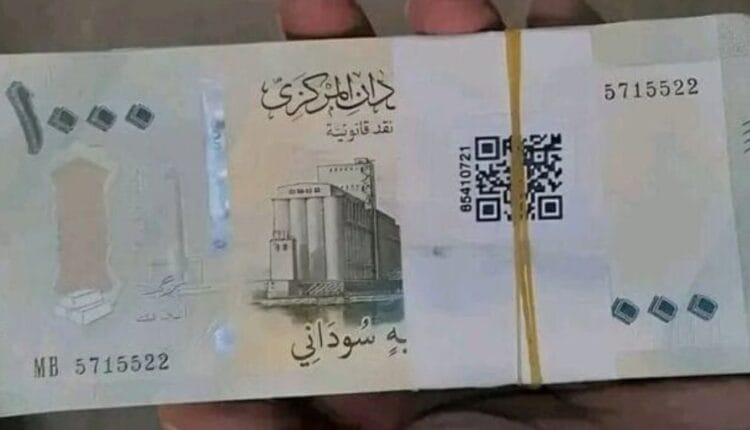
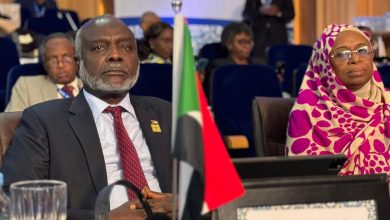
Former Assistant Governor of the Central Bank of Sudan, Abdallah Al-Hassan, has warned of the negative impact caused by the continued circulation of both old and new currency notes, saying it undermines the success of the replacement process.
Speaking to Al-Muhaqiq newspaper, Al-Hassan explained that this situation allows citizens to transport old currency notes from secure states—where the replacement has already taken place—to other regions, exchanging them for new denominations or converting them via electronic banking applications.
He urged the Central Bank of Sudan to act swiftly to resolve this issue.
According to Al-Hassan, the currency replacement process was likely aimed at determining the volume of money in circulation—both within banks and among the public—to inform future monetary and financing policies. However, he noted that it is difficult to accurately assess liquidity levels while several states and regions remain insecure.
He further highlighted exceptional obstacles that hindered the completion of the replacement operation, primarily due to the ongoing war that broke out on April 15, 2023. These included the suspension of the electronic clearing system for both local and foreign currency cheques, the shutdown of the national switch (EBS) operated by the Electronic Banking Services Company, and the disruption of most electronic banking applications and payment systems such as ATMs and point-of-sale devices.
“These disruptions significantly undermined the replacement process, which was originally intended to take place through the banking network,” he said. “When banks suspended most electronic services, they had no choice but to conduct cash exchanges directly and simplify account-opening procedures, which led to a temporary increase in deposits.”
Over time, however, Al-Hassan noted that banking services became concentrated in only about four banks, effectively creating an oligopoly.
“This concentration led to deposit accumulation in those banks while others suffered withdrawals, weakening their liquidity positions and potentially exposing them to serious risks,” he warned.
Al-Hassan stressed that the replacement campaign would have been far more successful if the Electronic Banking Services Company (EBS) had restored its operations—particularly the local and foreign currency clearing systems—and if electronic payment channels such as ATMs and POS terminals had resumed activity. He also recommended printing higher-denomination banknotes (2,000–10,000 Sudanese pounds) to help ease liquidity shortages and stabilize the currency structure.
He called for a post-stabilization study to determine suitable small (metal), medium, and large currency denominations. Such a study, he added, might even recommend dropping one, two, or three zeros from the current currency—an approach adopted by several other countries.
To combat counterfeit or substandard notes, Al-Hassan proposed establishing cash processing centers in bank branches, government offices, private institutions, and marketplaces, with the Central Bank supplying free currency-verification machines.