As Washington Hosts “Quartet” Meeting on Sudan, Hopes Rise for a Final Political Settlement
Sudan Events – Agencies
As the long-awaited meeting of the “Quartet” countries on Sudan approaches in Washington this October, optimism is growing across Sudanese circles. Many believe this round of international engagement could finally pave the way toward a lasting political settlement to end the war between the Sudanese Armed Forces (SAF) and the Rapid Support Forces (RSF).
Across Sudan, politicians and civil society activists alike see the upcoming talks as a last chance to halt a devastating conflict that has raged for more than two years, killing thousands, displacing millions, and destroying much of the nation’s infrastructure.
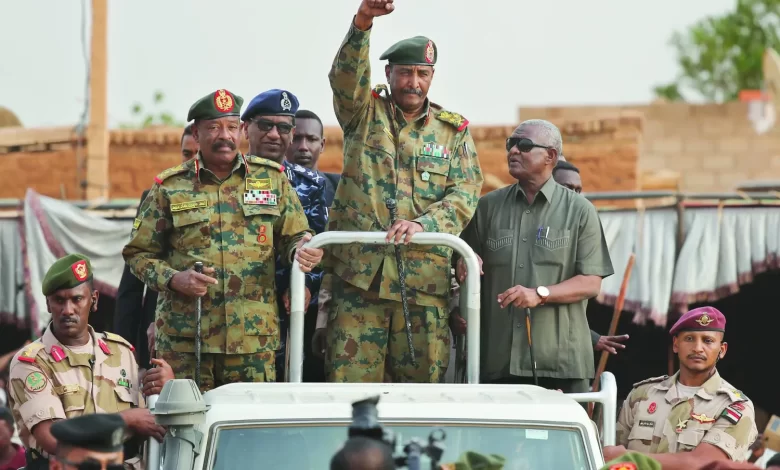
The visit of Army Commander Gen. Abdel Fattah al-Burhan to Cairo last Wednesday—where he met Egyptian President Abdel Fattah al-Sisi—focused on the Quartet’s plan, which brings together the United States, Saudi Arabia, Egypt, and the United Arab Emirates. Both leaders expressed hope that the Washington meeting would produce tangible results toward resolving Sudan’s crisis.
Following that visit, Sudan’s government issued its first clear stance on the Quartet initiative. Foreign Minister Mohieldin Salem said that U.S. President Trump’s recent initiative to end the war in Gaza “has created a positive atmosphere conducive to sustainable peace in the region—an opportunity that should also be used to stop the Sudanese war.”
Expectations and Warnings
Babiker Faisal, head of the Executive Bureau of the Federal Gathering and a senior member of the “Sumud” Alliance led by former Prime Minister Abdalla Hamdok, told Al-Ahdath that the Quartet meeting is expected to set clear timelines and mechanisms for implementing a humanitarian truce.
He said both warring sides had given a green light to move forward with the Quartet’s roadmap, noting a “major shift in public opinion toward the anti-war camp led by the Sumud coalition.”
However, Faisal warned against a bilateral power-sharing deal between the two warring parties, arguing that such an arrangement “would not end the war nor bring about lasting peace.” The success of the Quartet’s roadmap, he said, depends on a political process that tackles the root causes of Sudan’s crises. He emphasized that “Islamists” should not be part of any future dialogue, given their continued dominance over the state’s military and security institutions.
Prospects for Direct Talks
An official meeting in Rome last Thursday brought together Saudi Deputy Foreign Minister Waleed al-Khuraiji, Chadian President Mahamat Idriss Déby, and Mossad Bolous, the U.S. President’s Special Advisor for African Affairs. The encounter was part of ongoing international efforts to resolve Sudan’s war.
Bolous has repeatedly stated that Sudan’s warring sides are “close to engaging in direct talks,” adding that Washington maintains continuous contact with both the army and the RSF to establish general principles for negotiations.
Sources told Asharq Al-Awsat that the U.S. envoy’s recent communications with both camps covered the overall situation in Sudan and steps that could prepare the ground for formal negotiations.
Meanwhile, the parallel government established under RSF control has expressed its willingness to engage with the Quartet initiative to end the war.
Simultaneously, several Sudanese figures have been in contact with Burhan’s inner circle, urging him to respond positively to the Quartet’s efforts by reviving the Jeddah platform for negotiations with the RSF. For over two years, Burhan has insisted on pursuing the war until the RSF’s military defeat—a goal that, many observers now agree, has not been achieved and seems increasingly unlikely.
A Growing International Consensus
According to Sudanese political analyst Abdallah Adam Khater, the Quartet roadmap has evolved beyond the vision of the four founding states, comparing it to “a snowball that gathers more support as it rolls.”
He noted that the plan has gained successive endorsements from the United Nations, the African Union, the European Union, the Arab League, IGAD, and most neighboring and regional states—factors that, he argued, significantly enhance the prospects for a successful international push to end the war.
Speaking to Asharq Al-Awsat, Khater said that any political solution based on the Quartet’s roadmap “must center on a Sudanese–Sudanese dialogue conducted with a sense of national responsibility—one that goes beyond the current war and addresses the country’s long-standing crises.”
He added that all signs point to an imminent return of the SAF and RSF to the Jeddah platform to discuss a humanitarian ceasefire and a temporary truce, preceded by technical preparations for how the two sides would negotiate.
Regional Leverage and the Roadmap
The Quartet’s strength lies in the participation of three pivotal regional powers—Saudi Arabia, Egypt, and the UAE—whose close ties with Washington and influence across the region could help push Sudan’s rival factions toward a peace process. The first priority, diplomats say, is to protect civilians and ensure the flow of humanitarian aid, followed by political arrangements for a postwar transition.
The Quartet’s roadmap, outlined in a statement last month, calls for an initial three-month humanitarian ceasefire that would evolve into a permanent cessation of hostilities, paving the way for a comprehensive nine-month transition culminating in the formation of a civilian government free from military control.
Burhan’s Preconditions
Meanwhile, Gen. Abdel Fattah al-Burhan has laid down clear conditions for any future peace talks, particularly those based on the Quartet’s roadmap. Speaking in Atbara, River Nile State, he said the army “will not back down from its pledge to the Sudanese people. Whether through the Quartet or others—any party that wants to negotiate with us on what serves Sudan’s unity and dignity and ends this war—we will engage with them.”
However, Burhan rejected any unconditional negotiations, asserting: “We will not negotiate with anyone, and no one will impose on us a peace deal, a government, or figures rejected by the Sudanese people.”
He added that anyone seeking peace “must submit to the will of the people,” stressing, “We welcome all efforts, but there will be no guardianship over Sudan.” The army chief affirmed his readiness to enter talks only if they guarantee “an end to the rebellion” and prevent the imposition of unpopular figures on the Sudanese state.