Determined to Eliminate the Militia… Burhan in Atbara — Settling the Debate
Sudan Events — Agencies
Efforts to reach a settlement on the Sudan issue are accelerating, as part of a wider regional portfolio shaped by active international powers — led by the United States, Western countries and several regional states — who are taking advantage of the diplomatic momentum created by the Gaza agreement. It appears these powers have turned their attention to Sudan: their measures are now imminent and audible, and their messages have begun to reach Port Sudan through Cairo’s direct phone line. Cairo dispatched senior officials to meet with the Chairman of the Sovereignty Council and Army Commander, Lieutenant General Abdel Fattah al-Burhan, in Port Sudan, before Burhan himself traveled to Cairo to meet his Egyptian counterpart — a meeting that was the subject of rumours both before and after it took place.
Some rumours claimed there would be a trilateral meeting bringing together Burhan, President Sisi and the resigned prime minister Abdullah Hamdok. Others pointed to U.S. arrangements in the region and the current regime’s ties with Iran; still others spoke of an upcoming quartet meeting and what it might achieve. In the immediate aftermath of the meeting, however, leaks focused squarely on American and Western messages aimed at reordering the region in ways that align with their interests — and at securing a peace that matches their objectives and benefits.
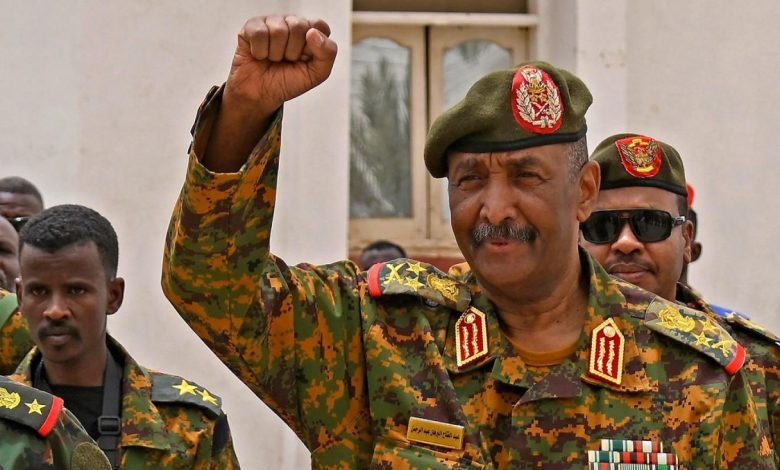
That approach has met the vision of the Chairman of the Sovereignty Council, who is currently under immense pressure to move toward a settlement that would end the war and satisfy the sponsoring powers. Leaks said Burhan put his conditions on the table: any forthcoming political understanding must be based on the Jeddah Agreement; militia forces must be assembled in camps supervised by the army; the al-Dukalo family must not participate in negotiations nor have a future political role in Sudan. He later reiterated these points from the Nile River state, specifically Atbara, which he visited to offer condolences over the death of martyr Muzamil Abdallah Merghani. There he spoke plainly, freed from the pressures around him, insisting he would continue to fight the enemy wherever found and would negotiate only on terms that restore the country’s wellbeing, end the war, restore Sudan’s dignity and unity, and prevent the possibility of future rebellions.
He explicitly referenced the quartet when he said, “We will not negotiate with any party — the quartet or others — except on terms that guarantee the country’s welfare.” Observers interpreted this as a message to a concerned Sudanese public wary of the Egypt visit and the quartet’s interventions. Dr. Saeed Salama, director of the Vision Center for Strategic Studies, believes the quartet cannot accomplish much due to internal problems. He said: “It is true that what is happening now reflects a genuine international desire to stop the fighting and the shedding of blood, but will it achieve what everyone wants?”
Dr. Salama added: “Beyond what was presented to the Sudanese president and his response, I think arriving at a formula accepted by all quartet partners is difficult. Many assume the quartet speaks with one voice, which isn’t true — there are differences among the mediators and a lack of serious commitment from the fighting parties on the ground, which makes these initiatives more like cumulative diplomatic efforts seeking a breakthrough rather than a clear strategic turning point.” He continued: “The current quartet-proposed vision for resolving the Sudan conflict has two main tracks: an immediate halt to hostilities and an effort to bring the leaders of the warring parties together at the negotiating table. Although some consider this vision theoretically realistic, it faces major challenges on the ground due to ongoing armed clashes and the absence of agreement on who should represent Sudanese parties in negotiations.”
He added: “Within the quartet, some countries insist on including representatives of the Sudanese army while others reject their participation — reflecting, as I said earlier, deep divisions even among mediators that hinder the start of a serious, effective dialogue.” He concluded: “Burhan understands the scale of the bets and the pressure, but he also knows these divisions and fractures inside the mediators’ committee and is shrewdly exploiting them to advance his cause.”
Dr. Abubakr Mahmoud Ahmed Ismail, a professor at Wad Al-Neel University, argued that the entire matter had nothing to do with a planned meeting between Burhan and Hamdok. He said the meeting had not been on the Cairo agenda nor scheduled, so claims that Burhan refused or excused himself from meeting Hamdok are unfounded. “Everything said about the quartet was marginal to the meeting, which discussed U.S. concerns about the transfer of weapons to Gaza — given Sudan’s alignment with Iran — in addition to Red Sea security and relations with China and Russia,” he added. “The meeting did not address the quartet except peripherally within arrangements for regional security and finding a settlement for conflicts in the Middle East.”
Major General Ma’ash Salah Muhammad Khalid believes Burhan read the situation accurately: he knows any settlement that repositions the militia politically or militarily will be rejected by the public, something most quartet countries have not absorbed, as they persist with the old formula. “People will not accept returning those who killed their loved ones, looted their properties, and raped their women to the political scene,” he said. “A settlement must meet the conditions set by the army commander and Chairman of the Sovereignty Council, because reintroducing the militia will plunge the country into greater crises.” He added: “War is not an objective, and no one wants it to continue, but ending it must not bypass the liquidation of these militias, the surrender of their weapons, and the end of any political ventures by the al-Dukalo.” He concluded: “Burhan’s statements from Atbara — and the dispatch of major combat units to operational areas in Kordofan — were a response to recent talk about a settlement that would reintegrate the militia and their backers into the scene.”