The Siege of El Fasher: The Unrelenting Suffering
Sudan Events – Agencies
In 2019, Omar al-Bashir, who had ruled Sudan for thirty years, was ousted in a coup. The new transitional government was a power-sharing arrangement between civilian political parties, the regular army, and the Rapid Support Forces (RSF)—the latest incarnation of the Janjaweed militias, largely recruited from Arab communities in Darfur and used by Bashir to crush the region’s rebellion.
In 2023, tensions escalated between the military factions of the transitional government. Discussions over formally integrating the RSF into the national army sparked confrontation: the RSF, which had gradually gained autonomy, refused to accept a subordinate role. Fighting broke out suddenly between the two sides, with catastrophic consequences—especially in Darfur.
The main road west of El Fasher, capital of North Darfur, had been deserted by travelers during the war in the region twenty years earlier. Its jagged volcanic hills became a refuge for bandits, and the road earned the name “Wind Street.” The newer route linking El Fasher and Tawila is no safer—locals call it “the Road of Death.” When I first traveled it last October, it was under the protection of the Sudan Liberation Army (SLA), one of the few rebel groups that remained neutral in the fighting between the army and the RSF. Its fighters had descended from their mountain strongholds to allow civilians to pass every Friday.
El Fasher is the army’s last stronghold in Darfur—a prime target for the RSF, which controls the rest of the region’s major cities and has besieged the capital since April last year. Initially, the RSF grudgingly accepted the neutral faction’s protection of the forty-mile corridor from Tawila, but in November reversed its stance, claiming the route was being used to resupply the army garrison.
When I returned in May, RSF checkpoints had replaced the rebel patrols. Near one such post, the road was littered with open suitcases, clothes, and schoolbooks. Witnesses said civilians leaving El Fasher were searched by RSF troops and allied Arab militias, who took what they wanted and left the rest. Empty donkey carts stood by the roadside—the animals had been seized, forcing their owners to walk. Looters even stole water from the jugs carried by those fleeing the city, leading to deaths from thirst and exhaustion, marked by fresh graves along the way. Around two hundred people may have died here in a single month.
There were still bodies in the brush, members of another rebel faction—now allied with the RSF—told me. The victims, they said, came from the same non-Arab groups historically targeted by the RSF. Trying to salvage their image, they buried the dead and helped civilians heading toward Tawila. A nurse in a white coat poured water mixed with flour for exhausted children, while men in uniform helped dozens of survivors onto a truck to continue their journey.
But this was not mere propaganda. Like every faction that fought the distant, brutal central government for two decades, these fighters and their communities have found themselves victims once again—caught in a new war between two wings of the Sudanese military that once collaborated in their oppression. The army and the Janjaweed together laid waste to Darfur between 2003 and 2005—a campaign the International Criminal Court still investigates as genocide.
A new war had seemed inevitable since Bashir’s fall. In Darfur, there was deep resentment that the “transition” in Khartoum was little more than cosmetic. In the capital, the army and RSF continued to cooperate until they jointly toppled the civilian-led transitional government in October 2021. The conflict that erupted in April 2023 is often described as “a war between two generals,” with civilians trapped in the middle. If it were merely that—a struggle for power—it might have remained confined to Khartoum and been easier to resolve.
But the RSF recruited heavily from Arab tribes in Darfur, its original base. The war quickly took on an ethnic dimension. Long-standing tensions between Arabs and non-Arabs erupted into the massacre of tens of thousands of Masalit people—the majority population in West Darfur—by the RSF and allied militias in Geneina in June 2023, forcing survivors to flee to Chad. The Masalit make up a large portion of the roughly 900,000 Sudanese refugees who crossed into Chad in the second half of 2023. By the end of that year, the RSF had seized Geneina and the capitals of three other Darfur states; only El Fasher remained outside its control.
The RSF began negotiating with non-Arab rebel groups stationed in El Fasher under a 2020 peace deal with the transitional government. Abdel Rahim, deputy RSF commander and brother of Hemedti, offered them control of the city if they persuaded the army to withdraw. Some rebel leaders threatened to fight should the RSF enter, fearing a repeat of Geneina’s massacres. The factions split between supporters and opponents of the RSF. At first, the RSF avoided confrontation, focusing on Khartoum—but as most rebels sided with the army by late 2023 and the RSF lost ground in the capital, El Fasher rose in strategic importance, becoming the central battlefield.
In April 2024, the RSF encircled the city and its million residents, launching shelling and over two hundred ground assaults over the following year. The army retaliated with airstrikes that sometimes hit civilians. Both sides lost fighters, including senior RSF officers. Civilians who took up arms to defend their city proved more effective than the army itself. The memory of RSF atrocities in Geneina—and of Bashir-era massacres—fueled their resolve. El Fasher earned the nickname “the Lion’s Moustache”—a place too fierce to approach.
“Since April 2023,” said Yasser, a 32-year-old fighter from El Fasher, “the RSF has stormed homes, abducted and raped women, looted vehicles, killed and humiliated people. They wanted to destroy us. That’s when we formed self-defense units.” With little military experience, he had once worked with the now-defunct UN–AU mission before turning to car smuggling from Libya. In the desert, rife with bandits and RSF troops, he and his comrades had to buy weapons from Libya to protect their convoys. Traders played a crucial role in arming the self-defense groups, which adopted names like “Ird-Ird” (“Crossed”) and “Khashin” (“Tough”). The RSF used their emergence as justification for claiming “there are no civilians left in El Fasher.”
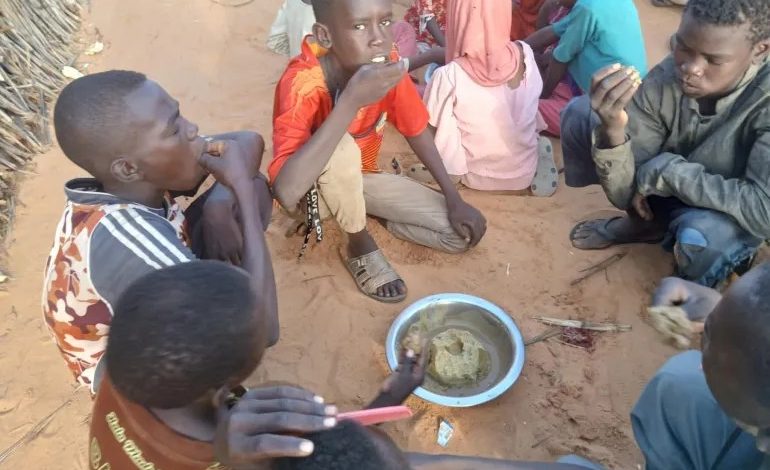
As army and popular resistance attacks mounted, the RSF responded with harsher violence and a tighter blockade. For months, El Fasher relied on the “Friday Corridor” from Tawila. After it was closed, traders and fighters began riding camels by night to fetch food—many were killed or wounded. Prices soared: a single onion cost 1,000 Sudanese pounds, ten times its prewar price. The poor resorted to eating livestock feed.
According to the IPC food security classification, the siege produced famine. In March 2024, a survey at Zamzam camp—home to half a million people south of El Fasher—found 29% of children malnourished. By August, famine was declared there; by December, in two more camps. In March this year, authorities said 38% of El Fasher’s children under five suffered from malnutrition.
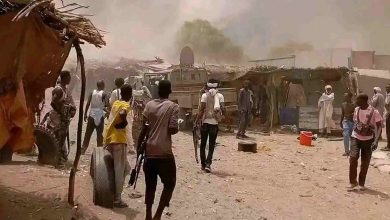
Zamzam was once considered safe. But in April 2024, the RSF launched a massive offensive: artillery and drone strikes followed by a ground assault. The camp’s defenses collapsed quickly. “If the army had backed us, they wouldn’t have taken Zamzam,” said Yasser. It hadn’t—and a third of his comrades were killed. Hundreds of displaced people died; tens of thousands fled to Tawila.
Nada, 25, has been displaced five times. During the attack on Zamzam, her husband, uncle, and five-year-old son were killed before her eyes. She was shot and later lost her surviving child. Men and boys were executed, aid workers killed—nine staff members of Relief International among them.
The attack had an ethnic character, targeting the Zaghawa—the backbone of both the rebels and the self-defense forces. Soldiers questioned people about their tribes, spoke to them in Zaghawa, searched phones for signs of combat activity or the distinctive braids of fighters. Those who fled were killed or raped.
After the massacre, Tawila’s displaced population swelled to 600,000. People first sought water and shade, then shelter. Communal kitchens, or takayas, sprang up, organized by youth groups and Emergency Response Rooms (ERR), funded by traders and the diaspora. But global funding shortages shut many down.
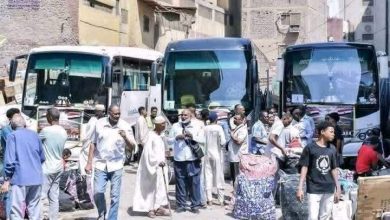
Thousands are now contemplating leaving Sudan altogether—especially after RSF threats that Tawila will be its next target. Many pay RSF-affiliated militias to smuggle them into Chad.
“If El Fasher falls to the RSF,” Yasser told me, “there will be no land left for us [non-Arabs] in this country.” He asked over WhatsApp whether Macron or Starmer might airdrop food to El Fasher “as they did in Gaza.” The RSF has dug trenches and built a 57-kilometer sand berm encircling the city. The war is increasingly fought by drones—one strike last month hit a mosque in the upscale First-Class neighborhood, killing seventy worshippers at dawn.
It has been eighteen months since the UN Security Council adopted Resolution 2736 calling for an end to El Fasher’s siege. But after decades of failed Western intervention, there is now consensus that only Sudanese can save their country. That principle is an old one—used by Bashir to stoke nationalism against Western “plots,” and later by the African Union in the name of continental unity. Today, Western policymakers place their hopes in “civilians” and “civil society”—divided, fragile, yet enduring—especially in the Emergency Response Rooms, recently nominated for the Nobel Peace Prize. But as one founder of the Zamzam ERR told me: “Forget Nobel. The priority is to stop the war.” He is now a refugee in Chad, surviving on meager and uncertain Western aid.
London Review of Books – Vol. 47, No. 19 – 23 October 2025