The War in Sudan: Betting on What al-Burhan Said
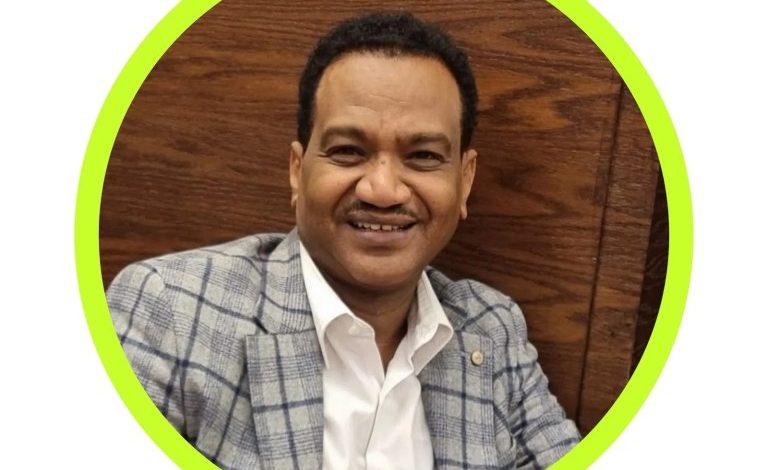
By Dr. Osama Mohamed Abdelrahim
Since the outbreak of war in Sudan on April 15, 2023, the bloodshed, destruction, and displacement have not ceased. The conflict has become a grinding machine that spares neither civilians nor soldiers, neither cities nor villages. And because wars are not merely fires that burn, but complex networks of interests feeding local, regional, and international powers, ending the fighting has become an urgent national and humanitarian necessity—not out of sentimentality, but out of responsibility toward a people exhausted by endless wars and a collapsing way of life.
Yet, it is crucial to distinguish between stopping the war as a tactical step—through a ceasefire—and ending the war as a strategic act that leads to sustainable peace by addressing the root causes of the crisis and preventing its recurrence. Halting the fighting does not necessarily mean achieving peace, just as stopping the bleeding does not mean healing the wound.
Negotiation, of course, is necessary—but on what basis? Every war eventually ends at the negotiating table. Negotiation is not weakness; it is a natural and essential step toward resolving conflicts—provided it rests on sound foundations. The key question is this:
Will negotiations merely reproduce the same crisis in a new form?
Or can they pave the way for a new state built on the sovereignty and will of the people rather than the logic of the gun?
The “Quad” (the United States, Saudi Arabia, Egypt, and the United Arab Emirates) has put forward its own vision for a settlement, emphasizing several key points:
A ceasefire through a three-month humanitarian truce.
Launching a civilian transitional process within nine months.
Rejecting the return of “extremist” groups (a clear reference to Islamists).
Ending foreign military support.
Including both the army and the Rapid Support Forces (RSF) in the negotiation process.
A closer reading, however, reveals that this proposal subtly seeks to rehabilitate and reintegrate the RSF, opening the door for it politically—as though it had not committed atrocities against the Sudanese people. That alone is reason enough to reject and expose it, both politically and publicly.
While the influence of international and regional actors cannot be denied, they must not be allowed to determine Sudan’s destiny. What matters more than the Quad’s conditions are the conditions of Sudanese society itself—the same society that has paid the highest price for this war. The world may look at Sudan through the lens of regional stability, the Red Sea, and transnational terrorism; but Sudanese citizens view it through the lens of security, dignity, sovereignty, and national pride.
When we look at the international and regional landscape, the patterns are clear:
Washington seeks stability that safeguards its Red Sea interests.
The Gulf states want to secure maritime and energy routes—while the UAE pursues broader political and economic ambitions on the African continent.
Egypt fears the spread of chaos to its borders.
But it is the domestic framework that must take precedence—the will of the people, national institutions, the army, and the vision for a genuine civilian state that is neither hostage to militias nor beholden to foreign agendas.
Israel’s role in the Sudanese arena cannot be ignored either—sometimes visible, other times operating in the shadows through direct and indirect channels. Given Sudan’s strategic location, resources, and access to the Red Sea, Israel views the conflict as an opportunity to reshape the regional balance of power in its favor, anchoring its influence between Africa and the Middle East. Its goal is not Sudan’s stability, but the consolidation of its own security interests. Understanding this role clearly is essential for dismantling external agendas and redefining national priorities from within, not from abroad.
Then comes the decisive question: can those who caused the war be part of its solution?
Can those who ignited, supported, or prolonged the conflict—or those who silently hoped for the rebels’ victory—be trusted to help end it?
The logical, patriotic answer is an unequivocal no.
Peace cannot be built by including those who betrayed the nation. It must begin with accountability and their removal from the political scene—at the very least—while empowering those who stood by the country and bore its suffering. The people who entrusted the army with their future, who stood behind it, fought alongside it, and sacrificed lives and livelihoods for the nation’s survival—only they have the right to shape Sudan’s destiny.
While international statements and media leaks multiply, General Abdel Fattah al-Burhan chose to deliver his message from Atbara, during the funeral of a fallen soldier. His words were clear: “We will not negotiate with any party, whether it is the Quad or others. We are ready for talks that serve Sudan’s interests and end the war in a way that restores the country’s dignity and unity, and prevents any future rebellion.”
With this statement, al-Burhan shut the door on attempts to impose an externally crafted settlement and redefined negotiation as a national process on national terms, with no compromise on dignity or sovereignty. His message spoke not only to external powers but also to hesitant domestic voices—bringing relief to many patriotic Sudanese who now must rally behind this stance with unity and unwavering resolve.
Every political and military process carries both tactical and strategic objectives. The leadership must distinguish between the two in any future talks:
Tactical: temporary ceasefires or urgent humanitarian arrangements.
Strategic: defining the state’s structure, the future of power, the fate of militias, and the exclusive control of arms by the state.
External agendas must never define Sudan’s path. Instead, they should revolve around national interests—not the other way around. True peace cannot be based on compromise, but on clarity: there is a victor and a defeated party—there can be no moral equivalence between the executioner and the victim.
This means, explicitly:
Excluding anyone who supported or sided with the militia from the future political scene.
Upholding the will of the people who mandated their army.
Building a new political process rooted in popular legitimacy, not foreign tutelage.
In the end, neither the Quad, nor the United Nations, nor any regional capital will decide Sudan’s fate. It is the Sudanese people—through their army, their sacrifices, and the blood of their martyrs—who hold the final word. Simply persisting along this path is, in itself, a form of victory.
Sudan’s future will not be written in foreign capitals, but with the blood of its martyrs, the resilience of its cities and villages, and the will of a people determined to be governed only by their own choice—not by external dictates. This war, however long it lasts, will end. What will endure are those who stood firm, who carried the burden of protecting the nation and its dignity.
The path to salvation is clear: a free national will, negotiation from a position of strength, and justice that holds the aggressors accountable.
There can be no bargaining over blood, and no delegation of the people’s mandate.
The Quad and others may have their calculations—but the Sudanese people have the final word. It is their voice that will write history and determine the nation’s fate.