What next after Al-Fashir?
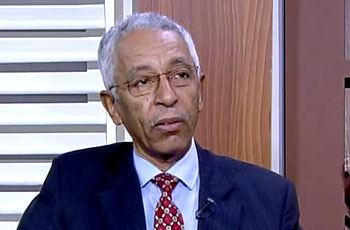
Dr. Al-Khadr Haroun
The fall of Al-Fashir into the hands of the Janjaweed after an almost legendary resistance was a heavy blow to all Sudanese. It confirms that the majority of Sudanese are committed to the unity of the territory on which we live, and that calls to carve up the country so it can be consumed from there are nothing but wild, reckless appeals by those who still believe that the ferocious war we are living through should be used as a vehicle to seize power. We hope that the sharp pain of loss, the cries of grieving mothers, and the hired, treacherous bullets that strike them and the infants at their breasts will awaken everyone from the hatreds of the past. We must all be certain that the aggression — which is supported — targets us all: the far right, the far left and the political center alike. Viewing the matter through the narrow lens of partisan allegiance and blind sectarianism is a grave betrayal of a proud nation. It is truly sad that some of the deceived, the incited, or the easily led respond either with gloating over a particular side, with excessive joy aimed at wounding a community or component of the population, or with delight at the fall of cities to militias backed by states and organizations that kill, burn, destroy, rape and slaughter innocents and the innocent on the basis of identity. That is a plague and a crime that calls for our unified condemnation. Without distinction, this sorrow has wounded us deeply. We hope the magnitude of this calamity will rouse our resolve, sharpen our capabilities, and bring out the best in us — to set aside disputes and rise to protect the homeland with whatever abilities each of us possesses. That is our duty as individuals, organizations, parties and groups. These are turning points in the history of peoples when people should not act from ethnic, political or ideological platforms — the fires that burn do not discriminate.
Concerning the Government of Sudan: the time has come to abandon the plan of conveying to citizens and foreigners alike that things are “business as usual” in areas under army and government control. We are not saying that all routine functions should stop — some are essential and must continue: such work cannot be shirked without harming people’s lives. These activities should not be part of the illusion; rather, they are forward-looking measures to restore hope and fight the paralysis and deadly despair that hinders action. Some essential measures include: encouraging planting seasons where agriculture exists to avert hunger; bringing medical aid from friends and international organizations and rehabilitating hospitals and schools; restoring the police to enforce security and protect citizens; and most importantly, encouraging displaced people and refugees among Sudanese to return to their homes and regions. These measures should be highlighted by official media in order to advance those objectives through reception of representatives of friendly states and specialized international organizations.
However, it is time to limit such publicity to a bare minimum so that neither citizen nor official lives in a false stupor that breeds laxity and complacency, burying their heads in the sand. You may recall the childhood tale of Ṭarfah al-Shib‘ al-ʿAkūl who fooled the children with a lie that they believed — the danger remains after the fall of Al-Fashir, as the situation and commentary indicate. Be warned. There is excessive emphasis on normal activity presented in a way that resembles hype, permitting each visitor to prolong their statements so that many compete in publicized visits by officials for the sake of publicity and the drafting of reports. “No one is better than anyone else!” After reducing such coverage, take advantage of opportunities to brief those “brothers” privately, behind closed doors and without fanfare — severely reproach their governments after the photo-op ends and give them the correct narrative of the war, accompanied by evidence and proof. We are in a state of war; there is no place for routine ceremonial honors and protocol. Tell them that silence, even if sympathetic in sentiment, effectively legitimizes the aggression against Sudan and that messages must be sent to their countries’ leaderships accordingly.
– The matter requires reconsidering governmental laxity while the country bleeds blood and loses lives. Reduce it by merging ministries and institutions to the minimal necessary level required to perform essential duties, and convert all state representations abroad into active cells to clarify the facts and mobilize support, working with free youth sectors in universities and organizations. Explicitly name the countries deeply complicit in the bloodshed — first and foremost before the Rapid Support Forces — and clarify what the RSF is and its tribal, racist nature, identifying it with the Janjaweed, which was accused in 2003 of committing genocide against African tribes. Host exhibitions in major hotels, displaying still and moving images with translations. Expose the countries that fuel this war and those who weekly bring Sudan before the UN Security Council in an obvious race intended to cover up the crimes of the United Arab Emirates by talking about famines in Sudan and labeling the food situation “the worst in the world.” The appropriate response is to condemn the state that supplies weapons, provisions and mercenaries and to halt its harmful actions; yet instead there is promotion and incitement toward international intervention to “save” the RSF and to impose a governing system not chosen by the Sudanese people.
– In the context of including the people and broadening the consultative circle, representatives of the people should be elevated from localities and states to the federal level, supplemented by academics from various fields and independent national figures with broad acceptance, to form a National Advisory Council that assists the government in making decisive decisions. This council would enable representatives of the people to understand the scale of the conspiracy against the country so they can play their part while conditions permit elections later.
– The method by which the government conceals its moves on matters that concern everyone is reprehensible and disregards millions of Sudanese who have the right to know what is happening. The great trust the army enjoys among most Sudanese is preserved by informing the nation’s leadership and the people of the facts in this way:
“Your country is under aggression that enjoys strong regional and international material, media and lethal weapons support; it aims to eradicate this Sudan — land and people. This aggression has been persistent since independence; it does not change with changes of governments or regimes but takes various forms according to international and local circumstances. In the face of this, Sudan stands alone with no protector. We defend the country with limited and scarce material means compared to what the aggressors possess, and we sometimes succeed in repelling them thanks to God and the resolve and sacrifices of our youth, and sometimes we fail due to the nature of things.”
Such a frank and accurate statement frees the government from unfair blame, spares it slanderous accusations, and grants people patience in the face of hardship: shortages of electricity and water and lack of medicine. That is the stance of a dignified people who endure what preserves their pride and honor as worthy human beings and deserving of respect. Such generalized speeches like “We will defeat the criminal Al-Daqlo militia!” during decisive moments like the fall of cities provoke not only anger but pity — they are deeply aggravating.
– Distinguished politicians, journalists, and those who have contact with officials should advise them that people demand transparency and inclusion in the public concern, so they can participate in a battle that concerns their fate and that of their children and the survival of Sudan — the cradle of civilizations, proud and unbowed.
I invite thought to the pinnacle of these proposed measures: declare a state of emergency throughout the territory, reduce institutions so that savings and all resources are devoted to the necessities required for effective defense of the homeland and protection of citizens. This is a legitimate right under international norms. Any attempt to treat continued war as a cunning pretext to seize the country and strip it of its fundamental right to life and self-defense should be resisted. No sane person loves war and destruction, but those who fail to defend their land with arms risk its ruin.
In addition to these measures, I call for stopping artisanal mining and confining mining operations to the state so that it can fund its duties and shoulder the burdens of preserving the state, protect land and honor in accordance with the Constitution. God is the source of intent and success. God is greatest — glory to Sudan.