Popular Resistance — From Liberation to Reconstruction
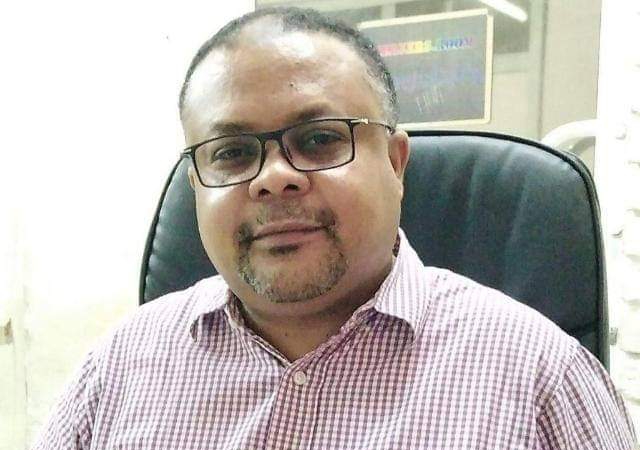
Othman Jalal
(1)
Popular resistance, at its core, is an expression of a society that leads across every strand of political, military, cultural and economic life. That was also the Prophet’s vision for statecraft — mobilizing the energies of the Muslim community. “Whoever buys the house next to the mosque will have Paradise. Whoever purchases the Well of Ruma will have Paradise. Whoever outfits an army in time of need will have Paradise.” Abu Bakr and ʿAbd al-Raḥmān ibn ʿAwf expended wealth and consumer goods in crises to support every community of Medina. Fighters equipped their own horses, boots, weapons and food from personal funds and entered battle, sometimes falling as martyrs but also reclaiming what they had spent.
For that reason the first Islamic state was unified in strength, greatness and institutional and leadership coherence, with a broad social base.
(2)
A state of dormancy has overtaken Sudan’s popular resistance while support continues to flow from the terrorist Mohammed bin Zayed to the criminal Al-Daglo militia — money, weapons and mercenaries — alongside persistent sectarian mobilization within the militia’s constituencies. That pressure toppled the cities of Bara and El Fasher — symbols of steadfastness, dignity and national unity.
Politically, pressure mounts on Sudan’s leadership through the so-called International Quartet — which, excepting Egypt, has become a corrupt vintage that engineered the April 15, 2023 war to break the will of Sudan’s army and people and to establish a client regime for the Zionist project under the terrorist Hemetti and his collaborators, Sumood and Tasis. When the scheme to dispossess Sudan through war failed, the Quartet returned with a new, sinister pitch aimed at negotiating a political settlement that would recycle the terrorist militia and its civilian political wing — Sumood/Tasis — into the centers of leadership and governance.
The tactics of the Zionist project and its local, regional and international instruments change, but the strategic objective remains: to subordinate Sudan or consign it to a cycle of internecine warfare, fragmentation and identity-based cantonization so that a peer regional power cannot rise to influence regional and international relations.
(3)
What comes after the fall of resilient, valiant El Fasher?
Sudan’s popular resistance must awaken; every sector of society must enroll in training camps. The roles of popular resistance must integrate fully — from liberating every inch defiled by the terrorist militia to comprehensive reconstruction.
Leadership of popular resistance at neighborhood, village, town, locality and state levels must arise from the womb of the community and its will. Likewise, the sources of financial and logistical support for resistance — from liberation through reconstruction — must be the Sudanese people at home and abroad. Popular resistance from liberation to reconstruction embodies and represents the will of Sudanese society in all its regional, religious, ethnic and political diversity.
(4)
The culture of popular resistance — in stirring enthusiasm, mobilizing and awakening societal energies — must draw upon cultural and artistic heritage, and the epic stories of Sudanese heroism across history: from the Kushite queen Amanirenas resisting the Roman invaders, to King Taharqa’s stand against the Assyrian incursions, and to the modern-day heroism of martyrs such as Colonel Ahmad Hussein Mustafa and Dr. Nahed Al-Nour confronting the Al-Daglo criminal gang.
(5)
The strategic aim of popular resistance is to confront the Al-Daglo terrorist militia until it is decisively destroyed or surrenders, and to bring its murderous leaders to trial — and to prosecute all civilian political leaders who supported the militia. Indeed, even those who cast doubt on the purposes of this national honor struggle, even with a single word, should face accountability.
Every state has sacrosanct taboos and fortified red lines; the struggle for dignity must be a source of inspiration and a fixed point of national pride, enshrined in school curricula at every level. Popular resistance — from liberation to reconstruction — is the reserve nucleus for the Sudanese army. It is the confident starting point for embedding the idea of a societal renaissance across all its political, economic and cultural dimensions.