El-Fasher Descends Into a “Darker Hell” as UN and Global Powers Condemn Escalating Atrocities in Sudan
Sudan Events – Agencies
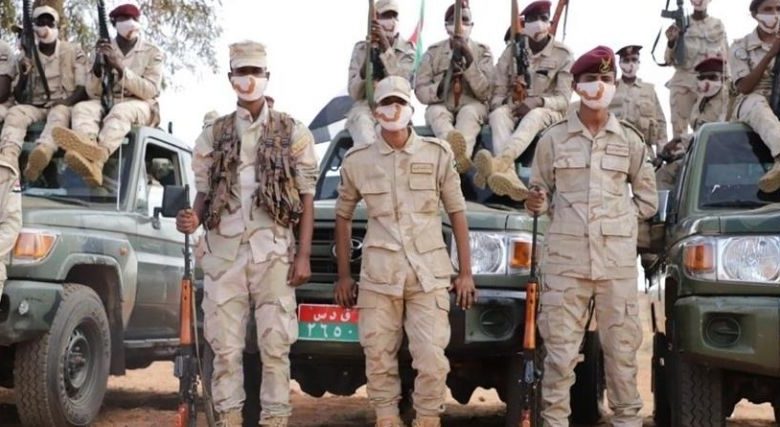
El-Fasher, the capital of North Darfur, has plunged into what UN officials describe as “a darker hell,” as international outrage mounts over reports of mass killings, ethnic violence, and attacks on hospitals following the city’s capture by the Rapid Support Forces (RSF).
France: Expansion of RSF Attacks “Reminds Us of Past Atrocities”
France’s Ambassador to the United Nations, Jérôme Bonnafont, expressed his country’s strong condemnation of the RSF’s expanded and intensified assault on El-Fasher, saying that the reports from the city “remind us of the mass atrocities committed in Darfur twenty years ago.”
He denounced the attack on the Saudi Maternity Hospital, where preliminary WHO reports indicate that around 460 people were killed, and stressed the need to hold perpetrators accountable. Bonnafont urged the Security Council to consider imposing new sanctions and emphasized that “there is no military solution to Sudan’s conflict.”
He called on all external actors to stop providing financial and military support to the warring parties and urged both sides to respect the arms embargo on Darfur, renewed unanimously by the Council last December. “For months, France has called on this Council to take decisive action,” he said. “It is urgent that we move beyond paralysis and adopt concrete measures.”
United Kingdom: Deep Concern Over Escalating Violence
UK Deputy Ambassador James Kariuki said his country, along with Algeria, Sierra Leone, Somalia, Guyana, and Denmark, had requested that the Security Council bring forward its meeting on Sudan due to “deep concern over escalating violence in El-Fasher and its devastating impact on civilians.”
He called on the RSF to comply fully with its obligations under international law to protect civilians and to halt attacks on aid workers and civilian infrastructure.
“It is vital that the RSF end all attacks on humanitarian personnel and infrastructure,” he said, urging both parties to cooperate with the UN and humanitarian agencies, lift movement restrictions, and provide guarantees for safe and unhindered access to El-Fasher and surrounding areas.
“There is no military solution to this conflict,” Kariuki added. “Continued fighting will only deepen the crisis and prolong suffering.” He called for an immediate ceasefire, a humanitarian truce, and a return to political dialogue.
Algeria: RSF Control of El-Fasher a Step Toward Sudan’s Fragmentation
Speaking on behalf of the African members of the Council—Algeria, Sierra Leone, and Somalia—along with Guyana, Algeria’s Ambassador Amar Bendjama said that the scenario everyone had feared had now become “a horrifying reality” after the RSF seized El-Fasher, describing it as “a dangerous step toward the fragmentation of Sudan.”
He referred to disturbing footage showing violence against civilians and reports that 460 patients and their companions were killed by RSF fighters at a maternity hospital.
“El-Fasher is bleeding and calling for justice and a strong response from the international community,” Bendjama declared. “Can the deliberate slaughter of civilians ever be a path to legitimacy?”
He insisted that the Security Council must not remain silent in the face of such atrocities, emphasizing the need to hold the RSF accountable for its violations. “Accountability is a powerful deterrent,” he said. “The Council must ensure that the RSF does not continue killing and terrorizing innocent civilians with impunity.”
Bendjama said that the violations in El-Fasher were “not surprising” but the result of months of international inaction. “The Security Council has a responsibility to protect civilians in Sudan,” he said, urging intensified efforts to that end.
UN Relief Chief Tom Fletcher: “El-Fasher Has Descended Into a Darker Hell”
UN Under-Secretary-General for Humanitarian Affairs and Emergency Relief Coordinator Tom Fletcher said El-Fasher had “descended into a darker hell,” citing credible reports of mass executions following the RSF’s entry into the city.
“We may not hear the screams, but as we sit here today, the horror continues,” Fletcher said. “Women and girls are being raped, people are being mutilated and killed, with total impunity.”
He warned that “the killing is not confined to Darfur,” pointing to similar atrocities in other regions, including Kordofan. Sudan’s crisis, he said, is both “a protection crisis and a hunger crisis.”
“Sexual violence against women and girls is systematic,” Fletcher continued. “Deadly attacks on humanitarian workers have become the new normal.”
He highlighted the particular vulnerability of children, noting that countless minors are being forcibly recruited to fight, and that one in five civilians killed in El-Fasher this month was a child.
Fletcher called for immediate and decisive action to stop the atrocities and to ensure full, unhindered humanitarian access across Sudan. He also urged greater funding for relief efforts.
Expressing outrage over the Sudanese authorities’ expulsion of the World Food Programme’s Country Director and its Emergency Coordinator, Fletcher said: “What is happening in El-Fasher echoes the horrors of Darfur twenty years ago. But somehow, today we are witnessing a global reaction that is alarmingly different—one of indifference, resignation, and shrugged shoulders.”
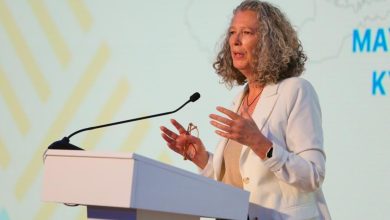
Martha Pobee: “No One Is Safe in El-Fasher”
Martha Pobee, the UN Assistant Secretary-General for Africa, warned that the risk of “mass atrocities, ethnically targeted violence, and further violations of international humanitarian law—including sexual violence—remains alarmingly high across the country, particularly in El-Fasher.”
In her briefing to the Security Council, Pobee said the UN Human Rights Office had documented credible reports of mass killings and summary executions during house-to-house searches and as civilians attempted to flee the city.
“Despite proclaimed commitments to protect civilians, the reality is that no one is safe in El-Fasher,” she said, adding that “there is no safe corridor for civilians to leave the city.”
She warned that Kordofan could become the next focus of military confrontation between the warring sides, citing reports of widespread RSF atrocities in Bara, North Kordofan, including revenge attacks with apparent ethnic motives and the summary execution of five Red Crescent volunteers.
Pobee urged an immediate end to the fighting and sustained dialogue “to reverse Sudan’s accelerating descent into de facto fragmentation.” She emphasized that external support was fueling the conflict, with continued inflows of weapons and fighters worsening an already dire situation.
She criticized the Security Council’s lack of decisive action despite months of warnings about the unfolding catastrophe in El-Fasher, urging members to “use all available tools to demand peace in Sudan.”
Pobee added that UN Special Envoy Ramtane Lamamra had invited both sides to begin technical talks—separately—with the UN to focus on de-escalation and civilian protection. She said Lamamra had received “encouraging signals” from both sides and called on member states with influence to press the parties to engage in the process.
Russia: Atrocities in El-Fasher Are “Shocking”
Russia’s Ambassador to the UN, Vassily Nebenzia, expressed concern over reports of widespread human rights violations, saying that violence against civilians—especially when ethnically motivated—is “unacceptable.”
“The atrocities committed by the rebels against civilians in El-Fasher, and the images circulating online, are shocking,” he said, pointing to similar incidents previously reported in Geneina and Gezira State.
Nebenzia warned that the Council should harbor “no illusion” about the likelihood of such practices spreading to other areas outside government control. He noted reports of rising numbers of foreign fighters among RSF ranks, including combatants from regions far beyond Sudan’s borders.
He argued that the events in El-Fasher clearly demonstrate that the only viable path for Sudan is to restore stability and build unified state institutions, warning that “any alternative path will only deepen the escalation and violence.”
Nebenzia stressed the importance of ensuring humanitarian access in coordination with the Sudanese government and cautioned against any approach that “equates the warring parties or questions the legitimacy of the government,” saying such steps would only “encourage fragmentation.”
He called on all Council members to “focus on constructive engagement and tangible support for the Sudanese people rather than reinforcing divisions.”
United States: RSF and Allies Committed Genocide
US Ambassador Dorothy Shea accused the RSF and its allies of committing genocide, citing “systematic killing of men and boys—even infants—and the deliberate targeting of women and children through rape and other forms of brutal sexual violence,” driven by ethnic motives.
“The United States condemns these heinous atrocities in the strongest possible terms,” she said, stressing the need for accountability, including through sanctions.
Shea said it was time to update Sudan’s sanctions list and that the Security Council must use all available tools to facilitate peace in the country. She urged the warring parties to end hostilities, allow unhindered humanitarian access nationwide, and protect civilians.
“It is not enough for the RSF to make humanitarian commitments—they must act on them,” she said.
Shea added that ending the wars is a top priority for President Trump, reaffirming Washington’s commitment to working with partners and stakeholders to resolve the crisis.