Survivors from El Fasher recount horrific scenes of killing, torture, and abduction
Sudan Events – Agencies
As she fled El Fasher in North Darfur, fighters from the Rapid Support Forces (RSF) stripped Madihah Al-Toum Bashir of her clothes after she was forced to abandon the body of her child, who had been shot dead before her eyes.
The ordeal Madihah endured reflects only a fraction of the atrocities committed by RSF elements after seizing control of El Fasher on October 26, when the militia carried out widespread violations, mass killings of civilians and prisoners, and imposed a total communications blackout on the city.
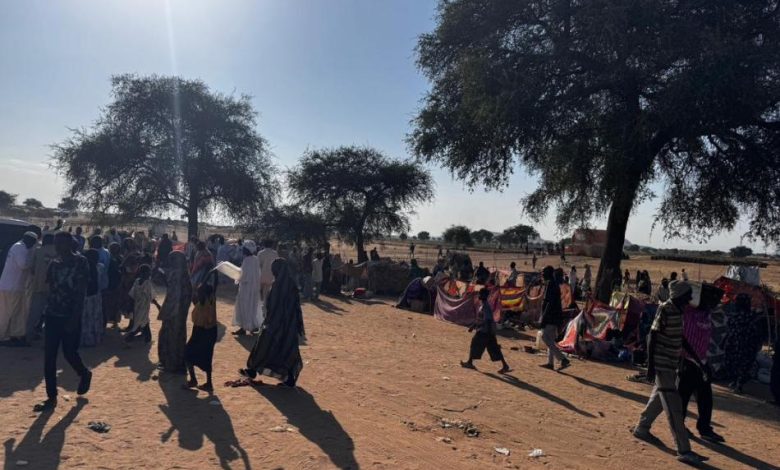
RSF troops pursued fleeing residents along the roads, rounding up many of them in the area of Qarni, where thousands remain stranded — including children separated from their families.
Madihah described her ordeal to Sudan Tribune, recounting her flight from Al-Sahafa neighborhood to Al-Daraja Al-Ula and then to the town of Tawila. “I fled at around 2 a.m. after shells began striking our home,” she said.
She explained that she and others took the western road toward Qarni, passing through multiple checkpoints where they were subjected to humiliating and invasive searches. “They stripped us of our clothes, took our money and phones… we were just running, not knowing where we were heading, with elderly people and the sick among us,” she said.
The most devastating moment came when Madihah watched her son being killed. “Before my eyes, an RSF fighter shot my son dead and ordered me to leave. I had to abandon his body without burying him, while my husband was arrested — we still don’t know his fate,” she said.
“Along the road between El Fasher and Tawila, corpses were scattered everywhere. Any man fleeing the city was either killed or captured,” she added.
Fatima Al-Toum Abdelrahman’s story was no less harrowing. Aware that escaping death would mean enduring pain and humiliation, she recounted her journey from the Abu Shouk camp north of the city toward the Mellit checkpoint. “Each checkpoint was worse than death itself,” she told Sudan Tribune.
“The soldiers forced us to stand for hours under the scorching sun while beating us and hurling racist insults, calling us ‘slaves’ and mocking us as ‘eaters of okra and hides,’” Fatima said.
She witnessed RSF fighters execute two of her relatives, aged between thirty and forty-five, accusing them of being army or rebel sympathizers. Fatima eventually collapsed from exhaustion and horror before being taken with other women to a northern area where they were separated from the men.
“Those men who remained were executed on the spot,” she continued. “The soldiers made sure we could hear their screams as they were shot, shouting, ‘Die, you dogs!’”
Daoud Mohamed Abkar, another survivor from El Fasher, described the terrifying hours when RSF forces stormed the city on October 26. “People were running in every direction, fleeing shells and bullets, with women and children screaming,” he told Sudan Tribune from a shelter in Al-Daraja Al-Ula neighborhood.
While fleeing, Daoud’s group encountered RSF troops near the University of El Fasher. They were stopped, beaten, and separated by age. “I saw RSF fighters execute seven young men who were accused of fighting alongside the army,” he said.
He added that while a group of over fifty people — mostly children — was later allowed to move on, they were brutally beaten again at a checkpoint near Qarni. “They struck everyone without mercy… some were left behind, probably dead from the torture.”
According to Daoud, vehicles charged 500,000 Sudanese pounds per person to transport escapees, but most could not afford the fee and had to flee on foot — risking arrest and looting by RSF-aligned tribal militias on motorcycles, horses, and camels, who also carried out mass executions.
Civilians escaping El Fasher are also being systematically kidnapped by RSF units, which detain hundreds of people and extort their families for large sums of money, human rights lawyer Abdelbasit Al-Haj told Sudan Tribune.
He said the militias contact relatives of the abducted — including those in safer areas or abroad — demanding ransoms exceeding 100 million Sudanese pounds (around USD 170,000) per person. Failure to pay, he said, results in torture, with videos of victims sent to families to pressure them.
“These violations reflect a deliberate policy to subjugate civilians and maintain control, exploiting the economic desperation of those displaced after more than 18 months of siege and displacement,” Al-Haj explained. “The militias have nothing left to loot except the civilians themselves — so they turned to abductions and extortion.”
He added that RSF forces warn families not to speak publicly about the kidnappings, threatening to kill the hostages if they do. “The silence of the international community is worsening the crisis,” he warned, calling for the RSF to be designated a terrorist organization and held accountable for crimes against civilians.
Three survivors — including a doctor — told Sudan Tribune they had been kidnapped and tortured by RSF fighters and forced to record ransom videos for their families. One said his captors initially demanded 75 million pounds before agreeing to release him for 20 million.
Another family from eastern Sudan said they paid 18 million pounds for their relative’s release, but the kidnappers broke their promise and contact was lost after payment.
Adam Regal, spokesperson for the General Coordination of Displaced Persons and Refugees in Darfur, warned of a grave humanitarian deterioration in the Tawila area of North Darfur, which has received massive influxes of people fleeing El Fasher and nearby regions.
“The humanitarian situation in Tawila is catastrophic,” Regal told Sudan Tribune. “Hundreds of thousands have arrived over the past months, and people continue to arrive daily.”
He said the displaced are living in dire conditions, facing acute shortages of food and clean water. Tawila relies on a few water tankers that cannot meet the growing demand, forcing many to drink unsafe water from open streams, raising fears of disease outbreaks.
Regal stressed the urgent need for shelter materials, life-saving medicines, psychological support, education, and safe spaces for children. He added that those arriving from El Fasher had endured grave human rights abuses, including killings, sexual violence, rape, looting, and intimidation.
“As of October, about 11,000 new arrivals were registered in Tawila, bringing the total displaced population to over one million,” he said. “Between 450 and 500 children have arrived unaccompanied, and around 450 patients are being treated in Tawila Hospital, which suffers from severe shortages of medicines and IV fluids.”
He called for an immediate ceasefire and a temporary humanitarian truce to open roads and allow aid delivery without restrictions. “As long as the war continues, so will the wounds, the tears, and the grief,” he said.
Regal urged Sudanese political forces to pursue a “Sudanese–Sudanese dialogue or national roundtable” to achieve lasting peace, and appealed to the international community, the Quartet, and the United Nations and its humanitarian agencies to act urgently to save hundreds of thousands of displaced people in Tawila, Jebel Marra, Kassab camp, Kurma, and other affected areas.