The Fall of Al-Fasher…Will We See a Repeat of Libyan Scenario?
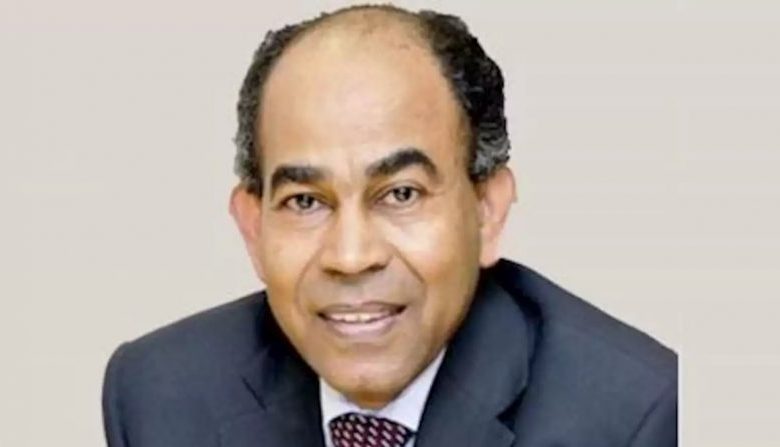
Osman Mirghani
Torrents of condemnations of the Rapid Support Forces (RSF) poured in from every direction over the past two days, following the mass atrocities and massacres the RSF committed in Al-Fasher after storming the city and forcing the Sudanese army and its allies to withdraw. Several reports and videos have documented the RSF’s crimes, exposing the scale of their crimes against civilians and ethnic violence that spared no one: not the elderly, women, children, nor doctors, nurses, or patients.
This is far from the first time that the RSF has behaved this way. It has committed similar atrocities in every area it entered until being pushed out, from Al-Jazira to Sennar, from Omdurman to Kordofan. The assault on Al-Fasher and its residents was neither accidental nor spontaneous. The crimes were deliberate and systematic: a siege on the city for nearly 500 days and starving its inhabitants and bombarding them with drones and artillery, even in displacement camps.
The predictability of these abhorrent crimes has done nothing to lessen the universal shock at seeing the systematic war crimes in Al-Fasher- massacre that have outraged numerous countries and international organizations who condemned the massacres and stressed the urgency of protecting civilians.
There have been calls, notably from the Senate Foreign Relations Committee Chairman Jim Risch, for designating the Rapid Support Forces a terrorist organization.
Amid this mass tragedy and palpable grief, we find a striking paradox: despite their well-documented record of atrocities, some actors continue to advocate for granting these forces a seat at the table of future negotiations. Whether by dividing Sudan and replicating the Libyan scenario, or through a ceasefire agreement that would necessarily entail concessions to the RSF and allowing them to become part of the future political landscape, legitimizing the RSF will be problematic given the grievance of most Sudanese citizens.
The fall of Al-Fasher will have profound repercussions for the course and outcome of the war. The city was the army and the joint forces’ last remaining stronghold in Darfur. That is, the Rapid Support Forces have effectively taken control of the entire region, which is roughly twice the size of Great Britain.
Al-Fasher’s significance cannot be limited to its historical status and its resilience under siege. It is also a strategic territory that links northern, central, and western Darfur, as well as a key gateway to Chad, Libya, and Egypt. Consequently, Sudan’s entire western border and the supply lines of foreign arms are now open to the RSF.
Once we add the RSF’s seizure of the strategic city of Bara in North Kordofan, the threat becomes even clearer: the group can now threaten the northern states from North Darfur, and it can also threaten El-Obeid, Omdurman, Khartoum, White Nile, and Al-Jazira through the Bara corridor. All these threats were implicit in RSF Commander Mohamed Hamdan Dagalo (Hemedti) in the speech he gave a few days ago, impelled by either personal ambition or plans encouraged by foreign actors. From the very start of the war, Hemedti made his intentions clear. He and his brother, Abdul Rahim, declared that they sought to capture or kill Abdel Fattah al-Burhan the commander-in-chief of the Army and Chairman of the Sovereign Council, laying out a plan to seize power and dismantle the army so that their militias could replace it.
The question remains: will the fall of Al-Fasher lead to an expansion of the war; or to the secession of Darfur and the partition of Sudan through a repetition of the Libyan scenario? US Envoy Massad Boulos hinted at the latter in several interviews he gave this week amid the rapid developments on the ground?
I am not inclined to see repetitions of developments in different places; every country has its own circumstances and particularities, and every war has particular dynamics. Darfur is not homogeneous, and the Rapid Support Forces do not represent the majority of its residents. In fact, many ethnic groups in the region despise the RSF and will never forget the crimes and ethnic cleansing it has committed in several areas.
Nevertheless, one cannot ignore the plans to partition Sudan. They have a long and well-documented history. It has been mentioned by former American and Israeli officials and discussed in many studies. These attempts will continue. If they stop today, then they will resume tomorrow so long as the efforts to weaken and fragment the entire region continue.
With the way things currently stand, the Sudanese army, as well as the joint forces and the Darfur factions, cannot remain idle. They will fight to prevent the Rapid Support Forces, and the foreign mercenaries and foreign powers backing them, from fully dominating the region and from pursuing their separatist agenda, which would only bring more atrocities, chaos and instability, both in Darfur and across the wider region.
The experience of South Sudan remains fresh in our memory: after secession, it plunged into a domestic conflict and became a source of instability for its neighbors.
Accordingly, escalation is imminent. Kordofan, where control has become more crucial than ever and could significantly shape the course of the war, will see particularly intense fighting.
As for the potential for negotiations following the fall of Al-Fasher and Bara, it has become far narrower.