Washington Begins Preparations for Possible Military Action in Nigeria
Sudan Events – Agencies
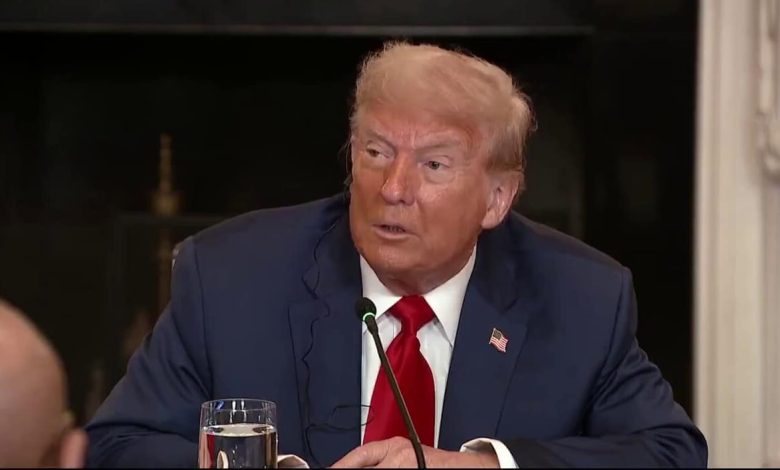
U.S. President Donald Trump announced on Saturday that he has instructed the Department of Defense (the Pentagon) to begin preparing for a “potential operation” inside Nigeria if the “killing of Christians” continues in the country. He warned that the United States “may enter that now-disgraced country, guns blazing,” to “eliminate the Muslim terrorists committing these atrocities.”
In a post, Trump wrote: “If the Nigerian government continues to allow the killing of Christians, the United States will immediately halt all aid and may enter that country… the strike will be swift, fierce, and sweet—just as the terrorists attack our beloved Christians.”
Earlier, Trump stated that Christianity in Nigeria is “facing an existential threat,” holding “radical Islamist groups” responsible for what he described as a “mass slaughter.” He also announced that the United States would designate Nigeria as a “Country of Particular Concern” regarding religious freedom, a classification that allows Washington to impose sanctions or direct specific assistance.
Nigerian Response
The government of President Bola Ahmed Tinubu responded that Trump’s description of Nigeria as “religiously intolerant” does not reflect reality, emphasizing that the Nigerian constitution guarantees freedom of religion for all citizens regardless of faith.
Background and Context
Nigeria, a nation of more than 220 million people, is roughly divided between Muslims and Christians. It faces multiple sources of violence, including extremist groups such as Boko Haram and ISWAP, as well as conflicts between herders and farmers, ethnic and religious tensions, and resource-driven disputes.
While Trump and his supporters argue that Christians are being targeted for their faith, several analysts note that the data and causes are mixed—many attacks stem from ethnic rivalries or competition over land and resources, rather than purely religious motives.
Nigeria’s possible inclusion on the U.S. list of “Countries of Particular Concern” could pave the way for actions such as suspension of aid or sanctions against Nigerian officials accused of “suppressing religious freedom.”
What Comes Next
Observers will be watching to see whether the United States proceeds with sanctions or even military intervention, or whether Trump’s remarks remain a diplomatic warning.
Attention will also focus on how the Nigerian government responds, particularly regarding efforts to protect religious minorities and address the security challenges Trump linked to Christian persecution.
Within Nigeria, the statements are expected to influence intercommunal dynamics between Christians and Muslims and could increase political pressure on the Nigerian leadership.