Full Details of the El-Fasher Epic, Part (1)
Sudan Events – Agencies
“What happened in El-Fasher and the steadfastness of the Sudanese Armed Forces for more than two years under siege and relentless shelling is a heroic epic—an unprecedented event in the history of warfare that deserves to be studied in military colleges and academies.”
That’s how a veteran Sudanese officer, who once held a senior military rank, described to me the extraordinary events.
In this investigative series, Sudanese Echoes reveals, for the first time, undisclosed facts and information about what took place in the city of El-Fasher—the heroic battles waged by the Sudanese Army and its allied forces, written in blood, courage, and sacrifice, and which captured the world’s admiration and astonishment.
Figures and Statistics
It is known that the siege of El-Fasher began on May 10, 2024, following the defection of several armed movements that abandoned neutrality and joined the Sudanese Army.
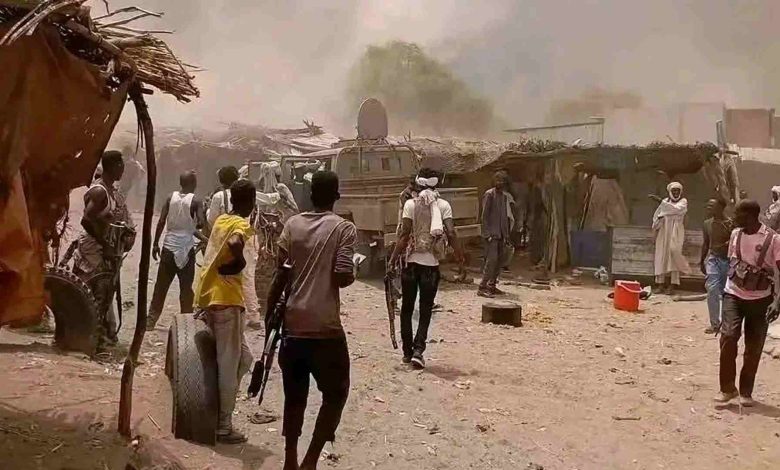
The siege imposed by the militias lasted over 500 days, during which El-Fasher turned into a ghost town. Thousands of residents fled, famine deepened, and all basic necessities of life vanished as the “Mahawish” militias blocked food and medical supplies while continuing intense artillery bombardment.
According to international organizations, more than one million people were displaced—an average of 1,000 every two days, based on data from the International Organization for Migration (IOM).
The spokesperson for the displaced reported that around 831 families, comprising more than 3,000 individuals, fled from inside the city. Meanwhile, the El-Fasher Emergency Coordination Center estimated total displacement at 700,000 people. Sudan’s Prime Minister, Kamal Idris, stated that around 916,000 citizens remained trapped inside the besieged city.
As for casualties, the numbers are tragic.
A report by the UN High Commissioner for Human Rights indicated that more than 700 people were killed in El-Fasher alone since the start of the siege.
Other UN reports cited 782 deaths and over 1,143 injuries, while global humanitarian organizations suggested that more than 2,000 civilians were killed due to militia shelling of residential areas.
At one point, 15 children were killed in a single day by indiscriminate shelling, while 171 children died of starvation—some reports raising that number to 239, victims of hunger caused by the prolonged siege.
The Siege of El-Fasher
How did the rebel Rapid Support Forces (RSF) impose their siege on El-Fasher?
A military source explained: “The RSF besieged the city through several tactics:
– Cutting off all main and secondary roads leading into the city to block the entry of food, medicine, or humanitarian aid—much like the Israeli siege on Gaza.
– Indiscriminate artillery bombardment using heavy guns aimed at residential areas and vital facilities, especially the airport, to prevent air deliveries.
– Deploying forces along the main city approaches.
– Using heavy weaponry, including artillery and drones, which led to the total destruction of El-Fasher’s infrastructure.”
The source added that, with support from ‘evil states’, the militia used helicopters shortly before storming the city to transport weapons, ammunition, and logistical supplies to militia strongholds in Al-Zurga Base, Um Kadada, Nyala, Zalingei, and Um Dafuq, in preparation for the final assault on El-Fasher.
Due to the long and merciless blockade that cut off all aid, famine ravaged the population.
Eyewitnesses who managed to escape by miracle said: “Food completely ran out. People resorted to eating neem fruits, animal fodder, tree leaves, and wild herbs. The siege dragged on for more than two years, cutting every access route and preventing any humanitarian, food, or medical supplies from entering. The all-encompassing blockade targeted every lifeline of the city, causing a humanitarian collapse, mass starvation, and mass displacement.”
Control Map of the City
El-Fasher comprises ten main districts: Al-Wahda, Al-Salam, Al-Nasr, Al-Ingaz, El-Fasher South, El-Fasher North, Al-Jabal, Al-Majlis, the Airport, and the Grand Market.
Before the city’s fall, six districts were under RSF control: Al-Salam, Al-Wahda, Al-Ingaz, the Airport, the Grand Market, and Al-Majlis.
Meanwhile, the Sudanese Army held Al-Nasr and El-Fasher South.
Demographics and Economic Role
El-Fasher’s residents are an ethnically diverse mix of Sudanese communities, primarily from the Zaghawa, Fur, and Masalit groups, with smaller numbers of Arab-origin tribes mostly concentrated in South Darfur State.
The city has long been a key commercial hub in the Darfur region, with residents engaged in agriculture, herding, and camel trading—making El-Fasher one of Sudan’s largest camel export markets, particularly to neighboring Egypt.